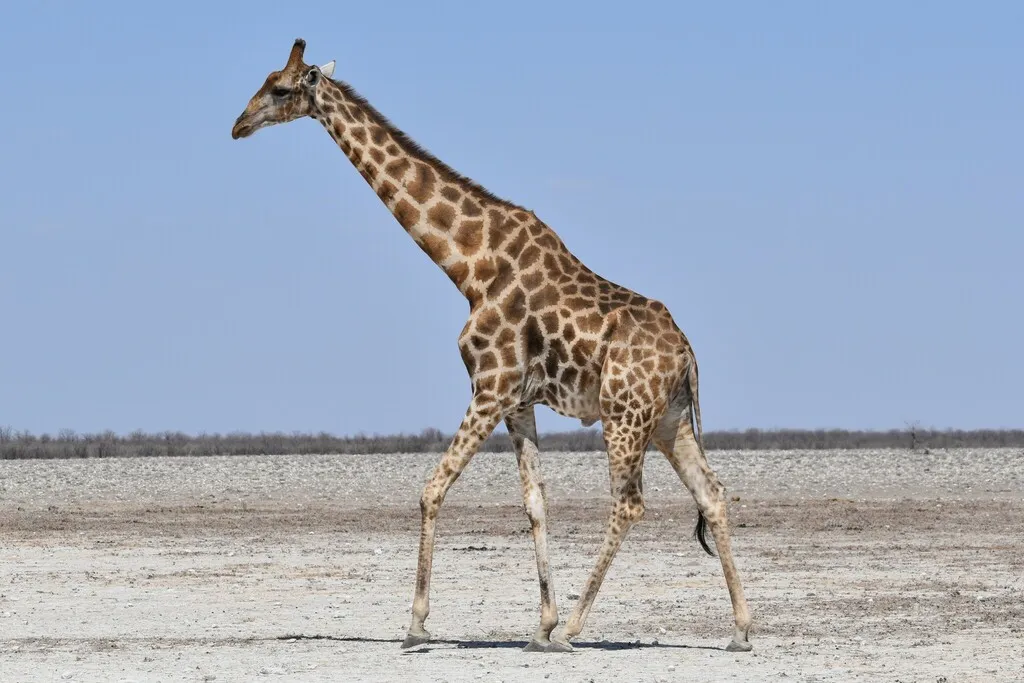
Southern Giraffe
Giraffa giraffa
Tall browsers of the mopane and acacia belts.
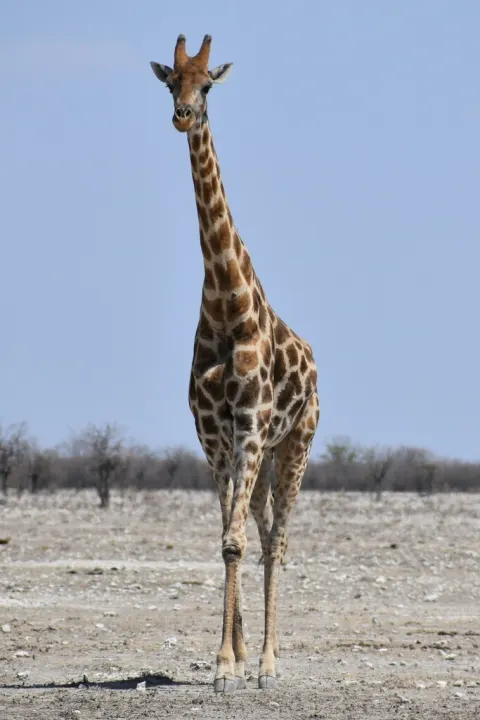
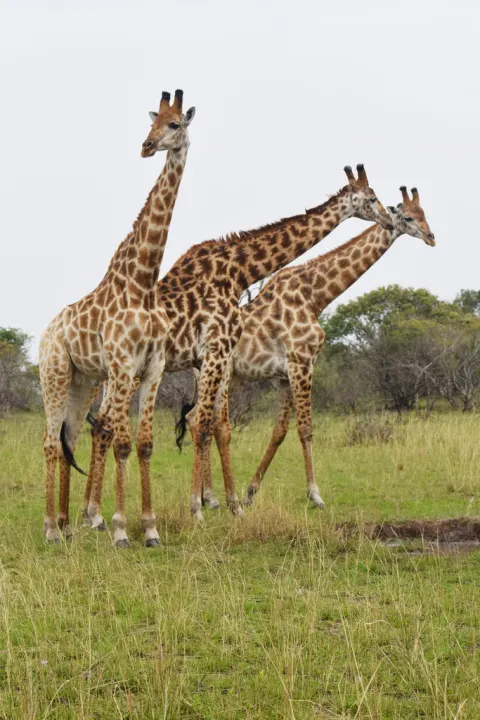
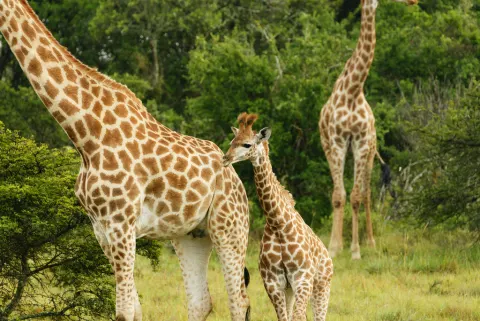
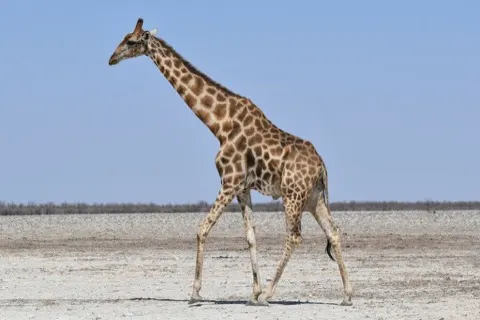
Roughly 50,000 southern giraffes make it the most numerous giraffe left, and the ones striding across Etosha's plains belong to the Angolan subspecies, pale, cleanly patterned, and superbly at home in thornveld. Everything about a giraffe is an engineering dare: a five-meter animal running 50 kilometers an hour on legs like stilts, a half-meter prehensile tongue in bruise-purple (sunscreen, probably), and a heart the size of a bag of flour generating double human blood pressure to irrigate a brain two meters above it. They hum to each other at night, at frequencies only recently noticed, and a giraffe drinking, legs splayed, head swung down through six meters, is one of the most vulnerable and mesmerizing sights in the bush.
Loose, ever-shifting herds with no fixed leader. Bulls test rank by necking, slow-motion swinging duels that can turn genuinely violent.
Acacia specialists, stripping thorny branches with tongue and lips. A big adult can strip 30 kilograms of leaves in a day, mostly in the cool hours.
Giraffes against a low sun are the easiest great silhouette in Africa. For something rarer, wait at water: the splayed drinking posture lasts seconds and is worth the patience.
Give drinking giraffes full space; they abandon the attempt when pressured, and in dry country that costs them.
Generalised encounter areas, not exact locations. Each shape is a grid cell coloured by how likely the species is there.
- Very likelySouth Africa10 km zone · medium confidence · 54 records · updated 41 days ago
- Very likelyBotswana10 km zone · medium confidence · 48 records · updated 41 days ago
- Very likelyNamibia10 km zone · medium confidence · 23 records · updated 41 days ago
- Very likelyZimbabwe10 km zone · medium confidence · 8 records · updated 41 days ago
- LikelyZambia10 km zone · medium confidence · 3 records · updated 41 days ago
African Elephant
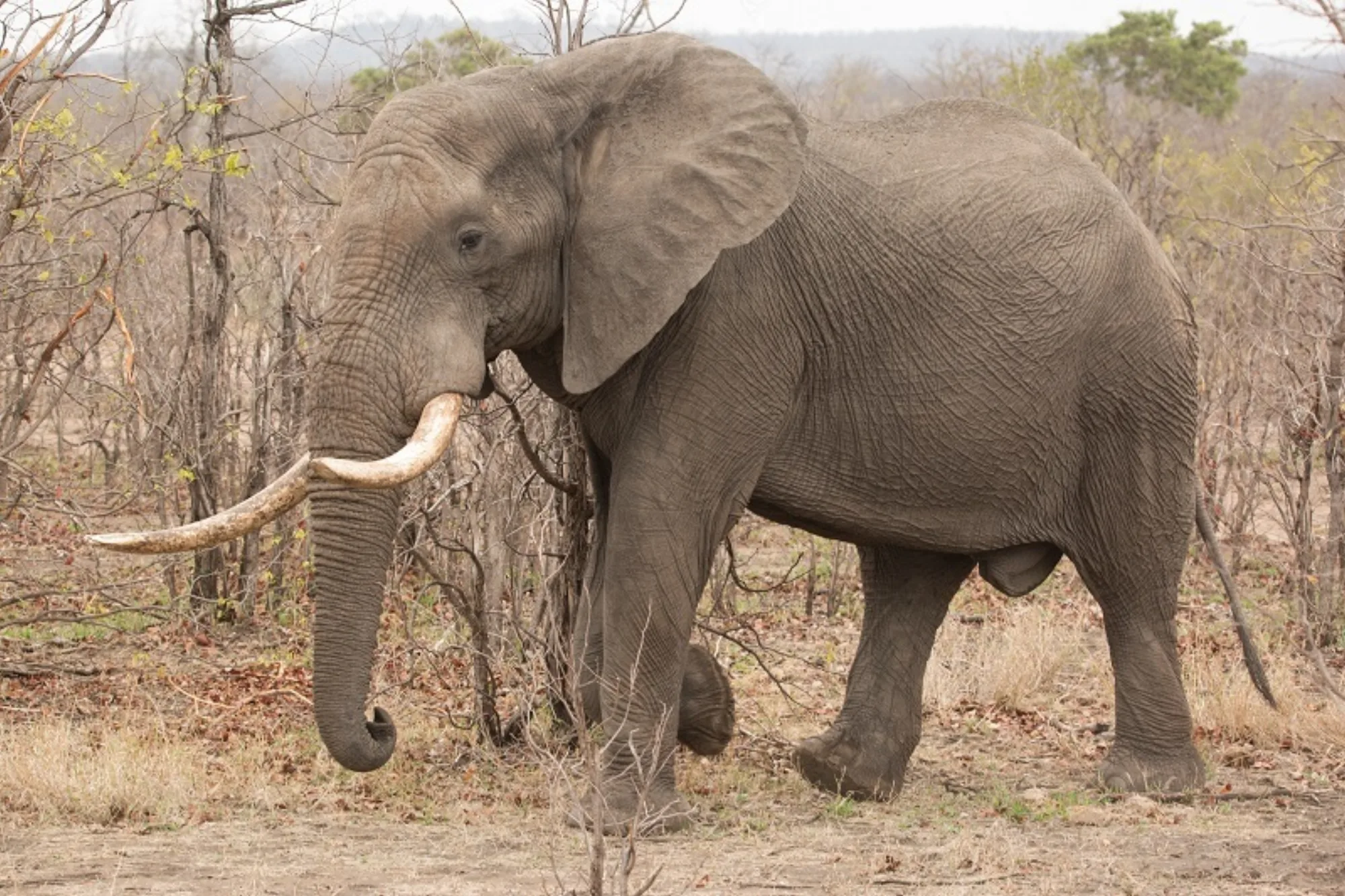
Loxodonta africana
Desert-adapted herds that survive on remembered water in some of the driest country in Africa.
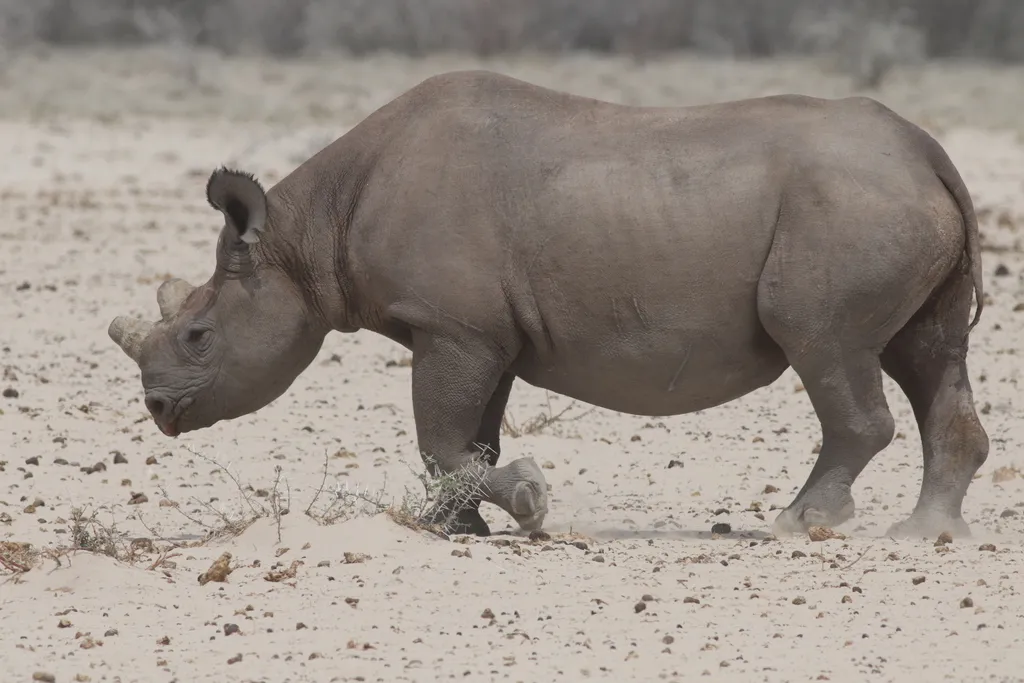
Black Rhinoceros
Diceros bicornis
Precise locations are withheld. Namibia holds a globally significant population.
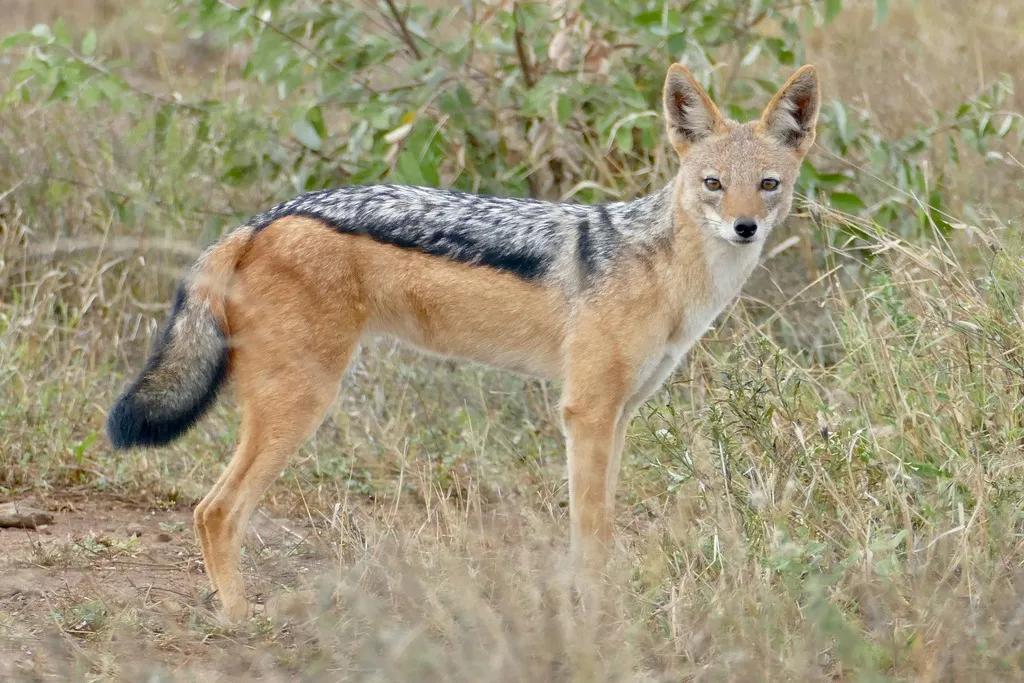
Black-backed Jackal
Lupulella mesomelas
Persistent, clever, and heard yipping across the plains at dusk.
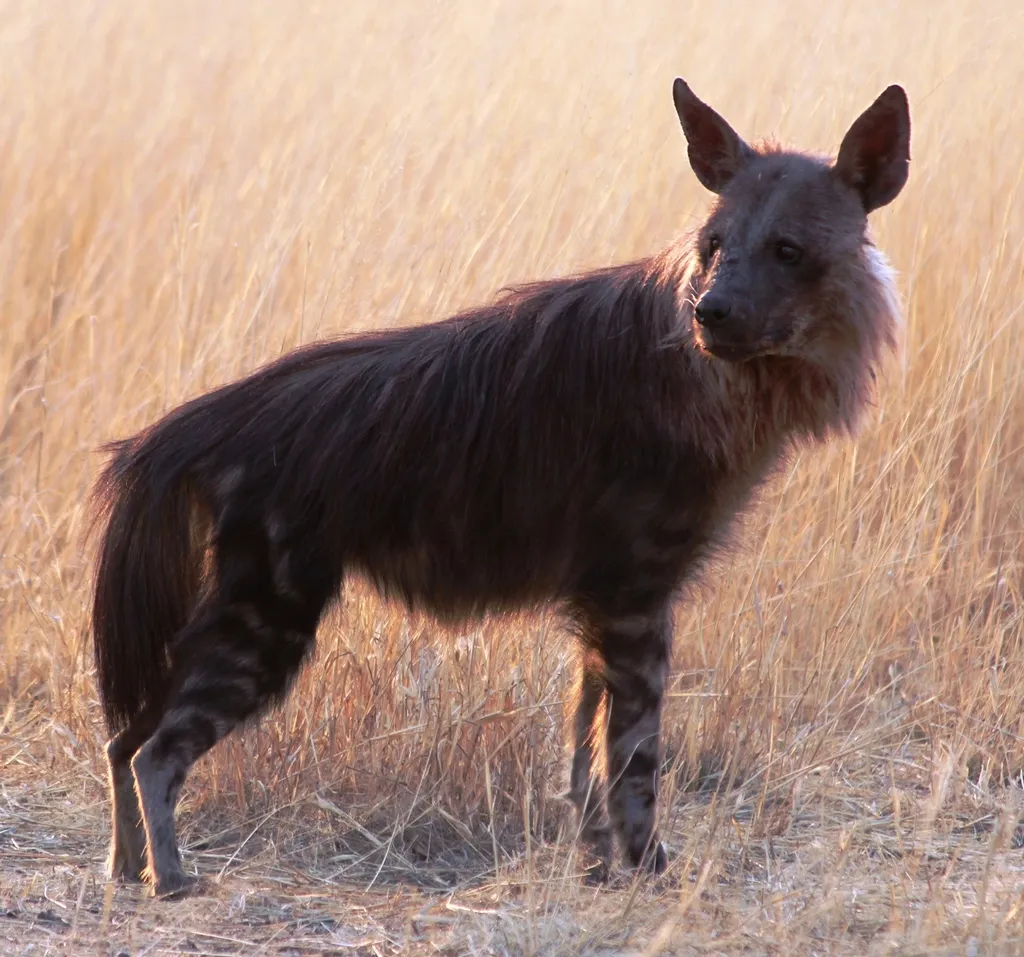
Brown Hyena
Parahyaena brunnea
Shaggy ghost of the Skeleton Coast, scavenging along the tide line.