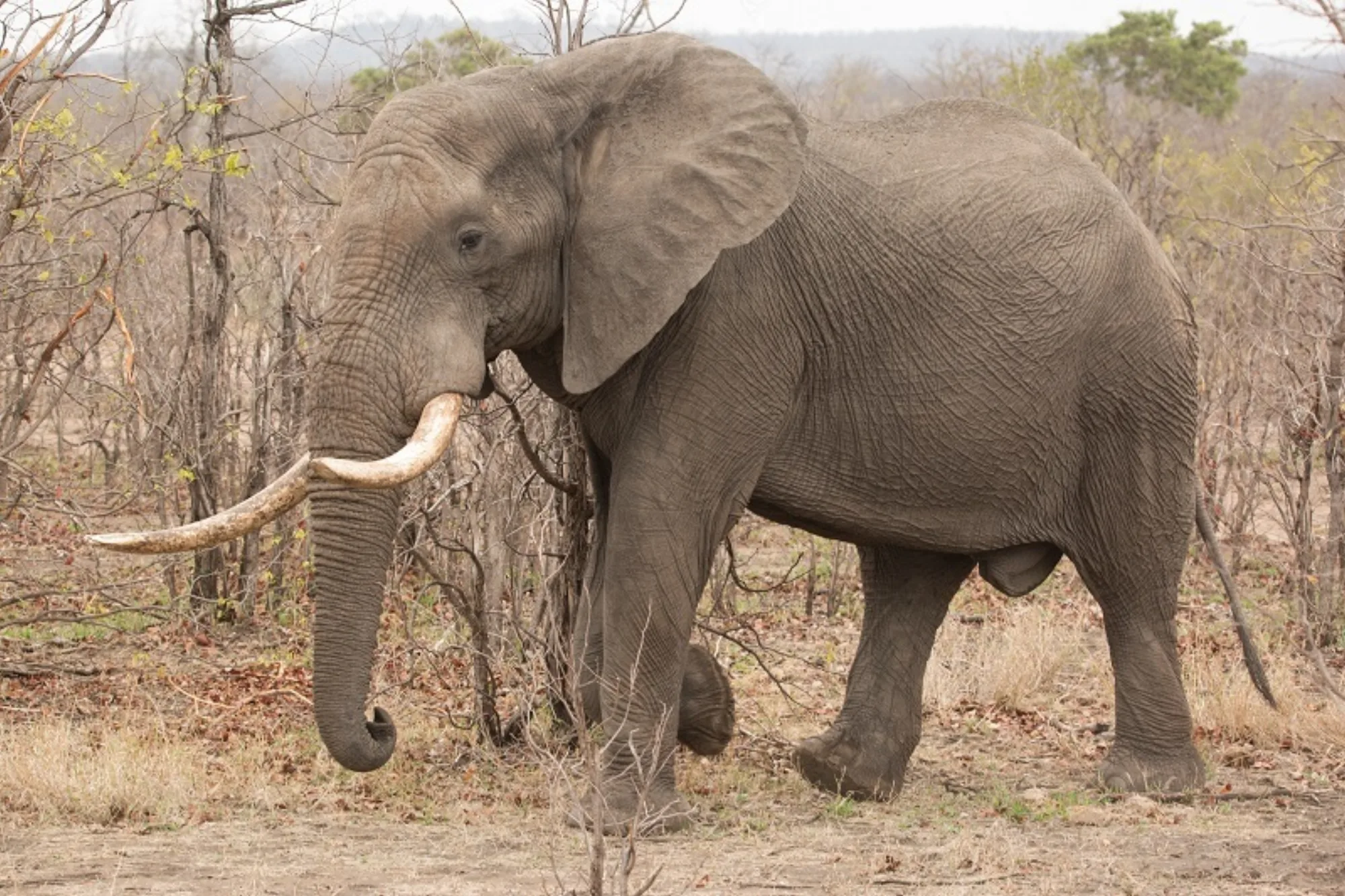
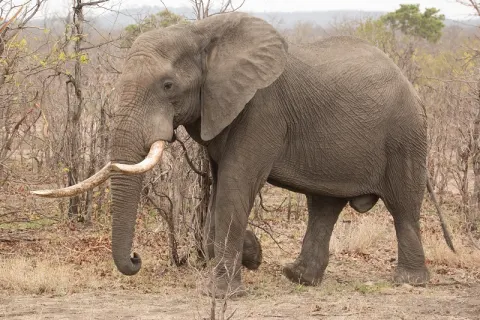
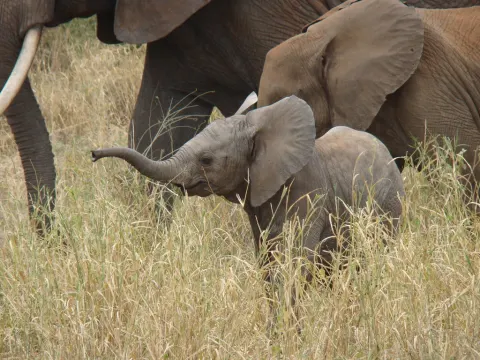
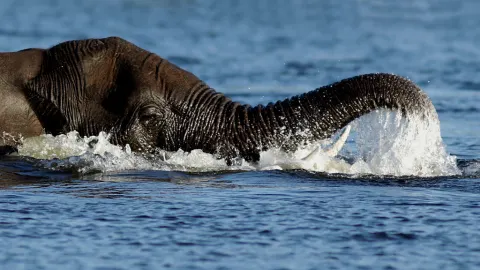
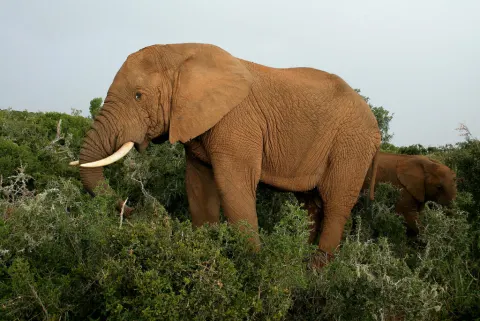
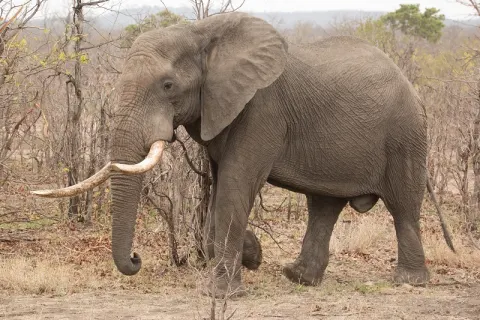
African Elephant
Loxodonta africana
Desert-adapted herds that survive on remembered water in some of the driest country in Africa.
The desert elephants of the Kunene are not a separate species, and that is the remarkable part. They are ordinary African elephants that have learned to live where less rain falls in a year than on London in a single April.
Their rivers run underground. The Hoanib, the Hoarusib and the Huab carry water above the sand for a few days a year and hold it below for the rest, and the herds walk them anyway, because they know where to dig. A matriarch stops, tests the sand with a front foot, and works down with her trunk until the hole darkens and fills. Behind her the herd waits. Behind them, at a careful distance, wait the oryx and the jackals and the sandgrouse, because the well she opens will not only be hers.
What holds this together is not strength. It is memory. A female of fifty carries a map of waterholes and lean-year routes that no younger animal has, which is why losing an old matriarch costs a herd far more than one elephant.
Watch the ears when you find them. Spread and still, they are radiators. Clamped back, you are too close.
Herds gather at waterholes in late afternoon; bulls often solitary.
Browsers and grazers; bark, grasses, marula and mopane.
Position downwind and low; the dry-season dust in raking light is the shot.
Never block a movement corridor between water and cover.
Generalised encounter areas, not exact locations. Each shape is a grid cell coloured by how likely the species is there.
- Very likelySouth Africa10 km zone · medium confidence · 1129 records · updated 41 days ago
- Very likelyKenya10 km zone · medium confidence · 953 records · updated 41 days ago
- Very likelyUganda10 km zone · high confidence · 457 records · updated 41 days ago
- Very likelyBenin10 km zone · medium confidence · 422 records · updated 41 days ago
- Very likelyTanzania10 km zone · medium confidence · 325 records · updated 41 days ago
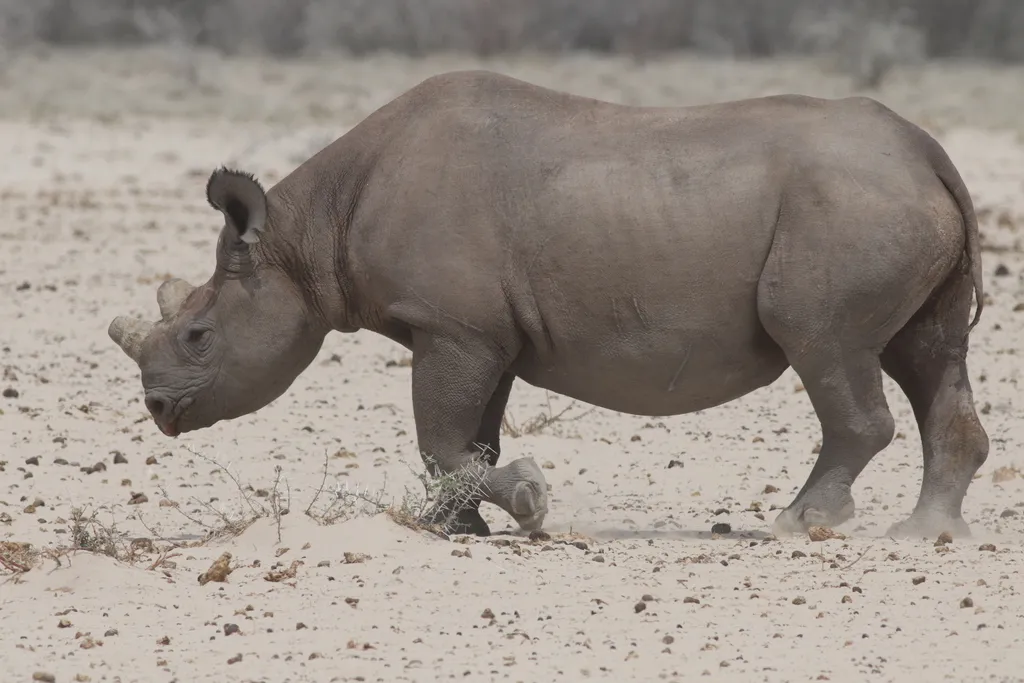
Black Rhinoceros
Diceros bicornis
Precise locations are withheld. Namibia holds a globally significant population.
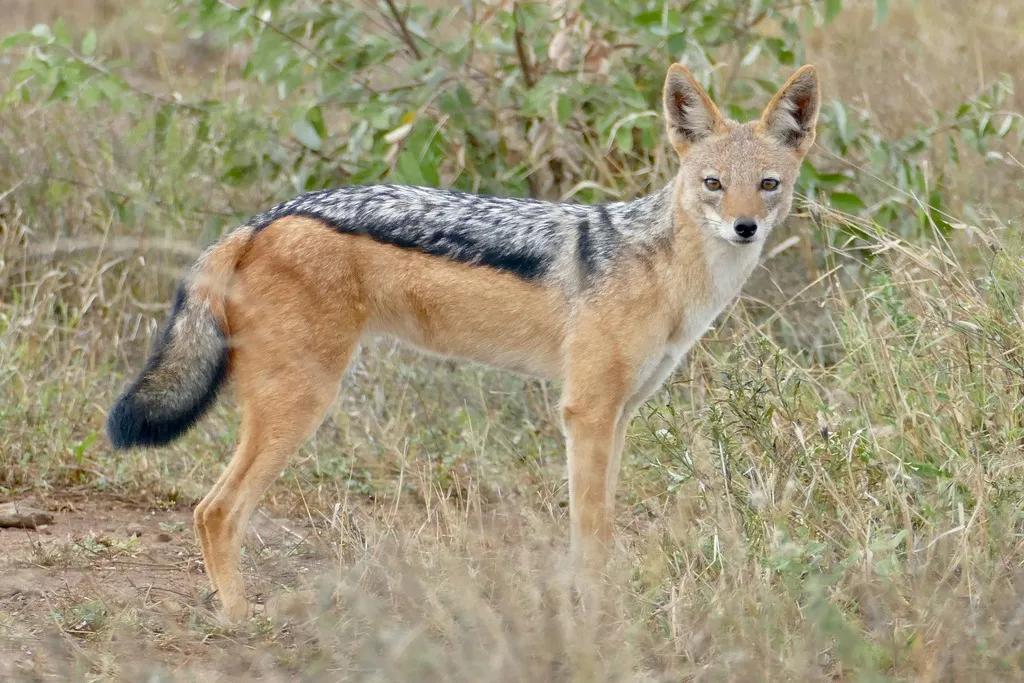
Black-backed Jackal
Lupulella mesomelas
Persistent, clever, and heard yipping across the plains at dusk.
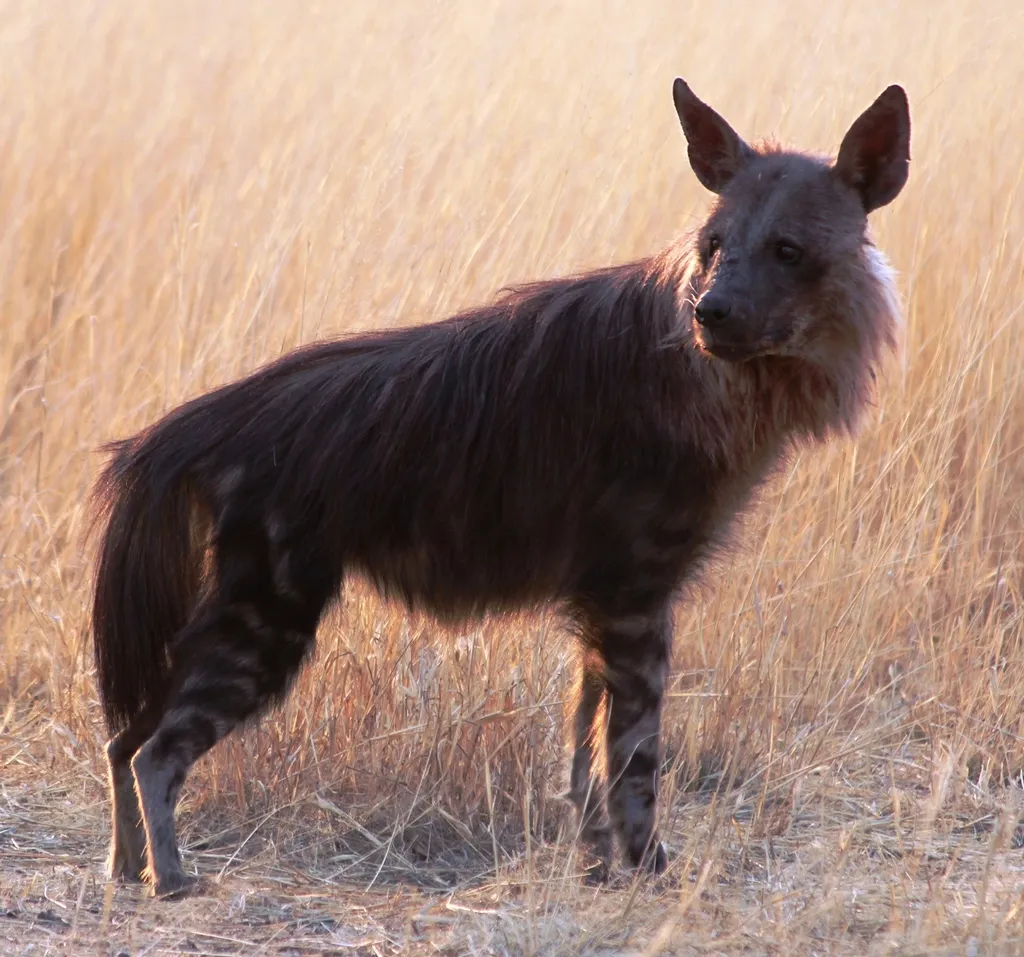
Brown Hyena
Parahyaena brunnea
Shaggy ghost of the Skeleton Coast, scavenging along the tide line.
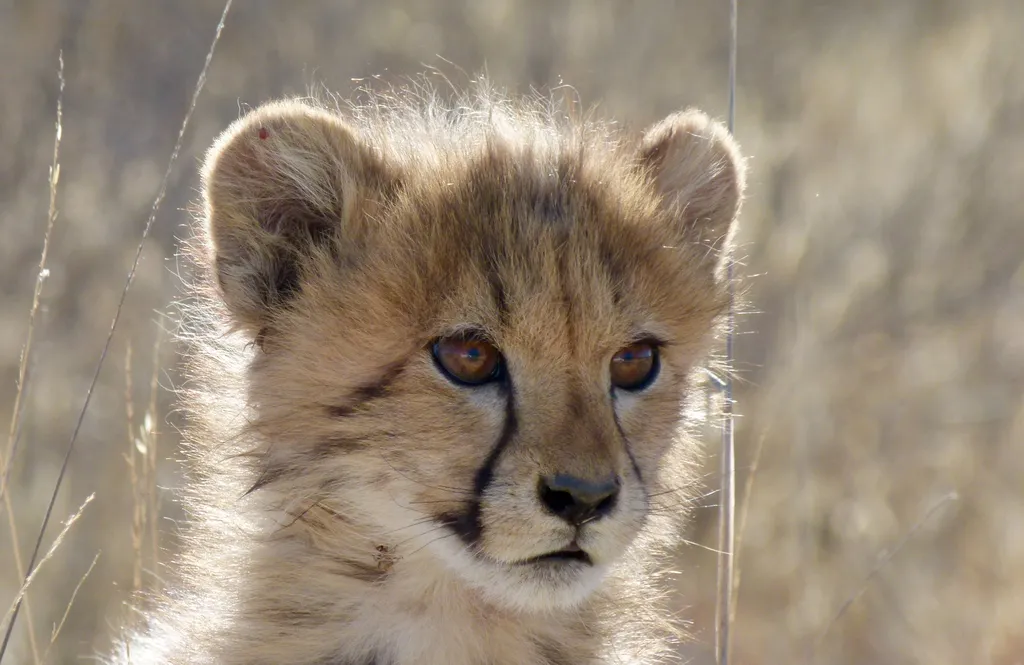
Cheetah
Acinonyx jubatus
Namibia holds the world's largest free-roaming cheetah population.