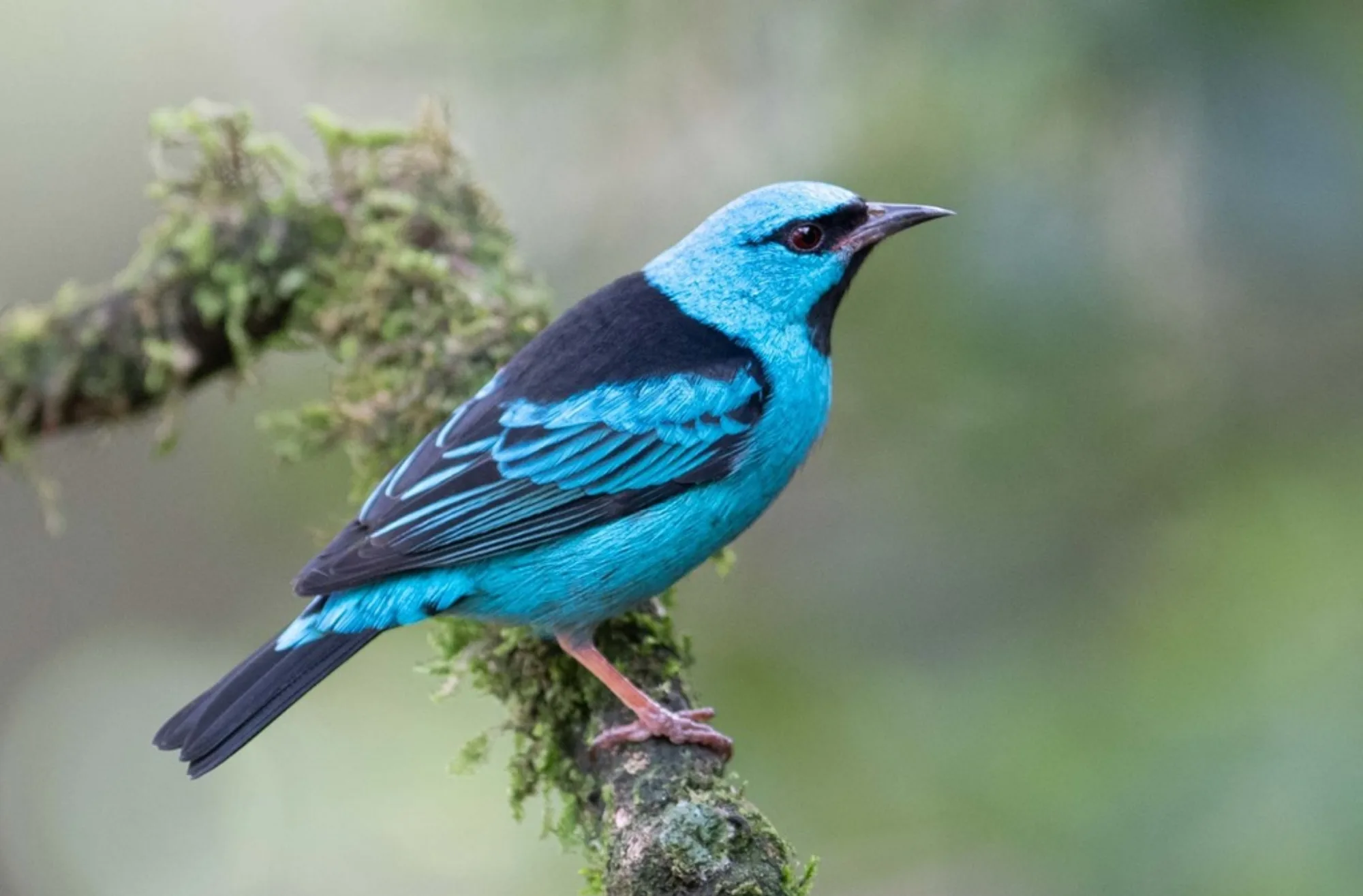
Blue Dacnis
Dacnis cayana
Osa Peninsula, Corcovado and Arenal are among the four atlas places where the Blue Dacnis is recorded, with records gathering most thickly in Brazil, Panama and Costa Rica. The atlas holds about 151,000 open records of this bird from 11 countries, including Colombia and Argentina. This map follows where those records concentrate.
Seasons for the Blue Dacnis differ by region, and each place page shows the months recorded there.
- Records
- 150,748
- Countries
- 11
- Atlas places
- 4
These are open occurrence records, so they show where people looked for and recorded the Blue Dacnis as much as where it lives. The atlas keeps a species' 200 best-recorded grid cells, so the map shows where records concentrate rather than its whole range. Cells are up to 25 km across, and every location is generalised to its cell.
Generalised encounter areas, not exact locations. Each shape is a grid cell coloured by how likely the species is there.
- Very likelyBrazil25 km zone · high confidence · 63340 records · updated 40 days ago
- Very likelyPanama25 km zone · high confidence · 28345 records · updated 40 days ago
- Very likelyCosta Rica25 km zone · high confidence · 21904 records · updated 40 days ago
- Very likelyColombia25 km zone · high confidence · 12908 records · updated 40 days ago
- Very likelyPeru25 km zone · high confidence · 8386 records · updated 40 days ago
- Very likelyEcuador25 km zone · high confidence · 5648 records · updated 40 days ago
- Very likelyArgentina25 km zone · high confidence · 5554 records · updated 40 days ago
- Very likelyTrinidad & Tobago25 km zone · high confidence · 2392 records · updated 40 days ago
- Very likelyGuyana25 km zone · high confidence · 1489 records · updated 40 days ago
- Very likelyBolivia25 km zone · high confidence · 478 records · updated 40 days ago
Conservation status not assessed here yet, so every location is generalised to its grid cell.