Socorro Dove
Zenaida graysoni
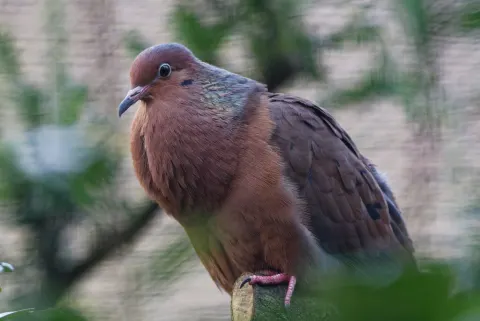
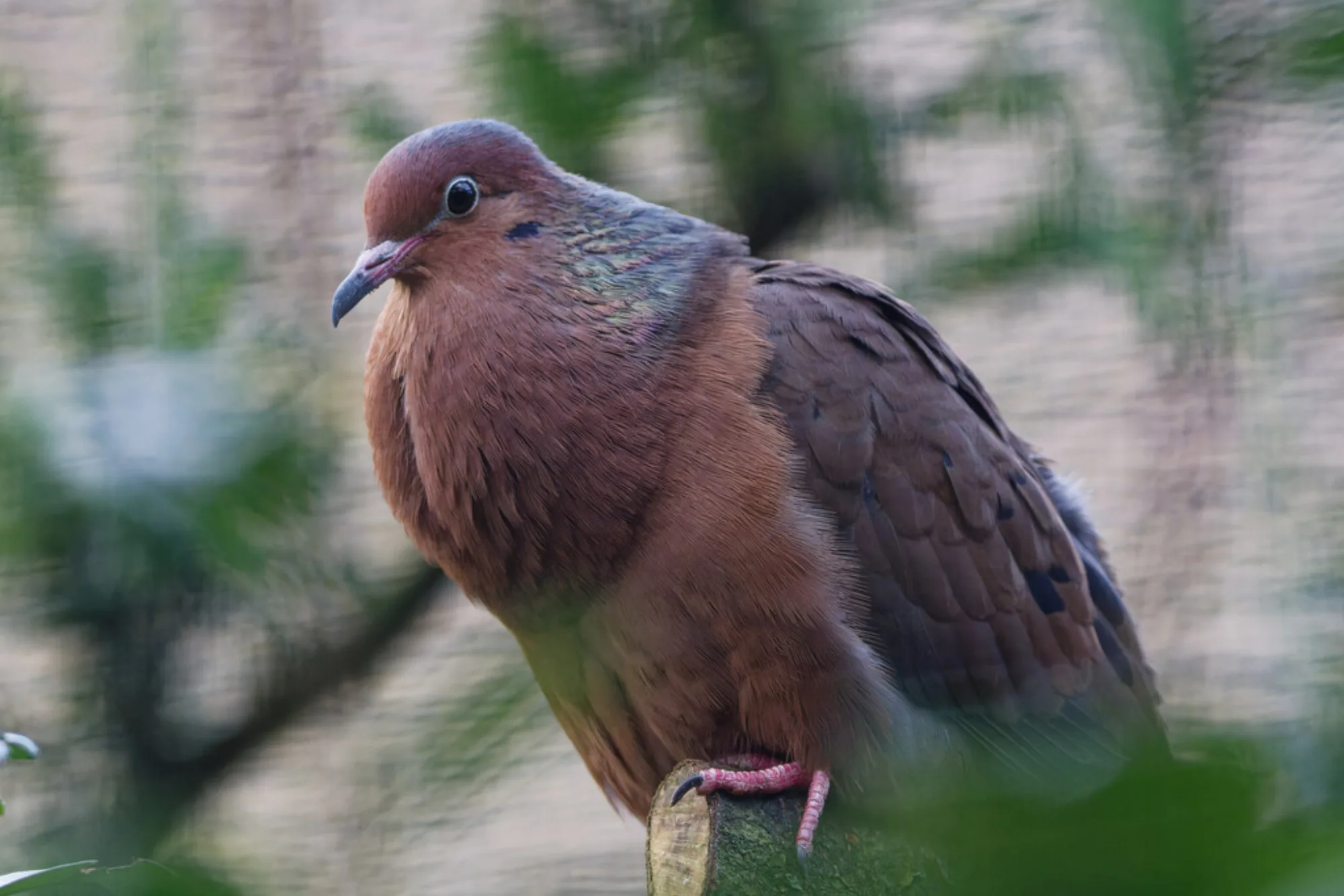
Once at home on a Mexican island, the Socorro Dove now survives only in captivity, with a reintroduction programme being prepared. It was found only on Socorro Island, in the Revillagigedo Islands off Mexico's west coast, and was last seen in its natural habitat in 1972. This medium-sized, mostly ground-dwelling dove measures 26.5 to 34 cm in length and has relatively long legs. Males have deep cinnamon heads and underparts, rufous-brown upperparts, a blue-grey nape and an iridescent pink patch on the neck. Females and young birds are slightly duller. Its call begins with a two-part coo, continues with three single calls and ends with another two-part coo.
The last place it was found was low, seasonally humid forest above 500 m, though before cats arrived it also visited the lowlands seasonally. Its former refuge included fig trees, with which the dove was often associated, and a dense understorey of spurges and ferns. The dove eats fruit and was known for keeping to itself: Grayson never saw more than a male and female together. Adults, especially males, drive their young away once they can look after themselves, and the pair then separates for a time. Little is known about breeding in the wild, but in captivity females generally lay two white eggs, which take 14 to 17 days to hatch. Feral cats were the main cause of its disappearance from the wild, while introduced sheep changed much of the island's vegetation. The birds show little fear of people or introduced predators, including cats.
Written from the English Wikipedia article Socorro dove (CC BY-SA 4.0).
- Records
- 15
- Countries
- 1
No atlas park has a record of the Socorro Dove in or around it yet.
These are open occurrence records, so they show where people looked for and recorded the Socorro Dove as much as where it lives. Cells are up to 25 km across, and every location is generalised to its cell.
Generalised encounter areas, not exact locations. Each shape is a grid cell coloured by how likely the species is there.
- Very likelyUnited States25 km zone · medium confidence · 15 records · updated 80 days ago
Conservation status not assessed here yet, so every location is generalised to its grid cell.