Kit Fox
Vulpes macrotis
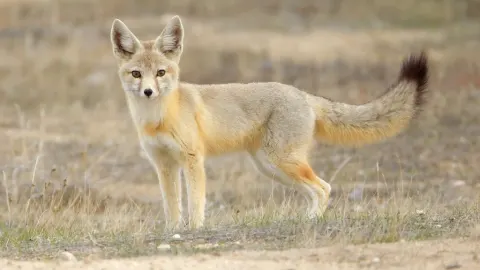
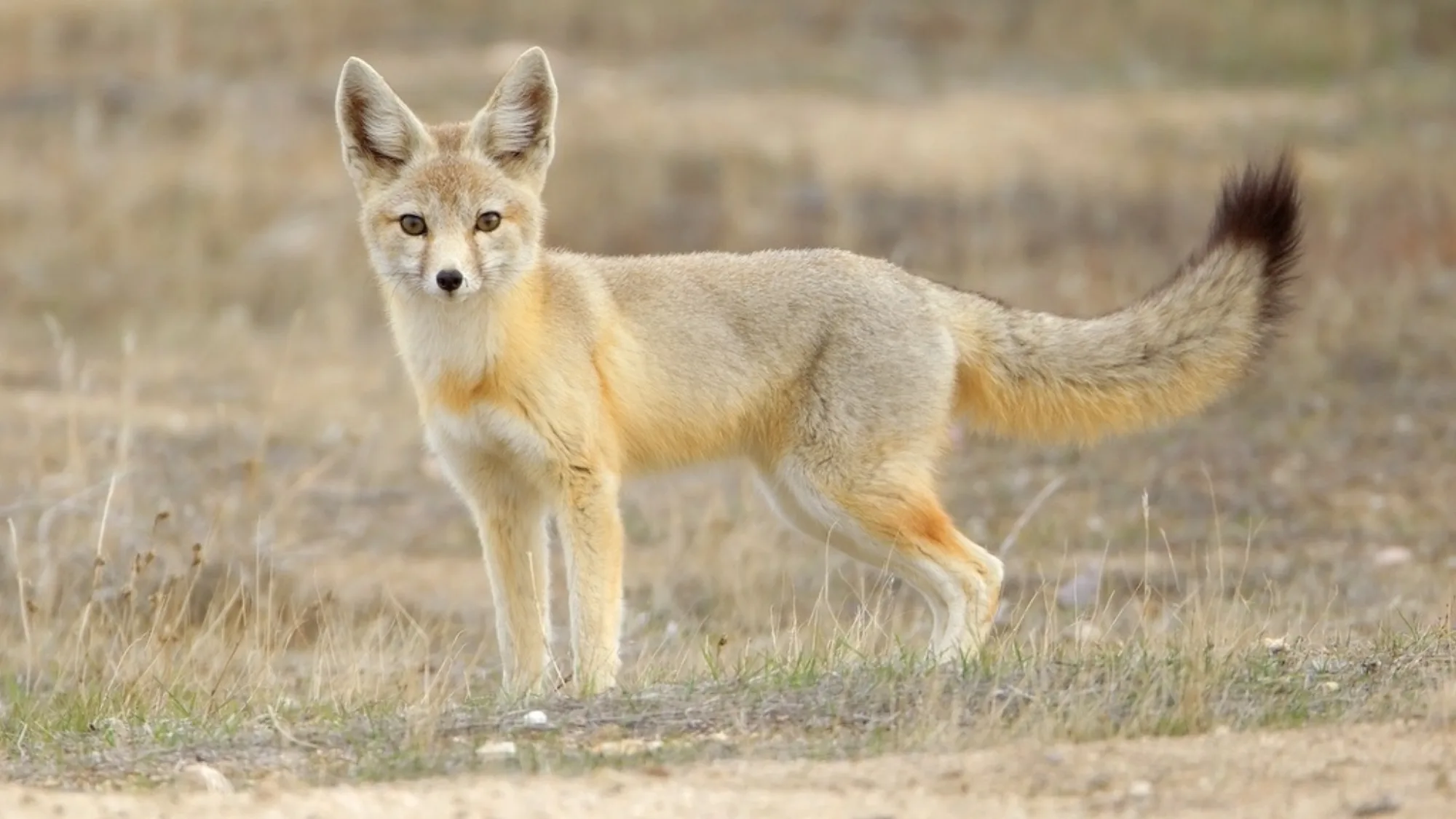
With oversized ears, a bushy black-tipped tail and a coat that ranges from yellow to grey, the Kit Fox is a small fox of dry country. Its back is usually darker than the rest of its coat, while its belly and inner ears are lighter, with dark patches around the nose. It weighs between 1.6 and 2.7 kg, and its large ears help it hear and release heat.
Its range stretches from the arid interior of Oregon through the southwestern United States to northern and central Mexico. Look for its habitat in desert scrub, chaparral and grasslands, as well as areas with salt-tolerant vegetation. It also occurs in orchards and, in small numbers, urban areas. Mainly active at night, it sometimes ventures out at dawn or dusk and rests underground during the heat of the day. Foxes dig dens or adapt other animals' burrows, and one fox typically occupies over 11 dens over the course of a year. They generally forage alone but favour life in pairs or small groups of relatives.
Kit foxes eat rodents, rabbits, insects and other prey, as well as carrion and occasionally fruit, and they sometimes cache food. A pair generally stays together year-round, and both parents help raise and protect the young. Litters are usually born in February or March, with four or five pups, which stay in the den for at least four weeks. Habitat loss is a major cause of decline in the San Joaquin population, while habitat fragmentation, road deaths and conversion of land to agriculture also threaten kit foxes.
Written from the English Wikipedia article Kit fox (CC BY-SA 4.0).
- Records
- 105
- Countries
- 2
- Atlas places
- 1
These are open occurrence records, so they show where people looked for and recorded the Kit Fox as much as where it lives. Cells are up to 25 km across, and every location is generalised to its cell.
Generalised encounter areas, not exact locations. Each shape is a grid cell coloured by how likely the species is there.
- Very likelyUnited States25 km zone · medium confidence · 91 records · updated 81 days ago
- Very likelyMexico25 km zone · medium confidence · 14 records · updated 81 days ago
Conservation status not assessed here yet, so every location is generalised to its grid cell.