Crocodile Monitor
Varanus salvadorii
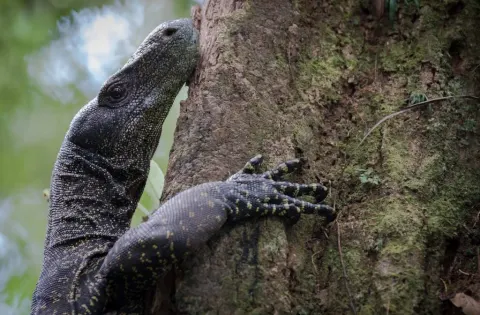
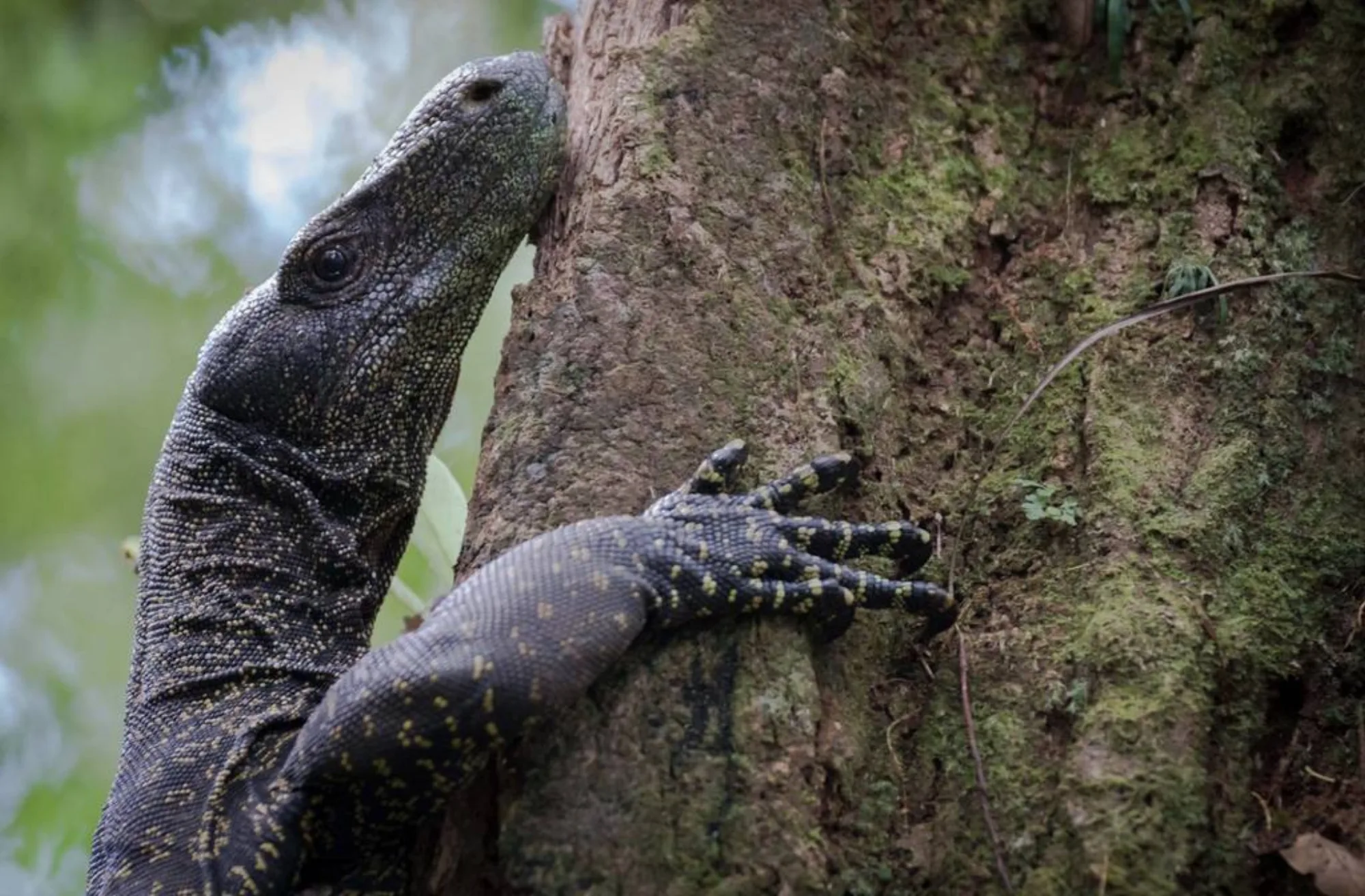
The largest lizard on the island of New Guinea, the Crocodile Monitor is a slender, arboreal predator. It is easily identified by its bulbous, blunt snout and a dark green body decorated with rings of yellow spots. While its typical length is under 200 cm, verified specimens have reached 255 cm. Its tail is exceptionally long, often measuring more than double the length of its body, and can be used as a counterbalance when the lizard leaps between branches.
These monitors inhabit the coastal mangrove swamps and lowland rainforests of Papua New Guinea and West Papua. They are exceptionally agile, capable of running up trunks and jumping through the high canopy. They hunt everything from birds and small mammals to frogs and other reptiles. Unlike many lizards, they can breathe efficiently while running, allowing them to stalk and intercept fast-moving prey. They are also known to rise up on their back legs to survey their surroundings.
Little is recorded about their life in the wild, as their remote habitat is difficult to access. In captivity, females lay clutches of four to 12 eggs between October and January, though successful breeding is rare. The species faces pressure from the clearing of forests and poaching. Local tribesmen sometimes hunt the lizards to use their skins for drums, and they are also collected for the pet trade. Despite being feared as evil spirits in local folklore, they are said to provide a warning if crocodiles are close by.
Written from the English Wikipedia article Varanus salvadorii (CC BY-SA 4.0).
- Atlas places
- 0
These are open occurrence records, so they show where people looked for and recorded the Crocodile Monitor as much as where it lives. Cells are up to 25 km across, and every location is generalised to its cell.
No encounter zones yet
Where and when you can expect to see Crocodile Monitor is calculated from observation density. No zones have been computed for this species yet.
Conservation status not assessed here yet, so every location is generalised to its grid cell.