Bottlenose Dolphin
Tursiops truncatus
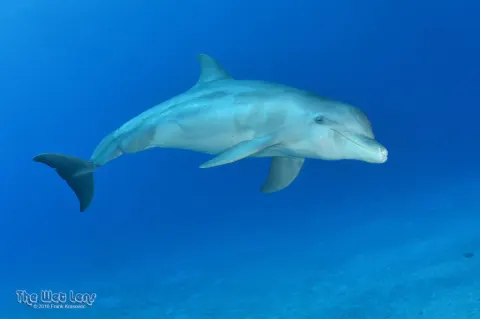
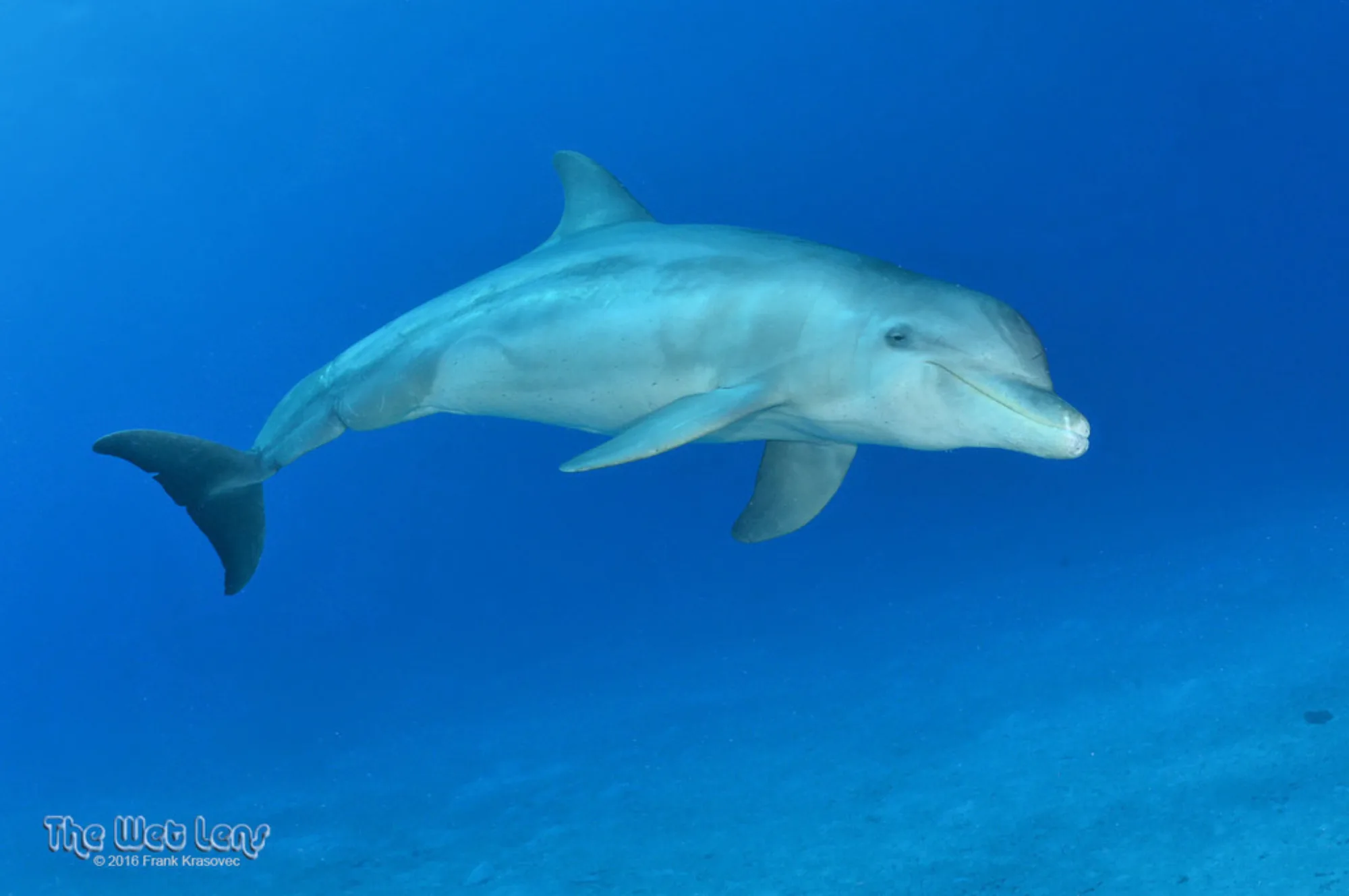
A short, well-defined beak and a hooked dorsal fin help distinguish the grey Bottlenose Dolphin (Tursiops truncatus), which reaches 2 to 4 m in length. Females tend to be smaller and lighter than males, while offshore populations tend to be larger and darker than those living near shore. The species inhabits temperate and tropical oceans around the world, avoiding polar waters. Near shore, it can be found in warm, shallow habitats such as harbours, bays, lagoons and estuaries; offshore dolphins are adapted to cooler, deeper water.
These social dolphins usually travel in pods of about 15, although groups range from pairs to more than 100, and occasionally exceed 1,000 for short periods. After feeding, particularly around midday or in the evening, they may play, call and swim together. They communicate with whistles, squeaks and pulses, as well as through postures, gestures and physical contact. Echolocation helps them find prey and navigate, and pods often work together to catch schools of fish, though individuals hunt alone too. Their diet varies by location and includes fish, eels, squid and shrimp, all swallowed whole. Breeding can take place year-round but happens mostly in spring; after a year-long pregnancy, a female gives birth to a single calf. Mothers stay with their calves for 3 to 8 years.
Threats vary with location: sharks attack dolphins, while orcas and stingrays mainly affect newborns. Dolphins are also hunted for food and can be killed accidentally in commercial fishing gear. Pollution poses another danger: oil spills have been linked to lung and reproductive disease, while toxic algal blooms can cause deaths among dolphins that eat contaminated fish.
Written from the English Wikipedia article Common bottlenose dolphin (CC BY-SA 4.0).
- Records
- 18,527
- Countries
- 16
- Atlas places
- 2
These are open occurrence records, so they show where people looked for and recorded the Bottlenose Dolphin as much as where it lives. Cells are up to 25 km across, and every location is generalised to its cell.
Generalised encounter areas, not exact locations. Each shape is a grid cell coloured by how likely the species is there.
- Very likelyUnited States25 km zone · high confidence · 12105 records · updated 80 days ago
- Very likelyFrance25 km zone · high confidence · 2548 records · updated 80 days ago
- Very likelyGuadeloupe25 km zone · high confidence · 932 records · updated 80 days ago
- Very likelyMexico25 km zone · medium confidence · 794 records · updated 80 days ago
- Very likelyFrench Polynesia25 km zone · high confidence · 640 records · updated 80 days ago
- Very likelyAustralia25 km zone · medium confidence · 349 records · updated 80 days ago
- Very likelyItaly25 km zone · medium confidence · 281 records · updated 80 days ago
- Very likelyTaiwan25 km zone · high confidence · 191 records · updated 80 days ago
- Very likelyRéunion25 km zone · medium confidence · 147 records · updated 80 days ago
- Very likelyUnited Kingdom25 km zone · high confidence · 99 records · updated 80 days ago
Conservation status not assessed here yet, so every location is generalised to its grid cell.