Song Thrush
Turdus philomelos
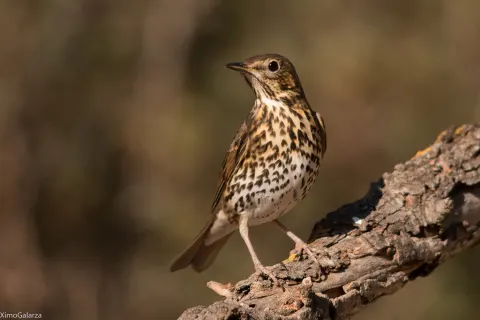
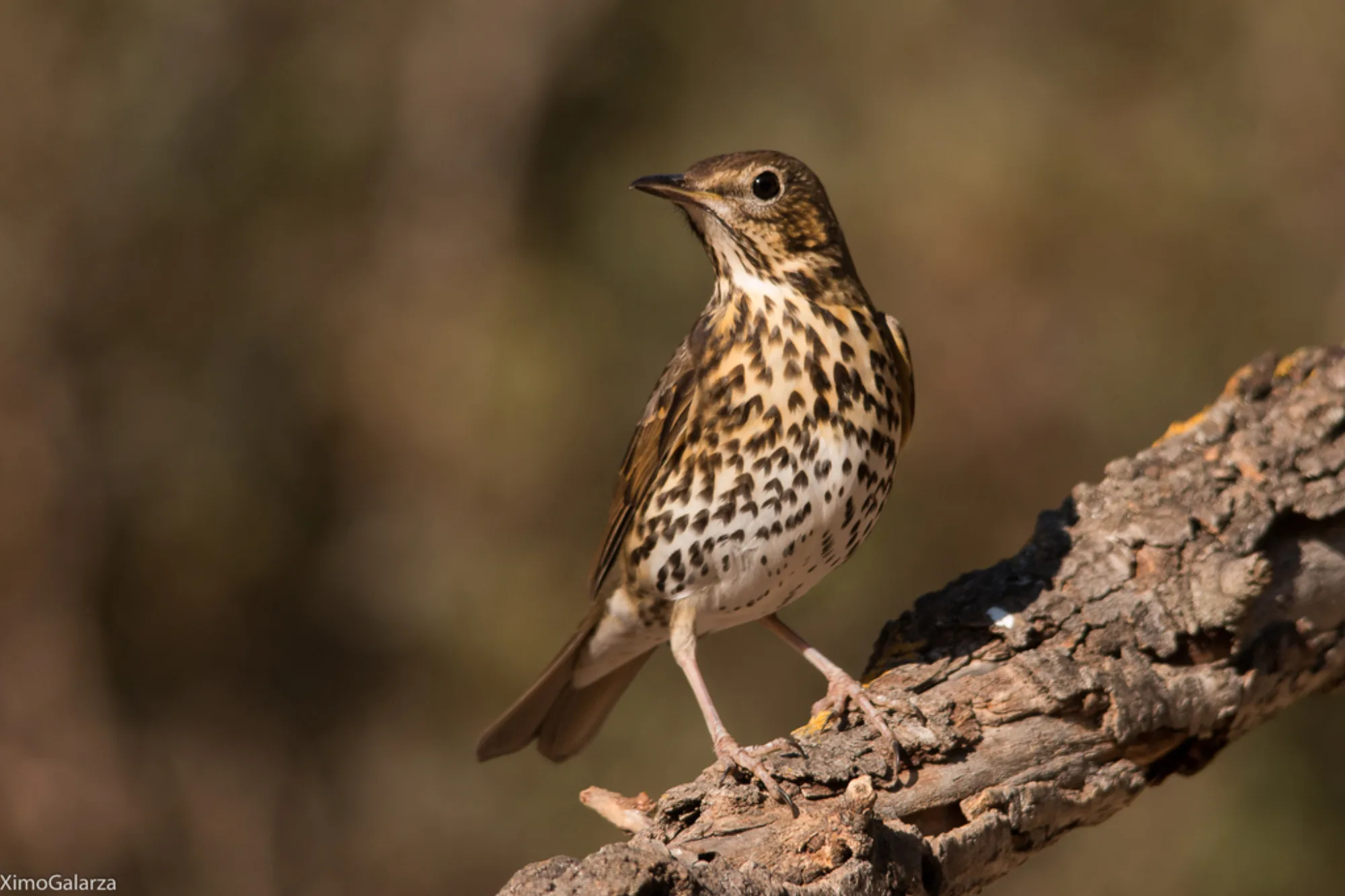
Listen for repeated musical phrases from a tree or rooftop, where a male Song Thrush delivers its loud, clear song. This brown-backed thrush has cream or yellow-buff underparts marked with black spots, a yellowish bill and pink legs. Young birds resemble adults but have buff or orange streaks on their backs and wings.
Song Thrushes breed across most of Europe and east through Ukraine and Russia almost to Lake Baikal. They use woodland with thick undergrowth and nearby open ground, as well as gardens and parks. In Great Britain, look for them among trees and bushes, including in hedgerows. Many birds from Scandinavia, eastern Europe and Russia spend winter around the Mediterranean, in North Africa and in the Middle East. Introduced populations live in New Zealand and Australia, with only a small population surviving around Melbourne in Australia.
Usually seen alone, the thrush searches open ground with a run-and-stop action and turns over leaf litter for food. It eats earthworms, snails, other invertebrates, soft fruit and berries, sometimes breaking snail shells against a favoured stone. The female builds a mud-lined cup in a bush, tree or creeper and lays four or five blue eggs with dark spots. Two or three broods a year are normal, though birds in the north may raise only one. Cats and birds of prey kill adults, while magpies, jays and grey squirrels can take eggs and nestlings. Numbers have fallen sharply in parts of Europe, particularly on farmland, where changes in farming may have reduced food and nesting sites. Poison bait used against slugs and snails in gardens may also threaten the birds.
Written from the English Wikipedia article Song thrush (CC BY-SA 4.0).
- Records
- 874,884
- Countries
- 84
- Atlas places
- 2
These are open occurrence records, so they show where people looked for and recorded the Song Thrush as much as where it lives. Cells are up to 25 km across, and every location is generalised to its cell.
Generalised encounter areas, not exact locations. Each shape is a grid cell coloured by how likely the species is there.
- Very likelyUnited Kingdom25 km zone · high confidence · 269663 records · updated 86 days ago
- Very likelyBelgium25 km zone · high confidence · 106055 records · updated 86 days ago
- Very likelyNorway25 km zone · high confidence · 105116 records · updated 86 days ago
- Very likelyNew Zealand25 km zone · high confidence · 80219 records · updated 86 days ago
- Very likelyFrance25 km zone · high confidence · 55038 records · updated 86 days ago
- Very likelyFinland25 km zone · high confidence · 44954 records · updated 86 days ago
- Very likelySweden25 km zone · high confidence · 34420 records · updated 86 days ago
- Very likelySpain25 km zone · high confidence · 23939 records · updated 86 days ago
- Very likelyGermany25 km zone · high confidence · 13297 records · updated 86 days ago
- Very likelyDenmark25 km zone · high confidence · 12688 records · updated 86 days ago
Conservation status not assessed here yet, so every location is generalised to its grid cell.