African Manatee
Trichechus senegalensis
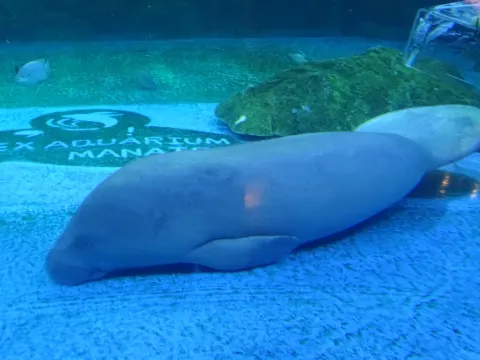
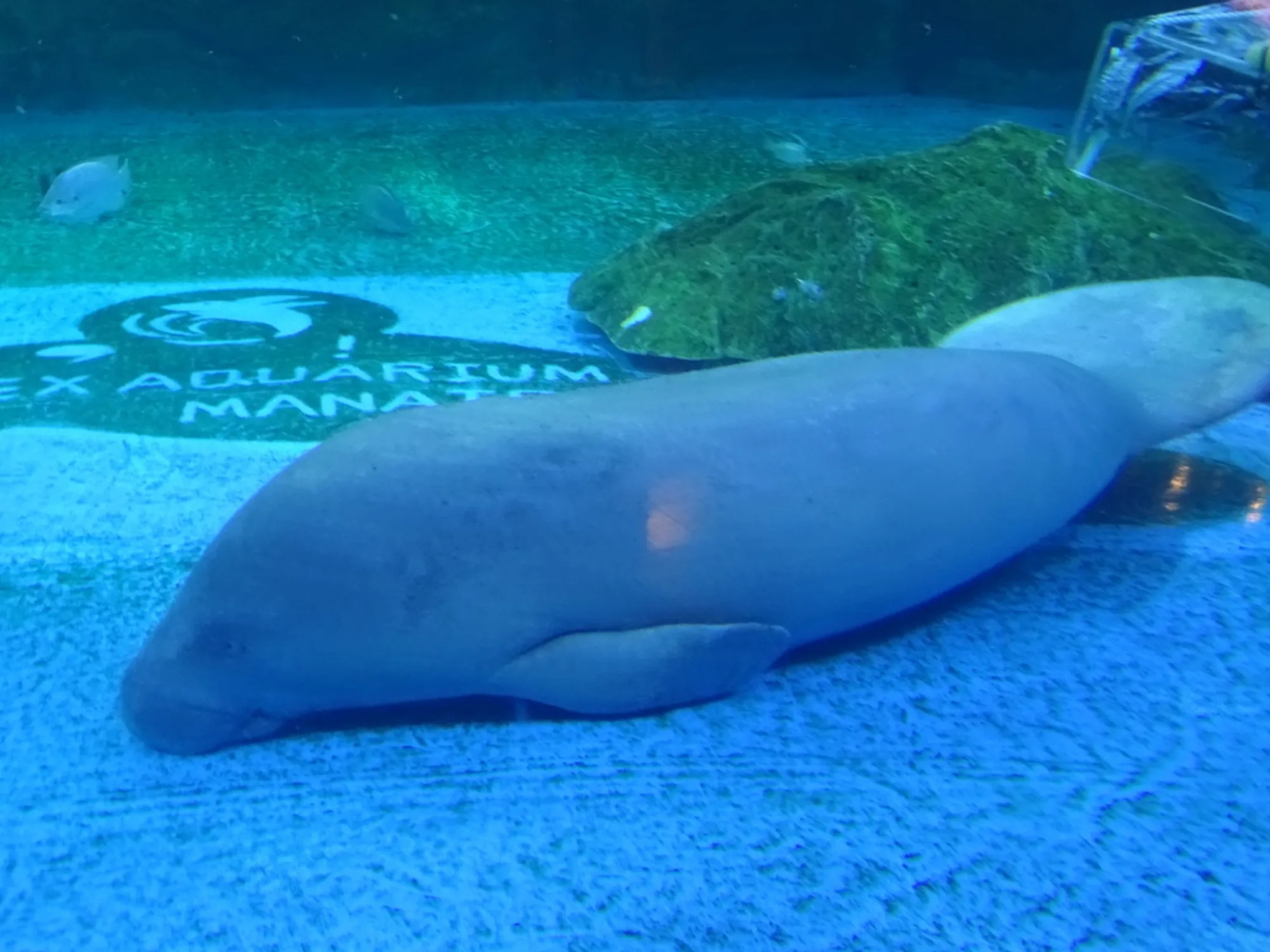
A paddle-shaped tail and a broad middle give the African Manatee its distinctive outline. Its skin is grey, although algae and other tiny organisms can make it look brown or greenish. It can reach 4.5 m in length and weighs about 360 kilograms; very young calves are darker than adults.
Its range extends along western Africa between Senegal and Angola, including coastal waters and isolated inland areas. Its habitats include rivers, lakes, estuaries, lagoons and bays, as well as shallow coastal flats and quiet mangrove creeks with seagrass. Some coastal animals move upriver during the rainy season and return downstream in the dry season. In Côte d'Ivoire, researchers tracking a sample found most in coastal lagoons, mangroves and other areas with herbaceous growth.
African Manatees are mainly active late in the day and at night, resting by day in shallow water. They usually move slowly and live in groups of 1 to 6, communicating through touch, sound and smell. Much of their food is vegetation above or overhanging the water, though they sometimes eat clams, mollusks and fish caught in nets. They breed throughout the year, and a female gives birth to one calf after a pregnancy of about 13 months. People hunt manatees for their meat, oil, bones and skin, while fishing nets and trawls can kill them accidentally. Dams can isolate populations and kill animals in turbines and intake valves; boats can also cause fatal collisions. Drought and changing tides can strand manatees, and some that travel up the Niger River starve when its waters dry up.
Written from the English Wikipedia article African manatee (CC BY-SA 4.0).
- Records
- 62
- Countries
- 2
No atlas park has a record of the African Manatee in or around it yet.
These are open occurrence records, so they show where people looked for and recorded the African Manatee as much as where it lives. Cells are up to 25 km across, and every location is generalised to its cell.
Generalised encounter areas, not exact locations. Each shape is a grid cell coloured by how likely the species is there.
- Very likelyBenin25 km zone · medium confidence · 60 records · updated 80 days ago
- PossibleSenegal25 km zone · medium confidence · 2 records · updated 80 days ago
Conservation status not assessed here yet, so every location is generalised to its grid cell.