Amazonian Manatee
Trichechus inunguis
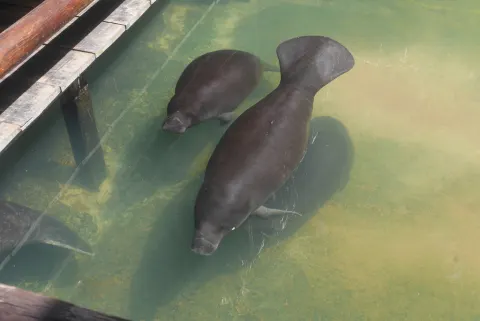
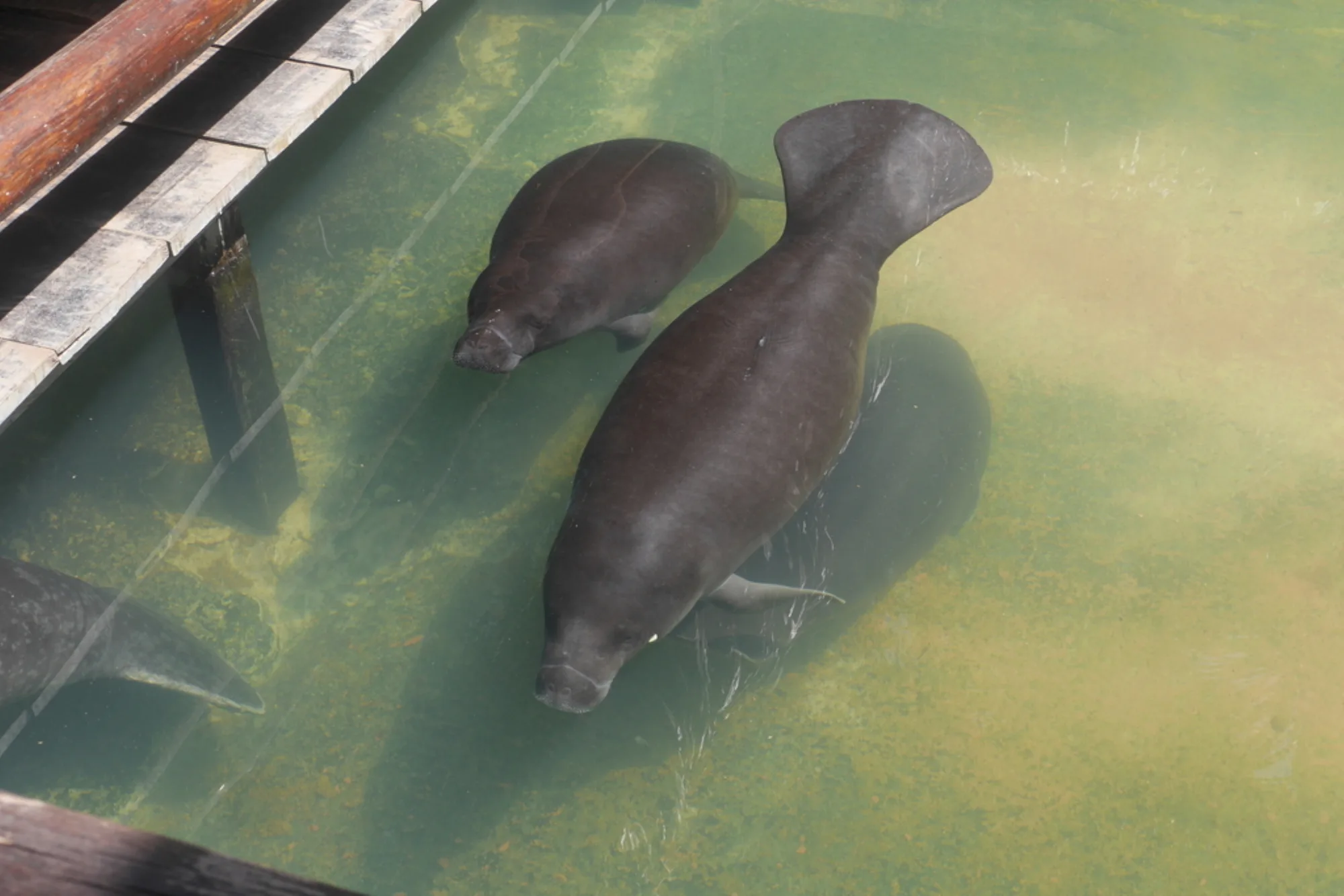
Found throughout the Amazon River drainage from the mouth in Brazil to the headwaters in Ecuador, Peru, and Colombia, the Amazonian Manatee is the only sirenian that lives solely in freshwater. This aquatic mammal is the smallest of its kind, reaching a maximum recorded weight of 379 kilograms. It is easily identified by its smooth, rubbery skin, which is typically grey or brownish with a white or pink patch on the breast. Unlike its relatives, it lacks nails on its flippers and has a straighter snout that allows it to feed efficiently on plants at the water surface.
These solitary animals are often found in shallow, calm waters like oxbow lakes and flooded forests. They are active during both day and night, though they stay almost entirely submerged. Because they have nostrils instead of blowholes, they must surface for air roughly every five minutes. Their diet consists of various aquatic vegetation, including water lilies and water hyacinths. During the dry season, they may move to deep lakes and survive for up to seven months without eating by relying on their fat reserves and a low metabolic rate.
While jaguars and caimans are natural predators, human activity is the primary threat to their survival. Illegal hunting for meat, fat, and skin remains a major problem across their range, with hunters using harpoons or traps. They also face dangers from oil spills, mercury pollution from mining, and accidental drowning in commercial fishing nets. Furthermore, deforestation leads to soil erosion that degrades the aquatic plants they need to survive.
Written from the English Wikipedia article Amazonian manatee (CC BY-SA 4.0).
- Atlas places
- 0
These are open occurrence records, so they show where people looked for and recorded the Amazonian Manatee as much as where it lives. Cells are up to 25 km across, and every location is generalised to its cell.
No encounter zones yet
Where and when you can expect to see Amazonian Manatee is calculated from observation density. No zones have been computed for this species yet.
Conservation status not assessed here yet, so every location is generalised to its grid cell.