Tench
Tinca tinca
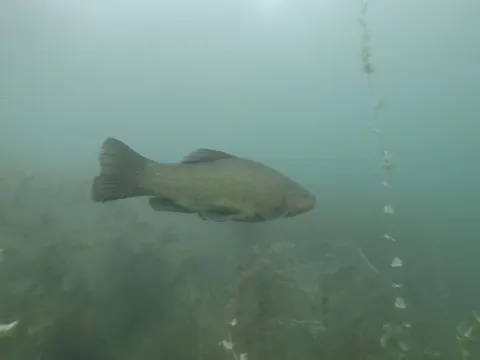
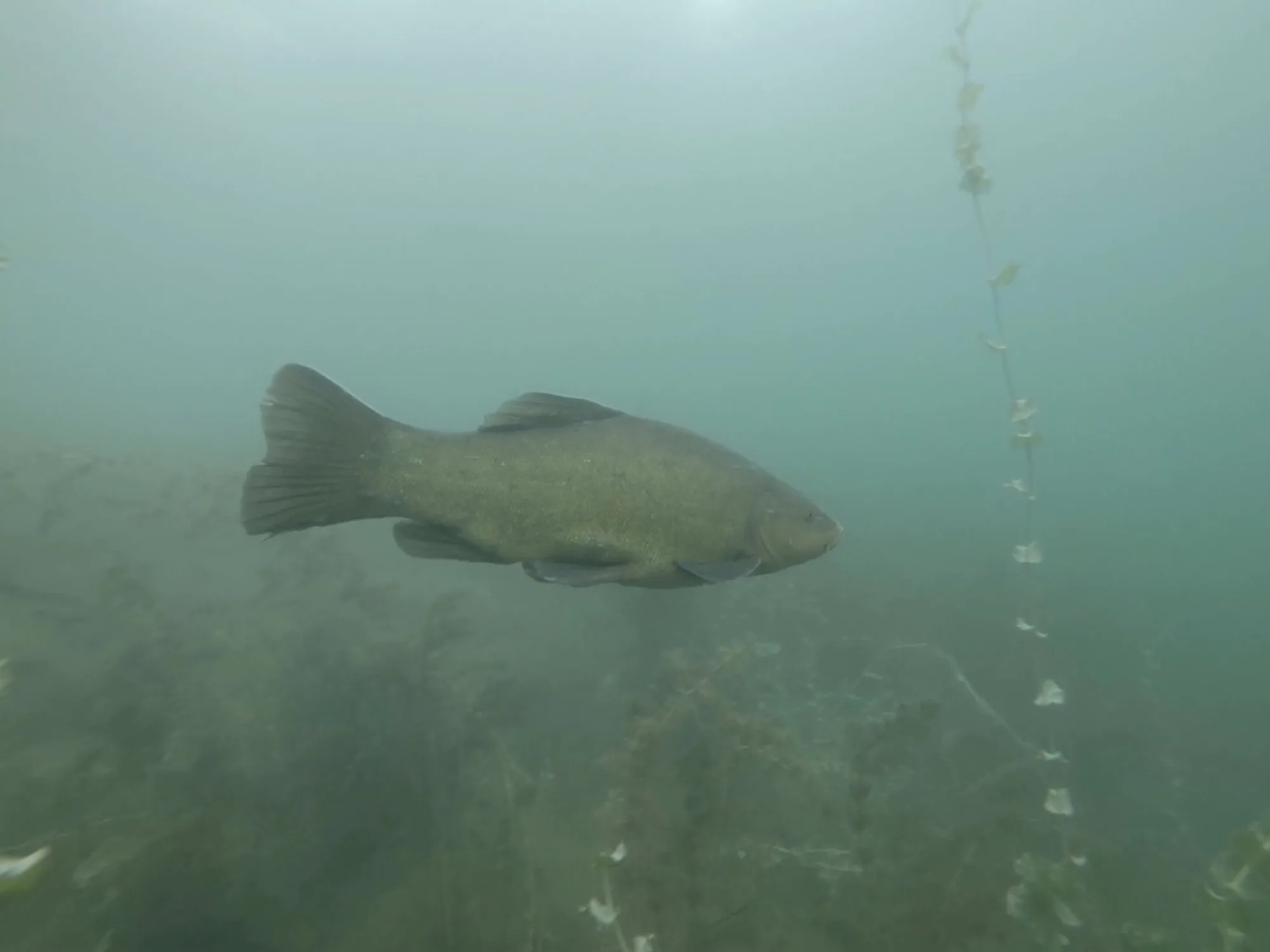
Olive-green and stocky, the Tench (Tinca tinca) has a carp-like shape, with a darker back and an almost golden underside. Its small eyes are red-orange, its tail fin is square, and its other fins are rounded. Tiny scales lie embedded in thick skin, giving the fish a slippery feel, while a small barbel sits at each corner of its narrow mouth. Tench can reach 70 cm, although most are much smaller.
Its range stretches across Eurasia, from Britain, Ireland and the rest of Western Europe to the Ob and Yenisei Rivers in Asia; it also occurs in Lake Baikal. Look for it in slow-moving fresh water, especially lakes and lowland rivers, although it also lives in brackish water. Still water with a muddy or clay bottom and plenty of vegetation is favoured. Tench are rare over stones in clear water and absent from fast-flowing streams. They can tolerate low oxygen levels, even in waters where carp cannot survive. Gravel pits can hold large individuals, as can deep, slow-moving waters with clay or silt beneath abundant aquatic plants.
Tench gather in shoals and feed mostly at night, favouring small animals. Their food includes chironomids on the bottom of nutrient-rich waters, as well as snails and pea clams among dense vegetation. Breeding usually takes place in summer, in shallow water among aquatic plants, where the fish deposit sticky green eggs. A female may produce as many as 300,000 eggs, and young fish grow rapidly. Anglers pursue Tench in rivers, lakes and canals, and the fish are edible, though not commonly eaten.
Written from the English Wikipedia article Tench (CC BY-SA 4.0).
- Records
- 80,837
- Countries
- 9
No atlas park has a record of the Tench in or around it yet.
These are open occurrence records, so they show where people looked for and recorded the Tench as much as where it lives. Cells are up to 25 km across, and every location is generalised to its cell.
Generalised encounter areas, not exact locations. Each shape is a grid cell coloured by how likely the species is there.
- Very likelySweden25 km zone · high confidence · 55194 records · updated 80 days ago
- Very likelyFrance25 km zone · high confidence · 13739 records · updated 80 days ago
- Very likelyNetherlands25 km zone · high confidence · 8152 records · updated 80 days ago
- Very likelySwitzerland25 km zone · high confidence · 1173 records · updated 80 days ago
- Very likelyUnited Kingdom25 km zone · high confidence · 1032 records · updated 80 days ago
- Very likelyCanada25 km zone · high confidence · 564 records · updated 80 days ago
- Very likelyBelgium25 km zone · high confidence · 384 records · updated 80 days ago
- Very likelyGermany25 km zone · high confidence · 331 records · updated 80 days ago
- Very likelyLuxembourg25 km zone · high confidence · 268 records · updated 80 days ago
Conservation status not assessed here yet, so every location is generalised to its grid cell.