Pygmy Tarsier
Tarsius pumilus
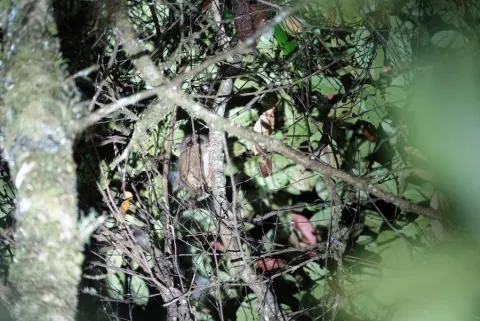
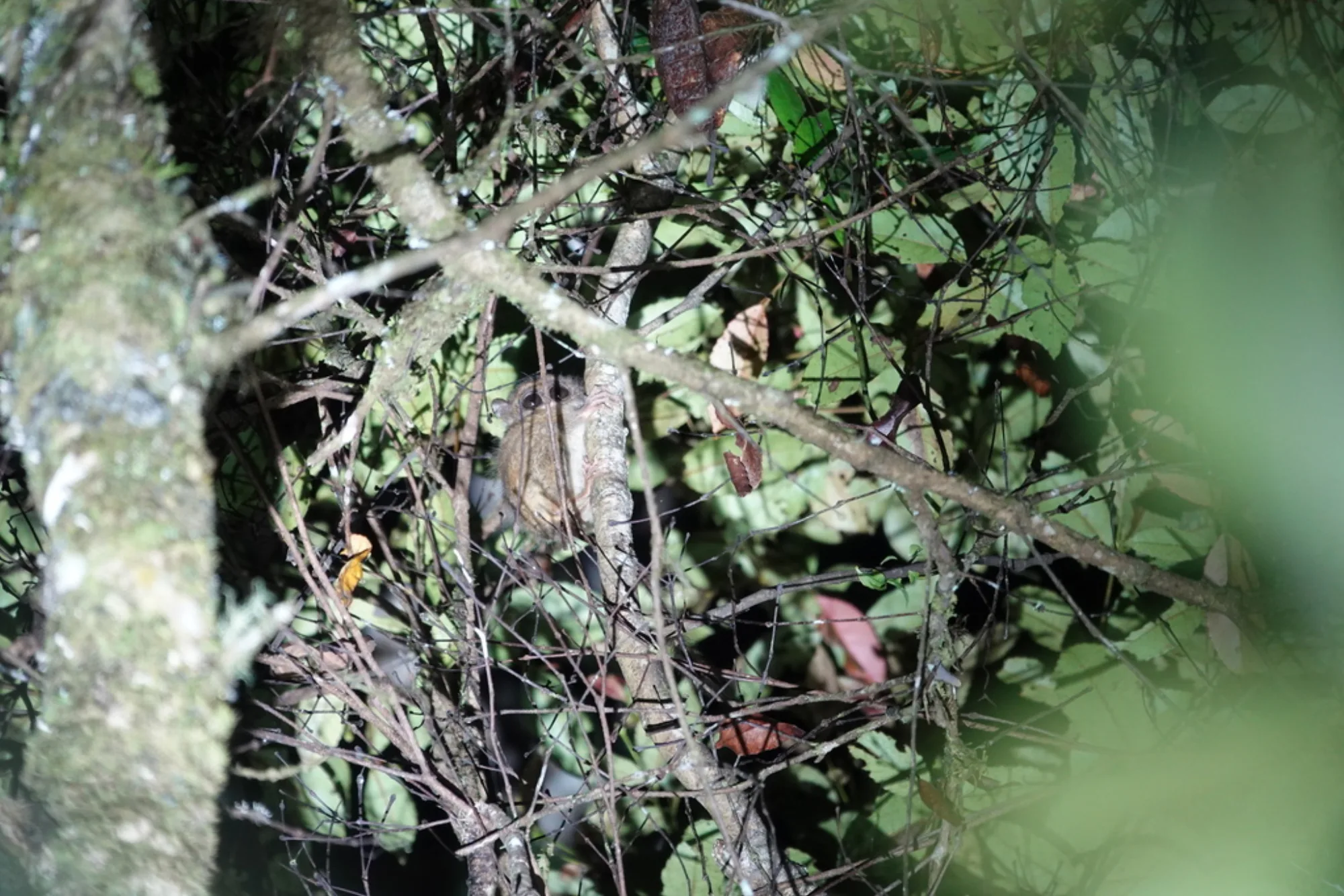
Hidden in the mossy cloud forests of central Sulawesi, the Pygmy Tarsier is a tiny primate that was once thought to be extinct. Measuring between 95 and 105 mm from head to body, this species is smaller and lighter than its relatives. Travellers should look for a creature with tan or buff fur and a long, hairy tail that reaches up to 275 mm. Its most striking features are its massive eyes, which measure 16 mm in diameter to help it see at night. Because its eyes are fixed in their sockets, the animal must rotate its neck up to 360 degrees to scan its surroundings.
These primates live at altitudes between 1,800 and 2,200 m, where the forest canopy is low and the undergrowth is dense. They prefer the edges of these mountain forests, where they find a higher abundance of moths, grasshoppers, and other insects to eat. They are active during the night or at twilight, spending their days sleeping on vertical branches without building nests. To navigate the trees, they use claw-like nails to grip branches while their tails provide balance during leaps.
Socially, these tarsiers usually form monogamous pairs that stay together for as long as 15 months. They have two breeding seasons each year, with births occurring in May and between November and December. The young develop rapidly, catching their own food by 42 days of age. While they communicate through touch, they may also use ultrasonic frequencies that humans cannot hear. Survival is difficult in their habitat because the low plant diversity leads to decreased productivity.
Written from the English Wikipedia article Pygmy tarsier (CC BY-SA 4.0).
- Atlas places
- 0
These are open occurrence records, so they show where people looked for and recorded the Pygmy Tarsier as much as where it lives. Cells are up to 25 km across, and every location is generalised to its cell.
No encounter zones yet
Where and when you can expect to see Pygmy Tarsier is calculated from observation density. No zones have been computed for this species yet.