Inshore Lizardfish
Synodus foetens
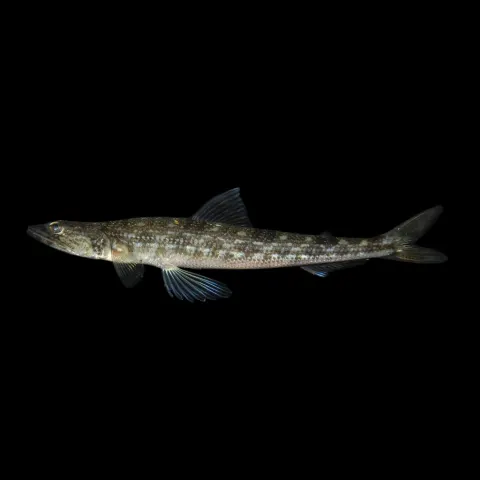
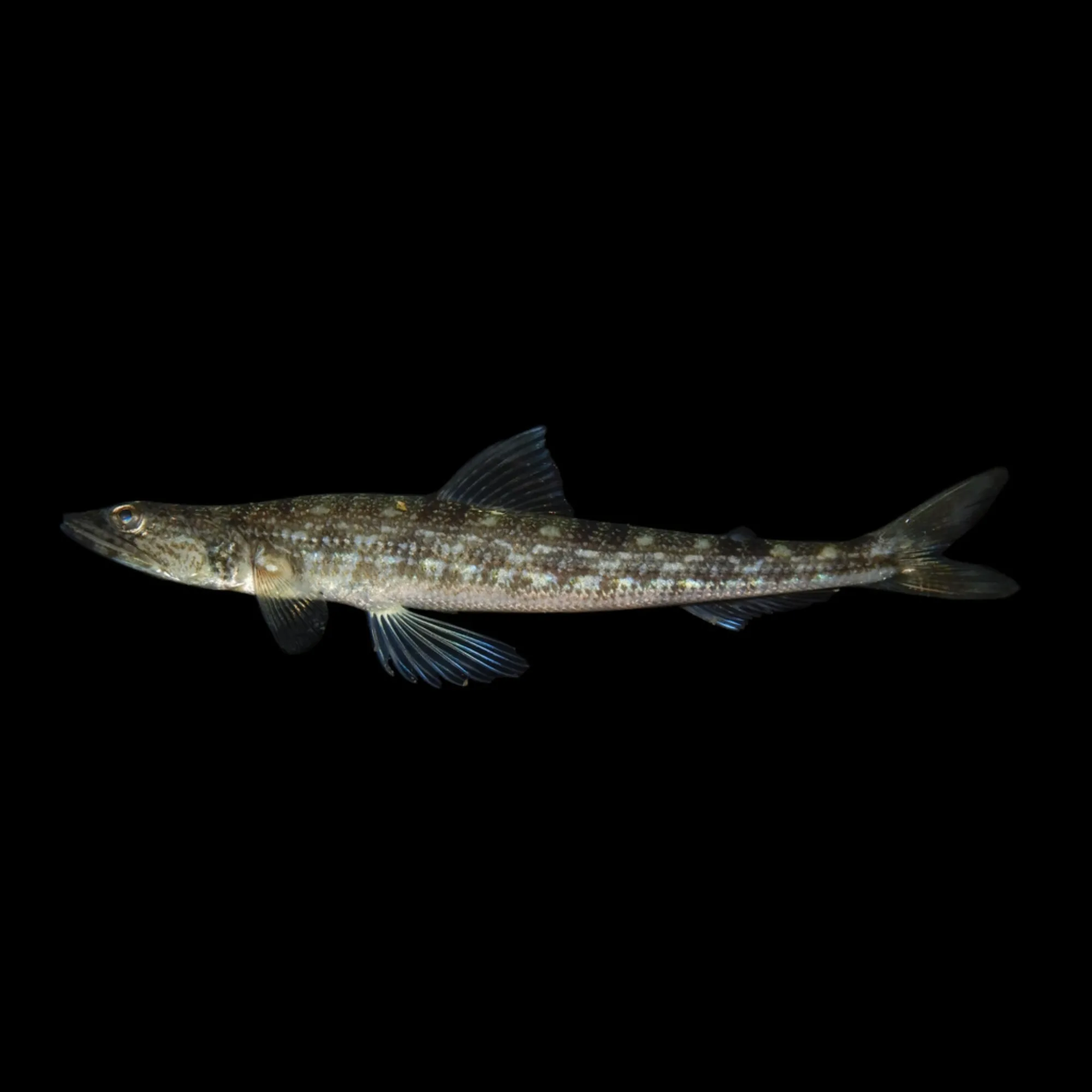
With its elongated, cigar-like body and pointed snout, the Inshore Lizardfish is built for quick swimming. Its back ranges from brown to olive, while its belly is white to yellow. Diamond-shaped patches can appear along its sides, though they usually fade as the fish grows. Young fish have dark spots that become less prominent or disappear in adults. Lengths around 40 cm are common, although the largest recorded reached about 50 cm. Mature females are generally larger than males, and the species can live for up to nine years.
In the western Atlantic, its range extends from New Jersey south along the US coast, and includes Bermuda, the Bahamas and parts of the Caribbean. Look for it near the bottom in shallow inshore waters, often over sand or mud. It also lives in creeks, rivers, estuaries, bays and lagoons, and among seagrasses. Smaller fish tend to stay closer to shore, while larger ones occur farther offshore. Adults have also been found in the open sea above continental shelves.
An ambush predator, it lunges at prey and quickly finishes it off. Smaller fish make up its main food, but it also eats animals such as shrimp, crabs, squid and sea urchins. Its diet changes with local conditions and seasons. The fish spawns throughout the year, scattering eggs in the water without guarding them; nearby plants and rocks offer the eggs protection. In the northern Gulf of Mexico, shrimp trawls often catch Inshore Lizardfish as bycatch. Many die in the trawls, and those caught are usually discarded because they have little or no commercial value.
Written from the English Wikipedia article Inshore lizardfish (CC BY-SA 4.0).
- Records
- 5,477
- Countries
- 5
- Atlas places
- 1
These are open occurrence records, so they show where people looked for and recorded the Inshore Lizardfish as much as where it lives. Cells are up to 25 km across, and every location is generalised to its cell.
Generalised encounter areas, not exact locations. Each shape is a grid cell coloured by how likely the species is there.
- Very likelyUnited States25 km zone · medium confidence · 5280 records · updated 80 days ago
- Very likelyMexico25 km zone · medium confidence · 173 records · updated 80 days ago
- LikelyBrazil25 km zone · medium confidence · 13 records · updated 80 days ago
- LikelyFrench Guiana25 km zone · medium confidence · 8 records · updated 80 days ago
- PossibleCanada25 km zone · medium confidence · 3 records · updated 80 days ago
Conservation status not assessed here yet, so every location is generalised to its grid cell.