Siamang
Symphalangus syndactylus
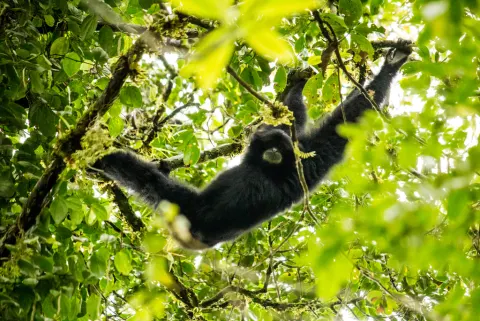
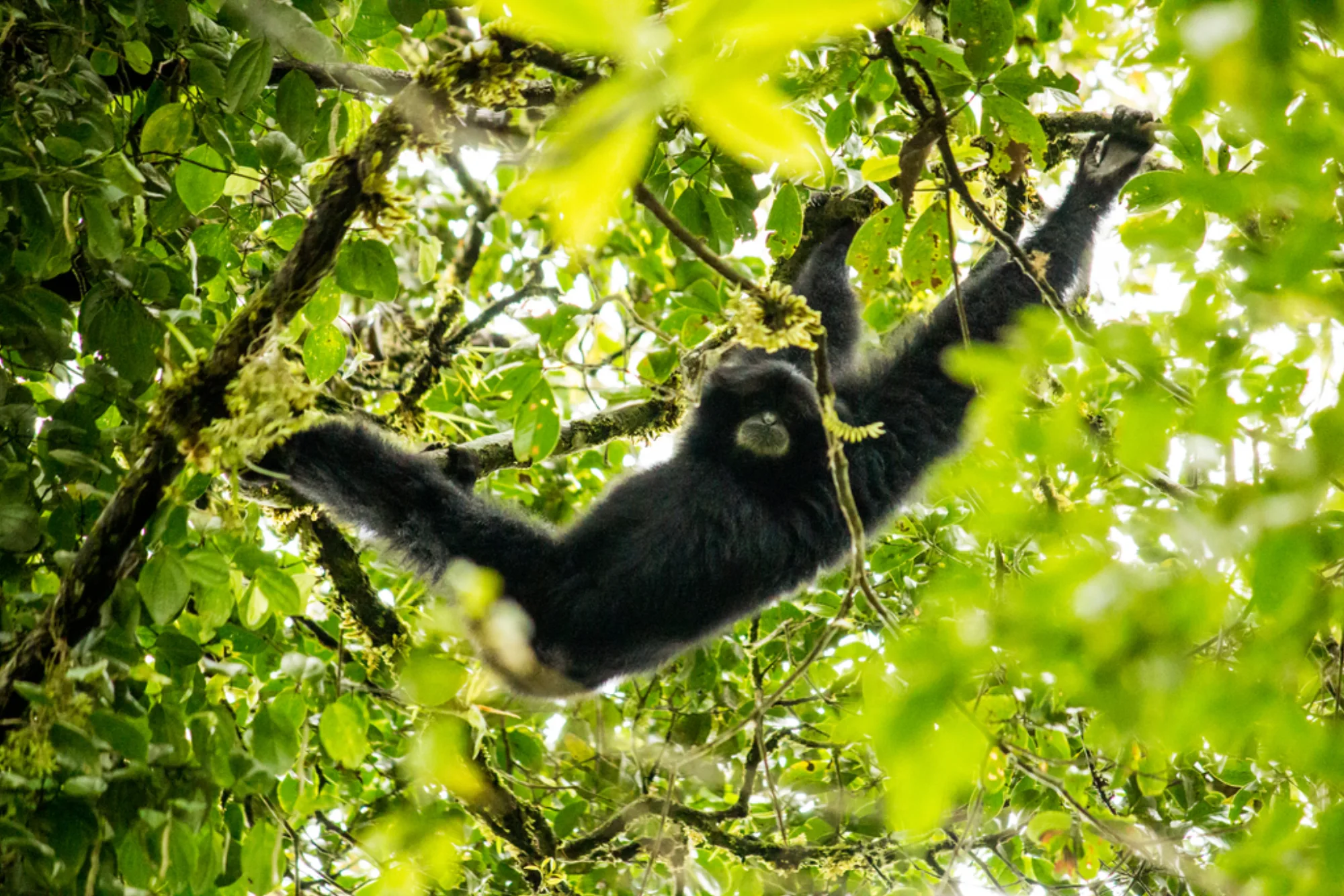
Long arms, shaggy black fur and a mostly bare face help distinguish the Siamang, the largest of the gibbons. Both males and females have a throat pouch that can swell to the size of the head and amplify their calls. Native to Indonesia, Malaysia and Thailand, this tree-dwelling ape lives in tropical rainforest. It inhabits remaining forests on Sumatra and the Malay Peninsula, from lowlands to mountains, at heights of up to 3800 m.
An early start may reward a forest visitor with the Siamang's singing, which carries through the trees in the morning. Mated pairs sing together, while loud calls also announce territory to neighbouring groups. Calling can be accompanied by branch shaking, swinging and movement through the treetops. Siamangs usually live in family groups with an adult male, an adult female and their young, sometimes accompanied by an older offspring. They spend more than half their waking hours resting, and may use midday breaks to groom or play. Their diet centres on plants, especially figs, with a preference for ripe fruit and young leaves. They also eat flowers, insects and bird eggs. Mothers care for infants during their first year, while fathers take on a major carrying role when the young are about 8 months old.
Forest loss is the principal threat, with palm oil plantations clearing large areas of habitat. Fires, illegal logging, expanding cultivation and development also break up the forest. Hunting for the illegal pet trade takes a further toll: hunters favour infants and often kill their protective mothers.
Written from the English Wikipedia article Siamang (CC BY-SA 4.0).
- Records
- 51
- Countries
- 4
- Atlas places
- 4
These are open occurrence records, so they show where people looked for and recorded the Siamang as much as where it lives. Cells are up to 25 km across, and every location is generalised to its cell.
Generalised encounter areas, not exact locations. Each shape is a grid cell coloured by how likely the species is there.
- Very likelyMalaysia25 km zone · medium confidence · 36 records · updated 80 days ago
- Very likelyIndonesia25 km zone · medium confidence · 11 records · updated 80 days ago
- LikelyUnited States25 km zone · medium confidence · 3 records · updated 80 days ago
- PossibleThailand25 km zone · medium confidence · 1 record · updated 80 days ago
Conservation status not assessed here yet, so every location is generalised to its grid cell.