Swamp Rabbit
Sylvilagus aquaticus
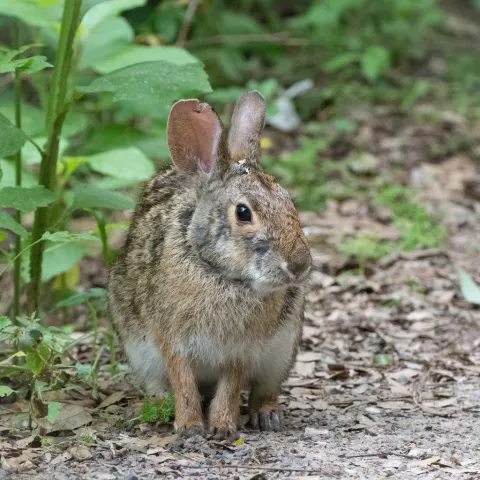
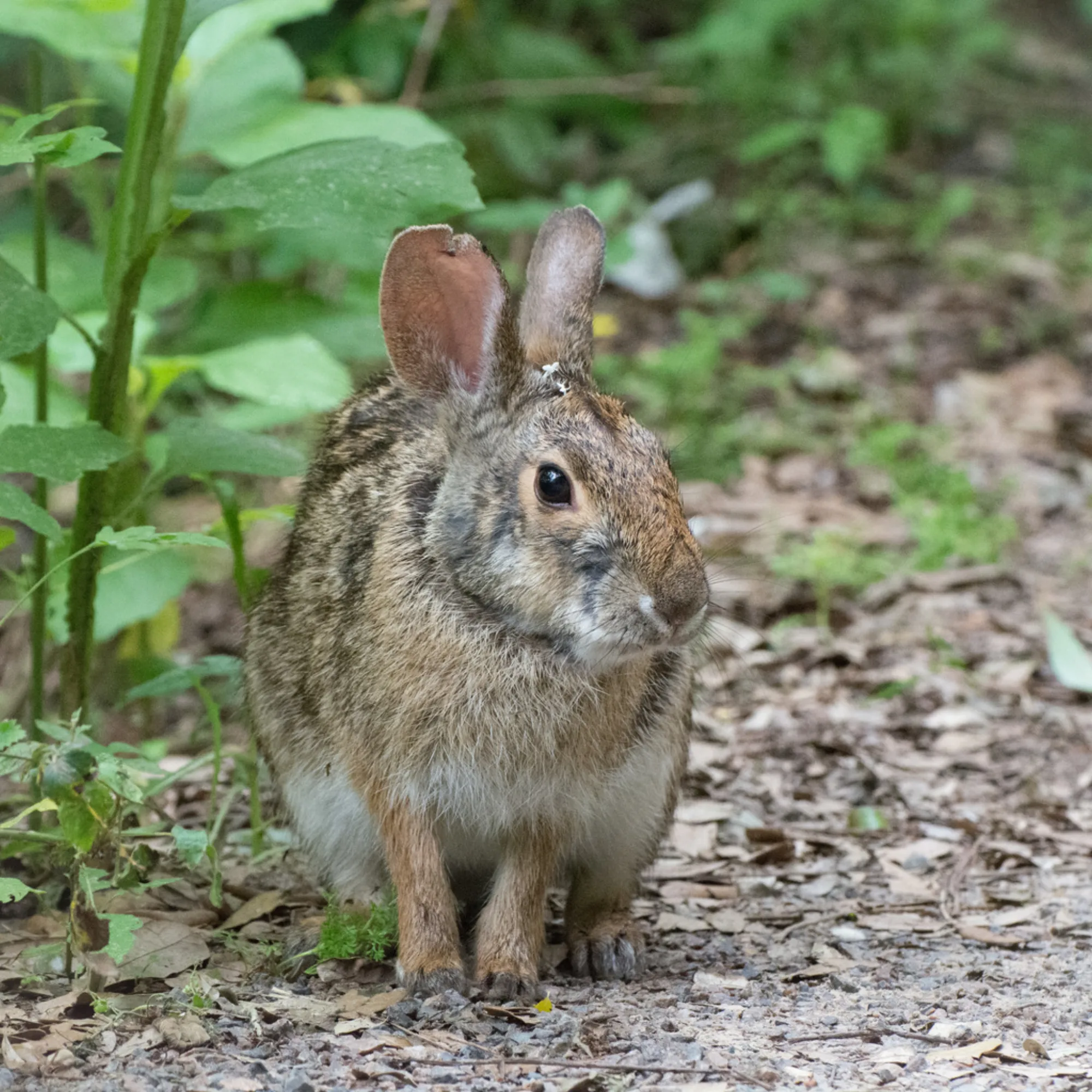
At home in southern wetlands, the Swamp Rabbit is the largest cottontail, with smaller ears than its relatives and orange colouring on the backs of its hind legs. Its head and back are usually dark or rusty brown or black, while its throat and tail are white and a cinnamon-coloured ring surrounds each eye. From the Gulf coast, its range extends through the south-central United States, with the greatest numbers in Alabama, Mississippi and Louisiana. Look for its habitat near lowland water, including cypress swamps, marshes, floodplains and river tributaries.
Secretive and mostly nocturnal, it spends much of its time in hollows dug among tall grass or leaves, emerging to forage at night or sometimes during daytime rain. Its plant diet includes grasses, sedges, shrubs, bark, seedlings and twigs. When threatened, it can escape into water, sometimes leaving only its nose and eyes above the surface. Swamp rabbits defend territories and communicate through calls and displays, although their home ranges can overlap. Females make nests in ground depressions lined with fur and grass, and each litter contains one to six young. Breeding continues year-round in Texas, while elsewhere it may occur between February and August.
Habitat loss and fragmentation have caused populations to decline, and agricultural development removes usable habitat and increases the frequency and severity of flooding. Dogs and American alligators prey on the rabbit, while feral pigs are potential predators. It is also hunted for meat, fur and sport, and can be affected by parasites and diseases including tularemia.
Written from the English Wikipedia article Swamp rabbit (CC BY-SA 4.0).
- Records
- 441
- Countries
- 1
No atlas park has a record of the Swamp Rabbit in or around it yet.
These are open occurrence records, so they show where people looked for and recorded the Swamp Rabbit as much as where it lives. Cells are up to 25 km across, and every location is generalised to its cell.
Generalised encounter areas, not exact locations. Each shape is a grid cell coloured by how likely the species is there.
- Very likelyUnited States25 km zone · medium confidence · 441 records · updated 80 days ago
Conservation status not assessed here yet, so every location is generalised to its grid cell.