Celebes Warty Pig
Sus celebensis
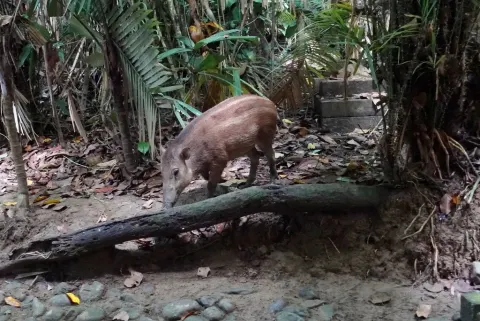
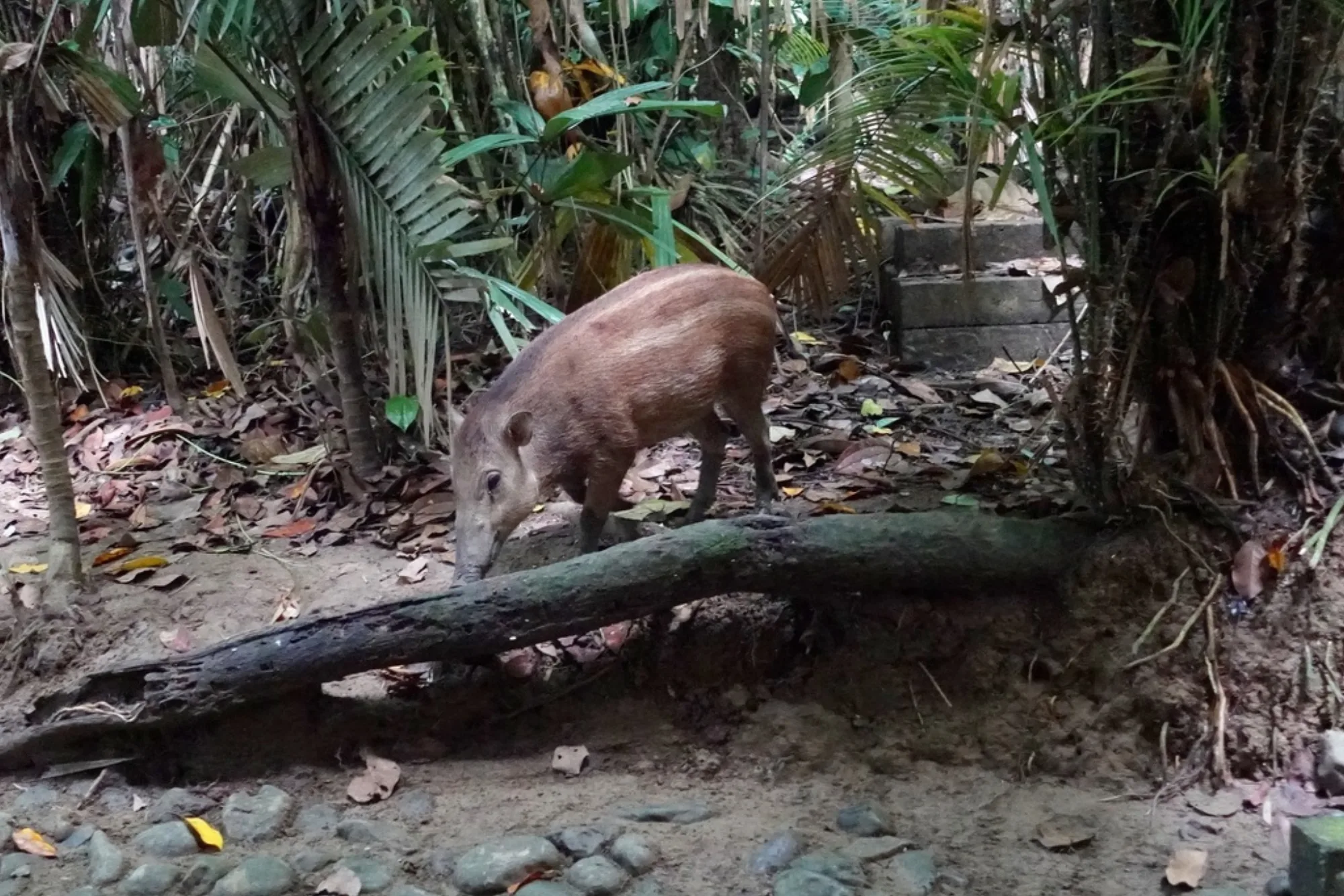
On the Indonesian island of Sulawesi, travellers may encounter the Celebes Warty Pig. This medium-sized animal is easily identified by its greyish-black coat, which sometimes shows hints of yellow or red. It has short legs, a rounded back, and a distinctive long tail ending in a tuft. On its face, you can spot three pairs of warts along with pale bristles on the snout and cheeks. A crest of dark bristles runs from the head down the spine as a stripe. While adults are solid in colour, the young piglets are marked with longitudinal stripes that disappear as they mature.
These pigs are highly adaptable, living in environments ranging from rainforests and swamps to grasslands and farms. They are found from sea level up to altitudes of 8,000 ft. You will typically see them moving in small groups of up to nine members, usually led by a single dominant male. These groups are most active during the early morning and evening when they forage for a varied diet of fallen fruit, roots, and leaves. They also consume carrion and small animals. Breeding occurs year-round, resulting in litters that can include up to eight offspring.
Despite their presence in national parks, these pigs face significant pressure from humans. Their forest homes are being cleared for agricultural use to support a growing human population. Furthermore, they are frequently hunted for their meat, which is sold in local markets. In the wild, they must also avoid natural predators such as saltwater crocodiles and large pythons. This species holds a deep history on the island; a cave painting of a male pig found on Sulawesi is at least 45,500 years old.
Written from the English Wikipedia article Celebes warty pig (CC BY-SA 4.0).
- Records
- 0
- Countries
- 1
- Atlas places
- 0
These are open occurrence records, so they show where people looked for and recorded the Celebes Warty Pig as much as where it lives. Cells are up to 25 km across, and every location is generalised to its cell.
Generalised encounter areas, not exact locations. Each shape is a grid cell coloured by how likely the species is there.
- Very likelyIndonesia25 km zone · low confidence · 0 records · updated 4 days ago
Conservation status not assessed here yet, so every location is generalised to its grid cell.