Pacific Sleeper Shark
Somniosus pacificus
Reaching 4.65 m in length, the Pacific Sleeper Shark ranks among the world's largest predatory sharks. Mature adults average 3.65 m, while newborns are about 42 cm long or less and tend to have lighter skin than adults. A parasite can often be seen feeding on the shark's eyes, impairing its sight.
Its main range lies in the northern Pacific's cooler waters, from temperate areas to the subarctic, including offshore California. Records also come from tropical waters near the Solomon Islands and Palau, as well as from the Antarctic. It occurs over continental shelves and slopes, from the surface down to 2,000 metres. Tracked sharks spent most of their time between 200 and 600 metres, with depth use slightly greater by day than by night. They move up and down through the water in search of food, using stealth and ambush when hunting.
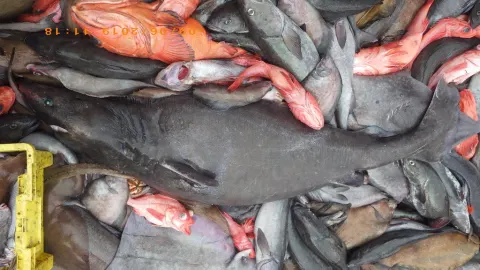
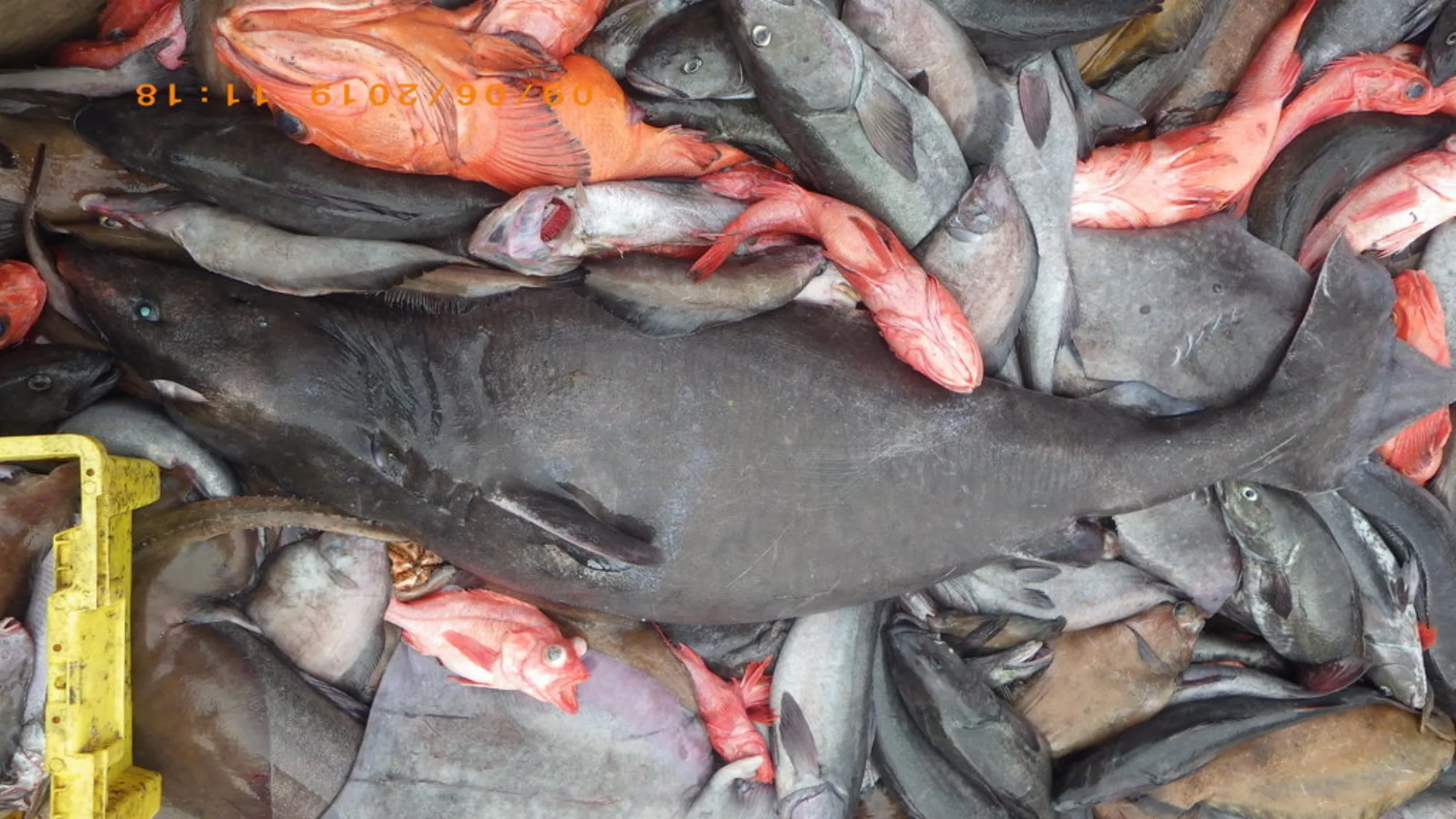
Despite a sluggish reputation, the Pacific Sleeper Shark is both a hunter and a scavenger, able to glide with little body movement or noise. Its diet varies with location and includes fish such as Pacific salmon and walleye pollock, as well as squid and giant Pacific octopus. Little is known about its early life, but the young are thought to hatch from eggs inside the female. Although fisheries do not generally target it, the shark is often caught accidentally, particularly in bottom trawls and on longlines. Its slow growth, late maturity and relatively low reproductive rate make it vulnerable to overfishing, and evidence points to regional population declines. Some caught sharks are released, but their survival is uncertain and depends partly on the gear and handling involved.
Written from the English Wikipedia article Pacific sleeper shark (CC BY-SA 4.0).
- Records
- 2,774
- Countries
- 1
- Atlas places
- 1
These are open occurrence records, so they show where people looked for and recorded the Pacific Sleeper Shark as much as where it lives. Cells are up to 25 km across, and every location is generalised to its cell.
Generalised encounter areas, not exact locations. Each shape is a grid cell coloured by how likely the species is there.
- Very likelyUnited States25 km zone · medium confidence · 2774 records · updated 80 days ago
Conservation status not assessed here yet, so every location is generalised to its grid cell.