Red Drum
Sciaenops ocellatus
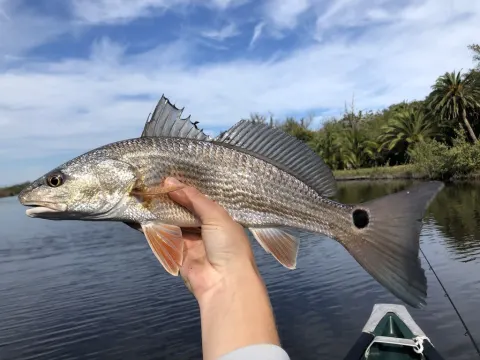
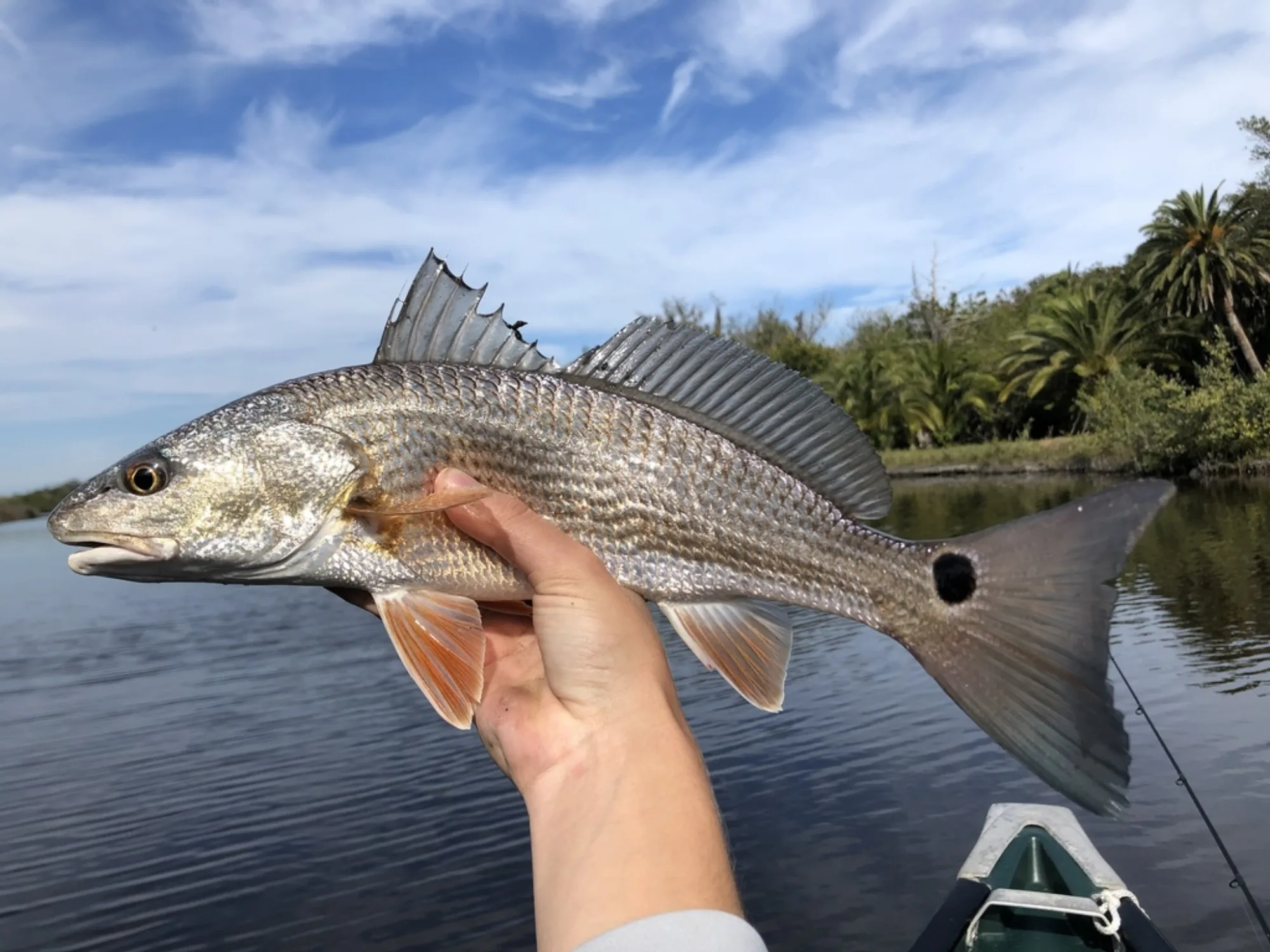
A dark red back fading to a white belly gives the Red Drum its colour, but the clearest mark is a large black spot at the base of its tail. Some have several spots, while a fish without one is extremely rare. Its body is somewhat streamlined, and three-year-olds typically weigh 2.7 to 3.6 kg. Red Drum live in Atlantic waters between Massachusetts and Florida, and across the Gulf of Mexico as far south as northern Mexico. Young fish favour grassy marshes in bays and estuaries, where these are available. Older fish favour rocky outcrops and jetties, as well as oil rigs and bridge posts, and can be found at different depths around these structures.
Red Drum search for food on the bottom by sight and touch, sucking it up or biting it. They also look for food in the middle and upper parts of the water. Adult diets change with the seasons: crabs, shrimp and mullet are summer and autumn foods, while menhaden, mullet and several other fish are eaten mainly in spring and winter. Mature fish spawn near shore from mid-August to mid-October, including around estuary entrances and channels beside barrier island beaches. Males make a drumming sound during spawning to attract females. Eggs hatch after 24 hours, and larvae likely use tidal currents to reach nursery habitats in creeks and shallow salt marshes. Red Drum can live for 60 years.
Fishing has placed pressure on the species, which is prized by recreational anglers and has also been taken commercially. Restrictions on both kinds of fishing have allowed populations to rebuild, and states adjust catch and size limits to help maintain them.
Written from the English Wikipedia article Red drum (CC BY-SA 4.0).
- Records
- 23,456
- Countries
- 4
- Atlas places
- 1
These are open occurrence records, so they show where people looked for and recorded the Red Drum as much as where it lives. Cells are up to 25 km across, and every location is generalised to its cell.
Generalised encounter areas, not exact locations. Each shape is a grid cell coloured by how likely the species is there.
- Very likelyUnited States25 km zone · high confidence · 23441 records · updated 80 days ago
- LikelyMexico25 km zone · medium confidence · 6 records · updated 80 days ago
- LikelyTaiwan25 km zone · medium confidence · 6 records · updated 80 days ago
- PossibleChina25 km zone · medium confidence · 3 records · updated 80 days ago
Conservation status not assessed here yet, so every location is generalised to its grid cell.