Red-crested Tree-rat
Santamartamys rufodorsalis
This rare rodent is found only in an isolated mountainous region of coastal Colombia. Known as the Red-crested Tree-rat, it is endemic to the Sierra Nevada de Santa Marta, where it occupies habitats at elevations between 700 and 2,000 meters. This area is recognized for its high levels of biodiversity and unique environmental conditions.
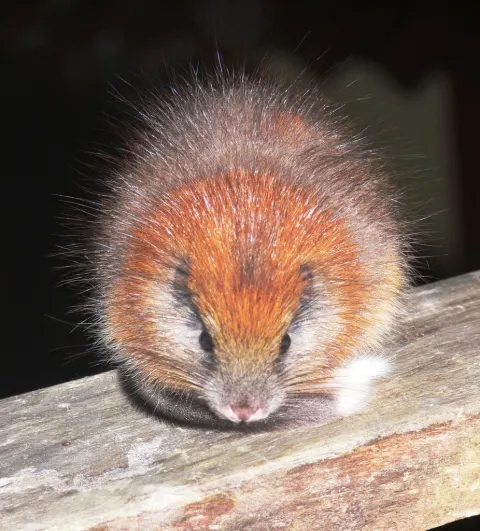
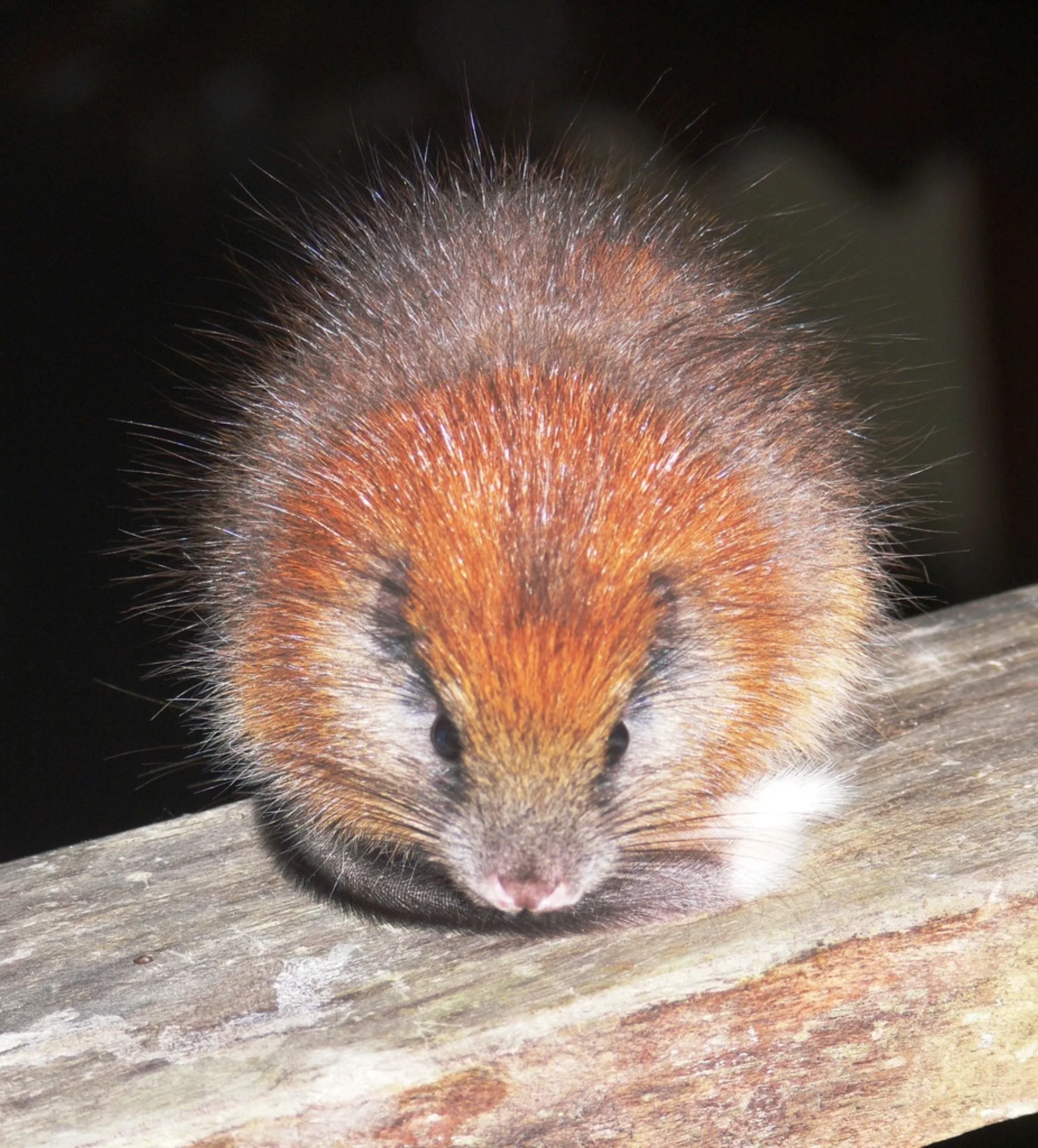
Adults are easily identified by a soft, long coat of intense red fur, though young specimens start with a grey coat. They grow to approximately 51 cm from the head to the end of the tail, with the final two-fifths of the tail being white. These rodents possess large eyes and small, light brown ears with internal hair tufts. Their long, thin whiskers can reach 13 cm in length, and a distinctive strip of red fur circles the neck.
Active at night, this species is capable of climbing vertical wooden surfaces with ease. While its specific diet remains unconfirmed, it is thought to eat plant matter like seeds or fruits. The animal is remarkably elusive; after sightings in 1898 and 1913, it was not seen again until a single individual was photographed in a nature reserve in 2011. This specimen was notably silent during the encounter. The survival of the species is currently pressured by the clearing of forests within its limited range. Additionally, the local environment faces degradation from climate change and the presence of feral cats that prey on native wildlife.
Written from the English Wikipedia article Red-crested tree-rat (CC BY-SA 4.0).
- Atlas places
- 0
These are open occurrence records, so they show where people looked for and recorded the Red-crested Tree-rat as much as where it lives. Cells are up to 25 km across, and every location is generalised to its cell.
No encounter zones yet
Where and when you can expect to see Red-crested Tree-rat is calculated from observation density. No zones have been computed for this species yet.