Walleye
Sander vitreus
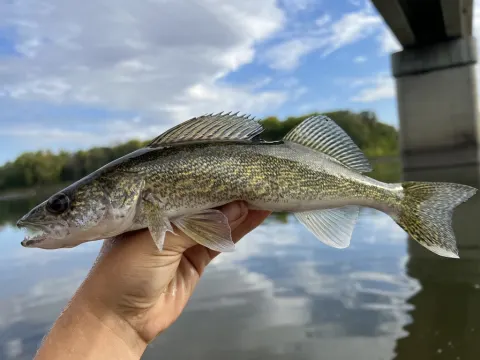
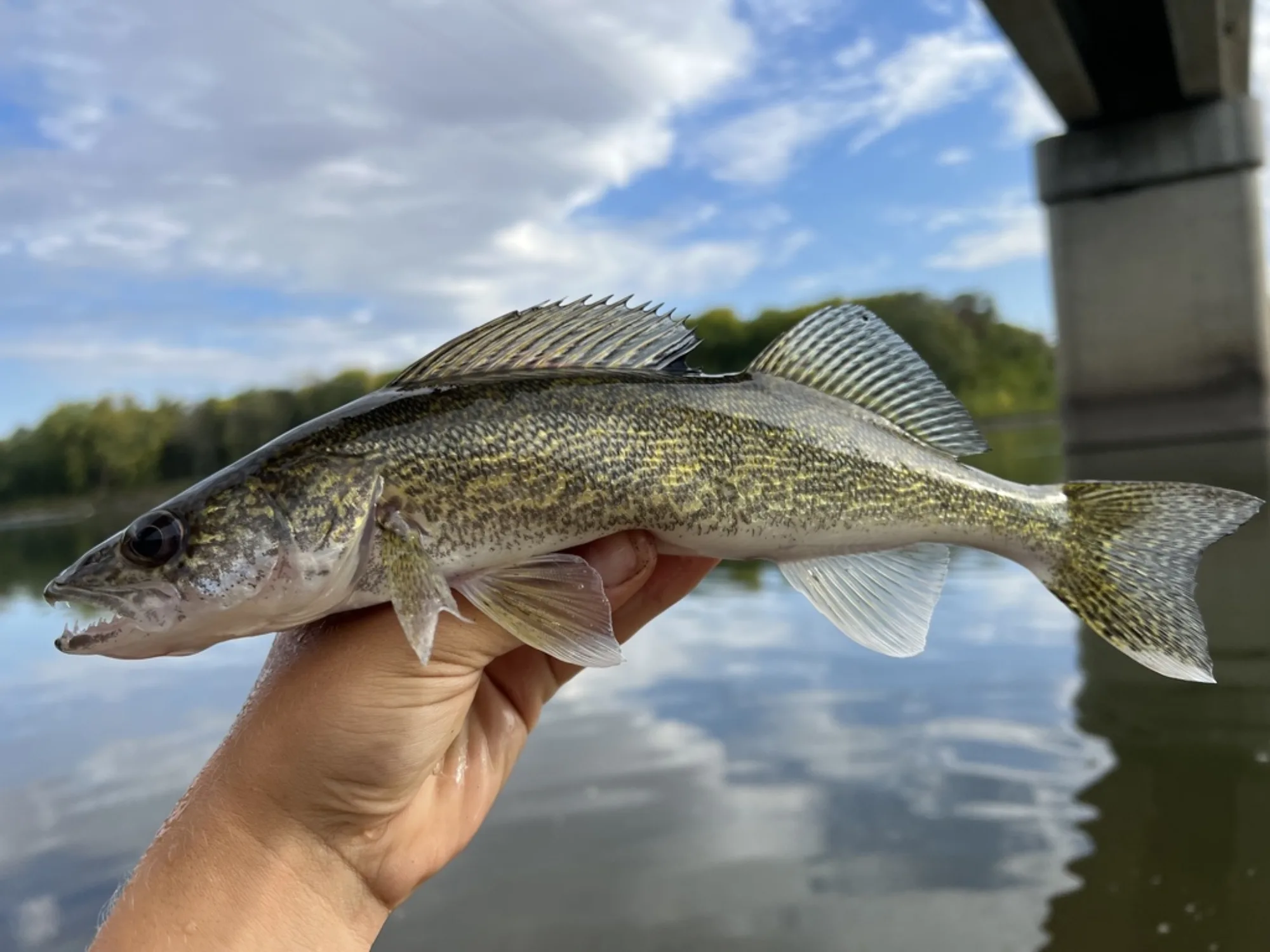
Pearlescent eyes give the Walleye its name and help it see when the light is low. This freshwater fish has an olive back that fades to gold along its sides, five dark markings across its upper body and a white belly. Look for the white on the lower part of its tail, a feature that distinguishes it from its close relative, the sauger. Walleyes grow to about 80 cm long and can weigh up to about 9 kg, although their recorded maximum size is larger.
Native to most of Canada and the northern United States, the Walleye lives in lakes, rivers and reservoirs across its range. Its eyes give it an advantage in murky or rough water, and it can also occupy deeper parts of lakes. In the warmest part of summer and at night, it can often be found in deeper water. Feeding activity increases around sunrise and sunset, under cloudy skies and when the water is choppy; in dark or turbid water, walleyes may feed throughout the day. Young fish begin by eating invertebrates, including fly larvae and zooplankton, before switching largely to fish; older walleyes also eat crayfish, minnows and leeches.
In late winter or early spring, adults migrate into tributary streams to lay eggs over gravel and rock, though some populations spawn on reefs, shoals, sand or vegetation. The parents do not care for the eggs or young. Walleyes are caught both commercially and for recreation, and fishing is managed in many places to prevent populations from being overexploited. In heavily fished populations, few fish older than five or six years are encountered.
Written from the English Wikipedia article Walleye (CC BY-SA 4.0).
- Records
- 39,668
- Countries
- 2
No atlas park has a record of the Walleye in or around it yet.
These are open occurrence records, so they show where people looked for and recorded the Walleye as much as where it lives. Cells are up to 25 km across, and every location is generalised to its cell.
Generalised encounter areas, not exact locations. Each shape is a grid cell coloured by how likely the species is there.
- Very likelyUnited States25 km zone · high confidence · 39546 records · updated 80 days ago
- LikelyCanada25 km zone · medium confidence · 122 records · updated 80 days ago
Conservation status not assessed here yet, so every location is generalised to its grid cell.