Pink-headed Duck
Rhodonessa caryophyllacea
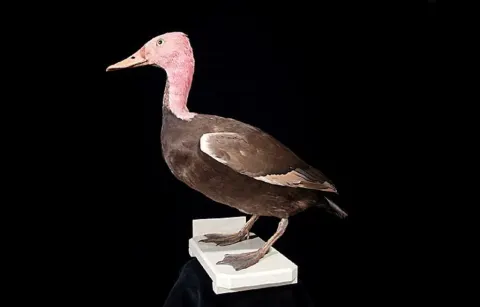
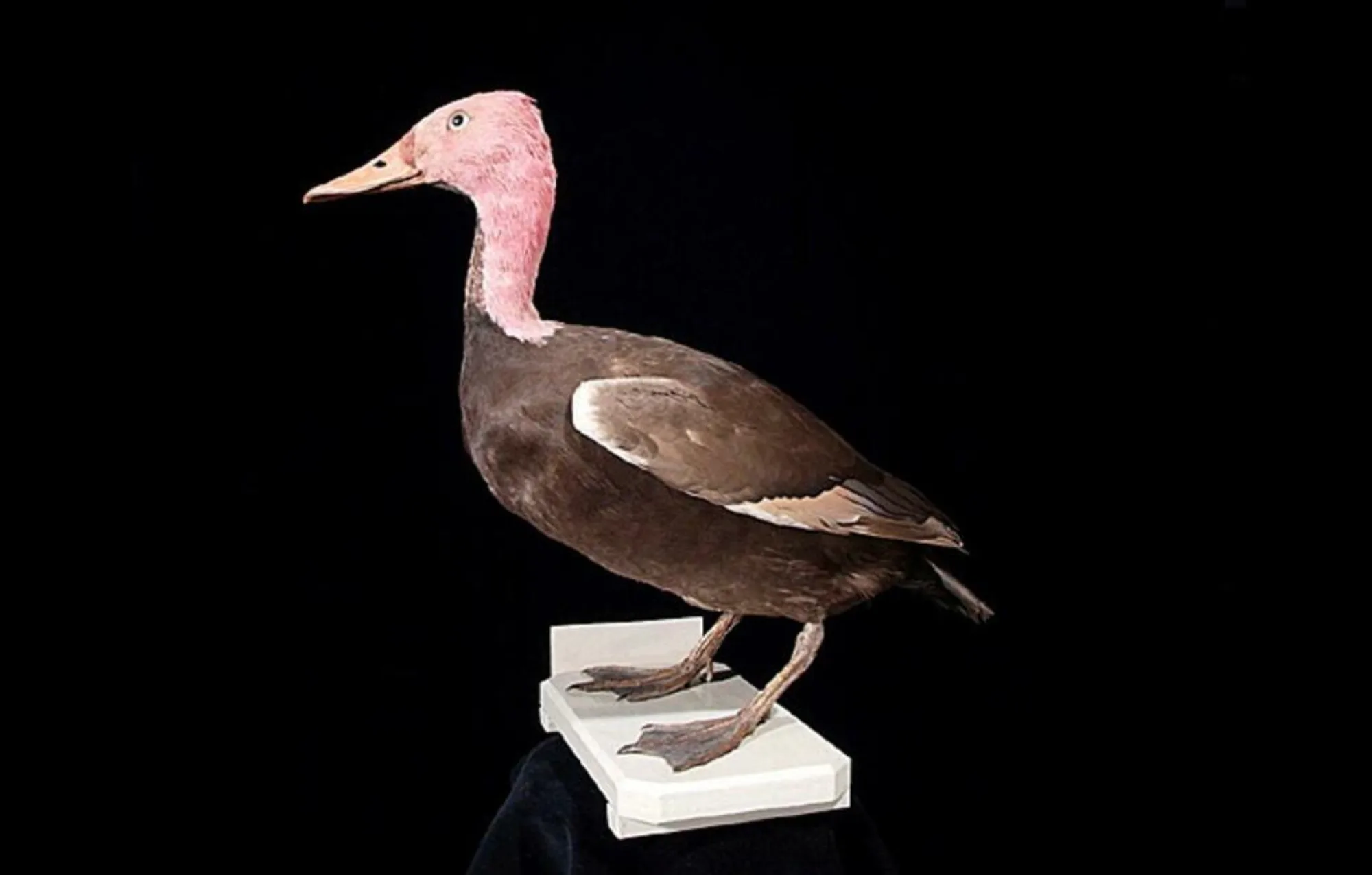
The Pink-headed Duck is a unique diving bird defined by its dark body and deep pink head and neck. Growing to about 41 to 43 cm, both sexes have long necks and peaked heads. While the male has a pink bill, the female possesses a paler bill and a lighter pinkish head. In flight, their wings show a pale pinkish-beige patch on the secondaries. These ducks were historically found singly or in pairs, though they occasionally gathered in small groups. They typically fed by up-ending or dabbling for water plants and molluscs.
This species once inhabited the riverine swamps of Myanmar and the lowland marshes of India, Bangladesh, and Nepal. Its preferred breeding habitat consists of pools and marshes within tall-grass jungle, where it builds a nest among the grass. The eggs are particularly distinctive, being creamy white and nearly spherical. They measure between 1.71 and 1.82 inches in length.
Feared extinct since the 1950s, the bird has not been confirmed in the wild since 1935. Its decline was likely caused by the destruction of its habitat. During colonial times, hunters frequently scoured the region and sought the bird for its unusual plumage. It was also popular as an ornamental bird for aviaries. Although recent expeditions in northern Myanmar have failed to find the duck, some believe it may still survive in inaccessible, unexplored swamp regions.
Written from the English Wikipedia article Pink-headed duck (CC BY-SA 4.0).
- Atlas places
- 0
These are open occurrence records, so they show where people looked for and recorded the Pink-headed Duck as much as where it lives. Cells are up to 25 km across, and every location is generalised to its cell.
No encounter zones yet
Where and when you can expect to see Pink-headed Duck is calculated from observation density. No zones have been computed for this species yet.