Gray Snub-nosed Monkey
Rhinopithecus brelichi
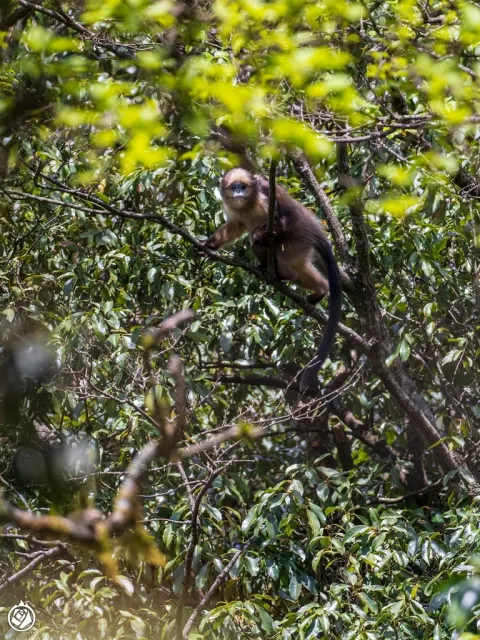
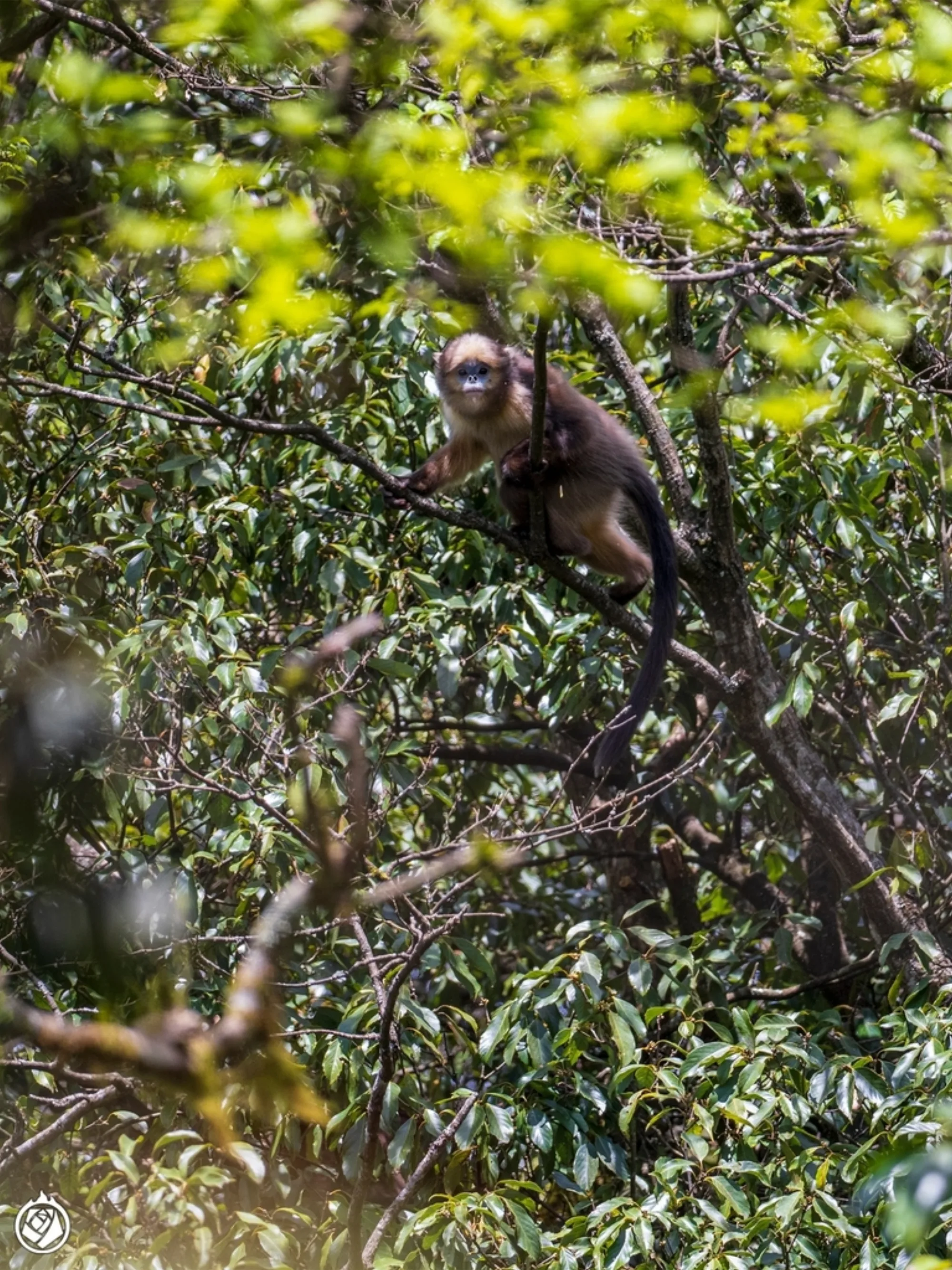
Found only within the Fanjingshan National Nature Reserve in China, the Gray Snub-nosed Monkey is a rare sight in the Wuling Mountains. This primate is easily identified by its bare, bluish-white face and pink skin around the mouth and eyes. Its long fur transitions from brown on the upper body to gray below, marked by a white patch between the shoulder blades and a golden brow. Adult males are particularly colorful, reaching weights of around 14.5 kg, while females are smaller at roughly 8 kg.
These monkeys move through mixed deciduous and evergreen forests at elevations between 570 and 2,300 meters. They spend much of their time in trees, using a mix of climbing, leaping, and swinging to navigate the canopy. Their diet shifts with the seasons, focusing on young leaves, flower buds, bark, and fruits. During the summer months, fruits and seeds may make up over a third of what they eat, while leaves dominate their diet earlier in the year.
Social life revolves around small family groups of five to ten members, led by one male. These units often merge into massive troops of 400 or more individuals to travel and sleep. Despite living within a protected reserve, the species faces serious pressure from forest clearing and illegal mining. Non-targeted hunting and accidental trapping in snares also threaten the remaining population, which some estimates suggest could be as low as 125 individuals.
Written from the English Wikipedia article Gray snub-nosed monkey (CC BY-SA 4.0).
- Atlas places
- 0
These are open occurrence records, so they show where people looked for and recorded the Gray Snub-nosed Monkey as much as where it lives. Cells are up to 25 km across, and every location is generalised to its cell.
No encounter zones yet
Where and when you can expect to see Gray Snub-nosed Monkey is calculated from observation density. No zones have been computed for this species yet.