Tonkin Snub-nosed Monkey
Rhinopithecus avunculus
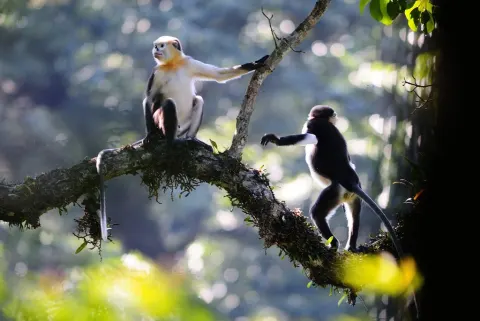
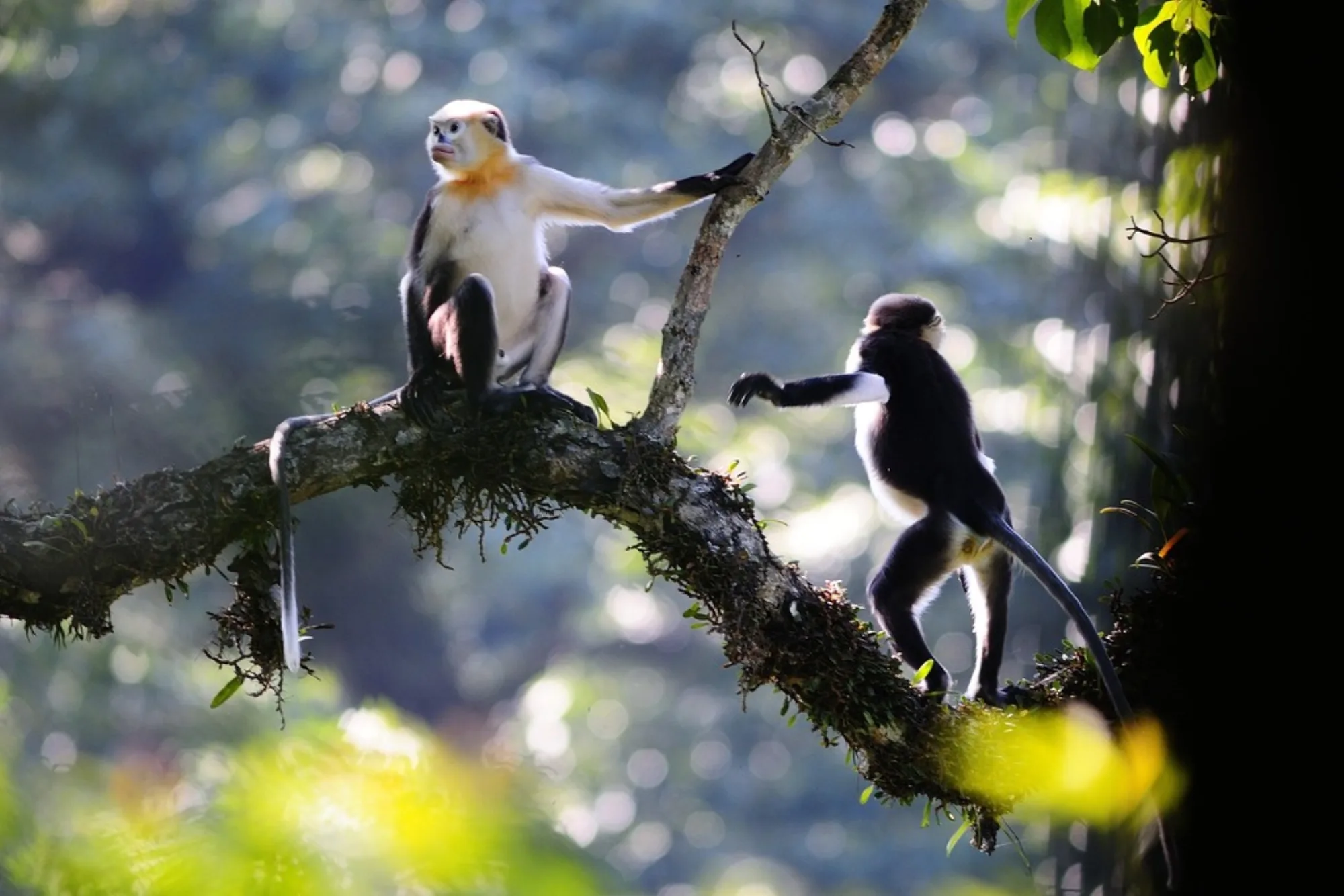
This slender, tree-dwelling monkey is easily identified by its unusual flattened face, which features a pink upturned nose and blue skin around the eyes. Adults are mostly black with creamy-white underparts and a white-tipped tail. Breeding males are particularly striking due to a bright orange patch on the throat. Juveniles are grey and lack this orange coloring. Reaching up to 65 cm in body length, the Tonkin snub-nosed monkey is the rarest of the world's five snub-nosed species.
Endemic to northern Vietnam, these primates live in primary forests on rugged limestone hills and mountains. They are typically found in bamboo and broadleaf evergreen habitats at heights between 200 and 1,200 m. Active during the day, they move through the canopy in small family groups led by a single male. They primarily eat leaves from bamboo and evergreen trees, though they also consume fruits, flowers, and seeds. To help digest this tough plant matter, they possess specialized stomachs and strong jaws.
Despite legal protection, the population is declining. Hunting for the wildlife black market and for food remains a major threat. Because the monkeys often approach humans and emit loud alarm calls instead of fleeing, they are at high risk from poachers. Additionally, their forest home is being lost to illegal logging, mining, and the expansion of human agriculture. These pressures have left the remaining monkeys in small, isolated groups with very low genetic diversity.
Written from the English Wikipedia article Tonkin snub-nosed monkey (CC BY-SA 4.0).
- Atlas places
- 0
These are open occurrence records, so they show where people looked for and recorded the Tonkin Snub-nosed Monkey as much as where it lives. Cells are up to 25 km across, and every location is generalised to its cell.
No encounter zones yet
Where and when you can expect to see Tonkin Snub-nosed Monkey is calculated from observation density. No zones have been computed for this species yet.