Javan Rhinoceros
Rhinoceros sondaicus
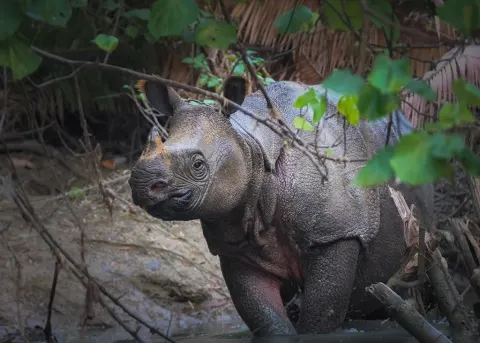
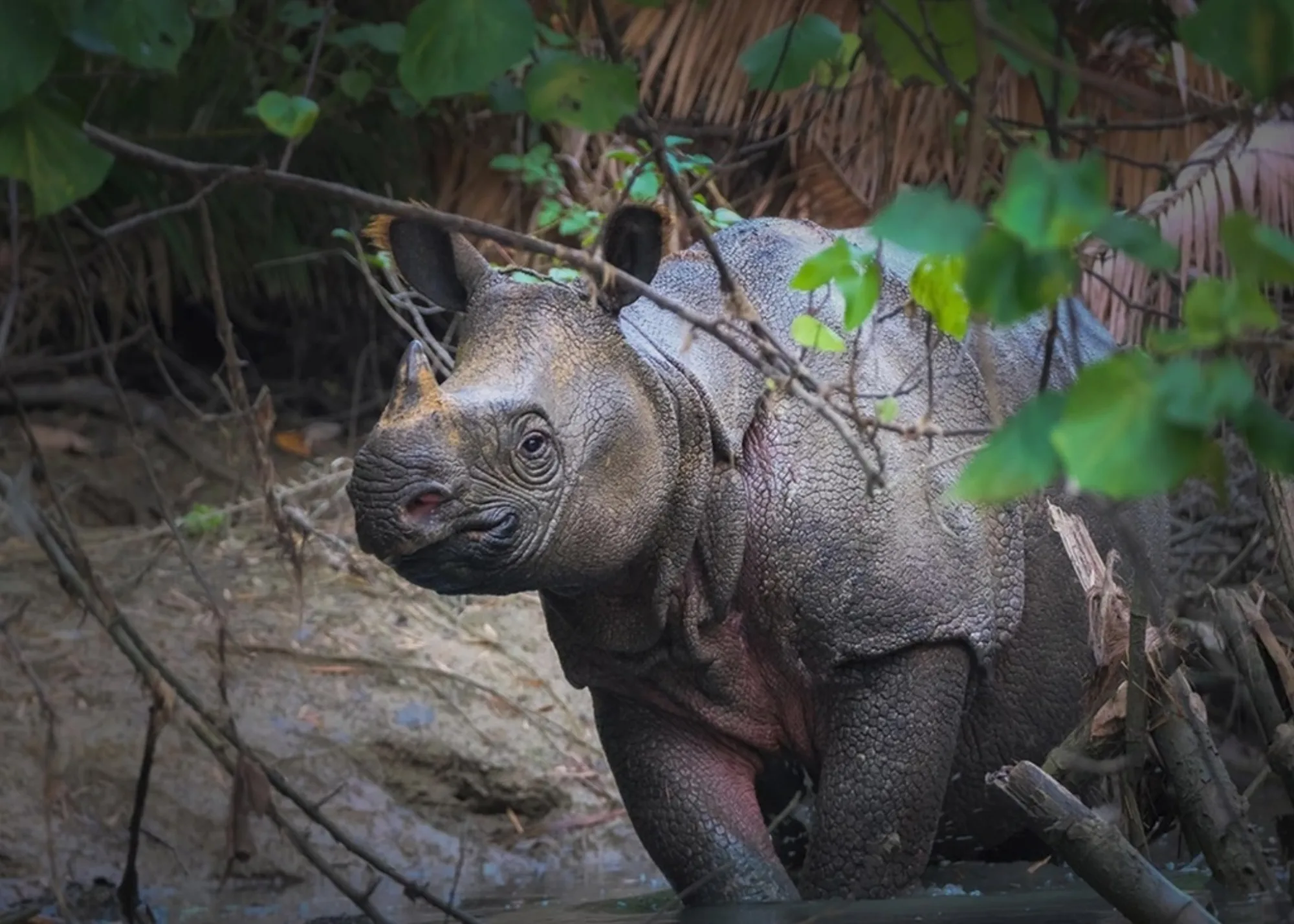
The Javan Rhinoceros is the largest animal on the island of Java and the second-largest in Indonesia. It is recognizable by its hairless, splotchy gray skin, which falls into folds that give it an armored, saddle-like appearance. Only the bulls have horns, which are the smallest of any living rhino species, usually measuring less than 20 cm. These solitary animals have excellent hearing and smell, though their vision is poor.
Historically, these rhinos ranged across Southeast Asia and Indochina, reaching as far as East India and China. Today, the only known wild population lives within the lowland rainforests and wet grasslands of Ujung Kulon National Park. This herbivorous browser eats around 50 kg of food daily, favoring shoots, twigs, and fallen fruit. While they are mostly antisocial, they may gather at salt licks or mud wallows to maintain their body temperature and receive essential nutrients. Recent camera trap footage of cows with calves has confirmed that they are still breeding in the wild.
Poaching is the primary cause of their decline, as their horns are highly valued in traditional medicine. Because the entire population is restricted to one small area, the species is also at risk from disease and a lack of genetic diversity. Furthermore, they must compete for scarce resources with wild cattle, while invasive arenga palms have begun crowding out their natural food sources. Human interference remains a threat, as the rhinos may become aggressive and attack if people approach too closely.
Written from the English Wikipedia article Javan rhinoceros (CC BY-SA 4.0).
- Atlas places
- 0
These are open occurrence records, so they show where people looked for and recorded the Javan Rhinoceros as much as where it lives. Cells are up to 25 km across, and every location is generalised to its cell.
No encounter zones yet
Where and when you can expect to see Javan Rhinoceros is calculated from observation density. No zones have been computed for this species yet.