Whalesucker
Remora australis
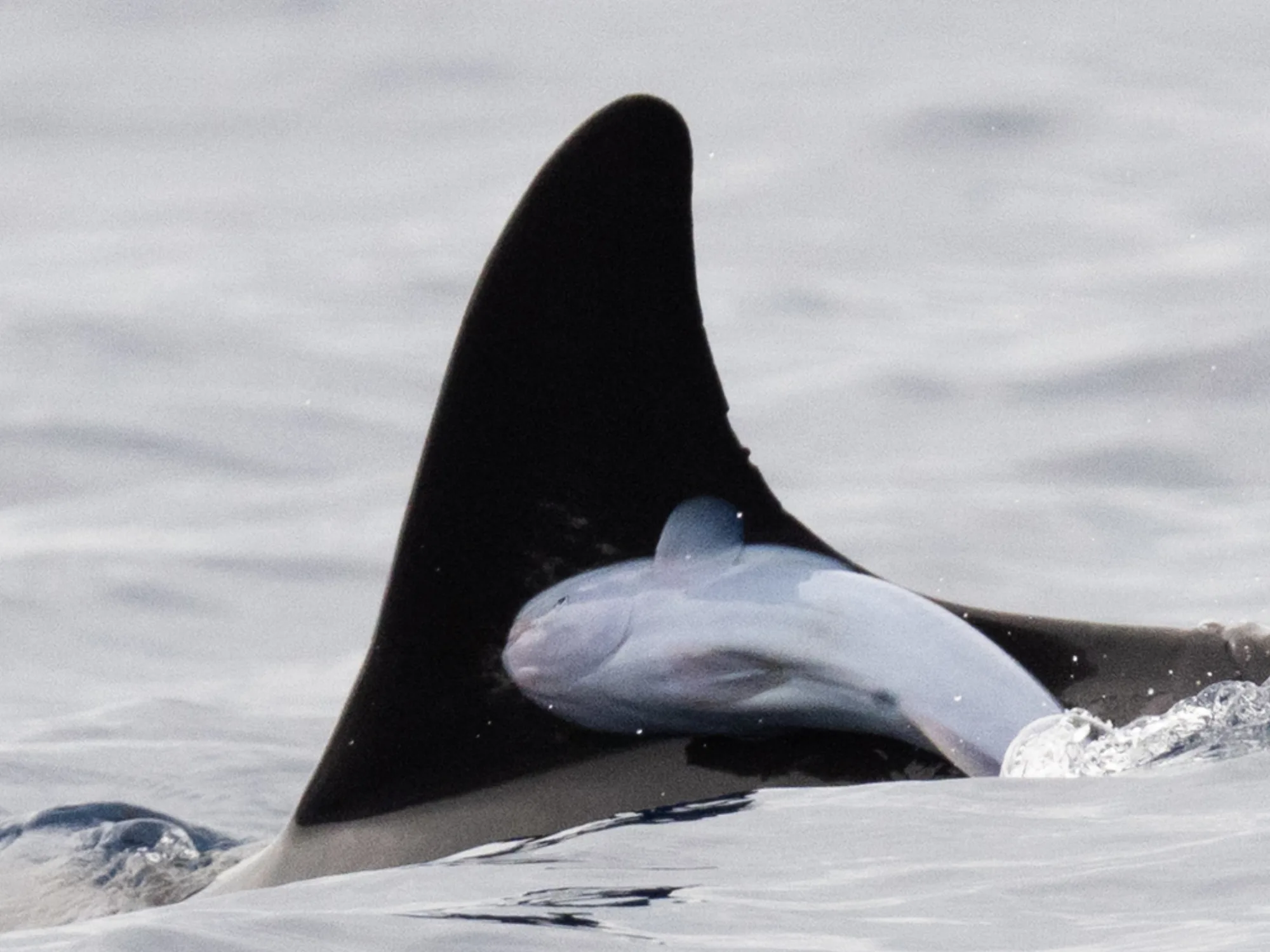
While it belongs to a family of hitchhiking fish, the Whalesucker is the least common variety to be encountered. It is identifiable by its uniform brown or greyish-brown color and a massive, oval-shaped suction disk on top of its head. This disk is the largest of any remora, taking up nearly half the length of its body. Smaller individuals may show blotches or bars, but once they exceed 35 cm in length, their fins turn yellow. They can eventually reach a total length of 76 cm.
These fish are found in warm and tropical waters across the globe, from Vancouver Island down to Chile and from Texas to Brazil. They live in a mutualistic relationship with cetaceans, most commonly the blue whale. By using their disks to latch onto the flanks or belly of a host, they save energy on swimming and gain protection from predators. They are also known to associate with spinner dolphins, where up to three fish might attach to a single animal. To avoid being seen by seabirds, they typically stay away from the host's underside.
Whalesuckers act as cleaners, feeding on parasites, sloughed-off skin, and even the feces or vomit of their hosts. This benefit is balanced by the physical cost to the whale or dolphin, as the disks can scrape the skin and the fish's presence creates drag. Hosts may even spin through the water to try and dislodge them. While the fish are safe with their hosts, they can lose their grip if they fail to maintain the necessary pressure against the skin.
Written from the English Wikipedia article Whalesucker (CC BY-SA 4.0).
- Atlas places
- 0
These are open occurrence records, so they show where people looked for and recorded the Whalesucker as much as where it lives. Cells are up to 25 km across, and every location is generalised to its cell.
No encounter zones yet
Where and when you can expect to see Whalesucker is calculated from observation density. No zones have been computed for this species yet.
Conservation status not assessed here yet, so every location is generalised to its grid cell.