Red-eyed Tree Frog
Agalychnis callidryas
Night walks after rain, leaves at eye level.
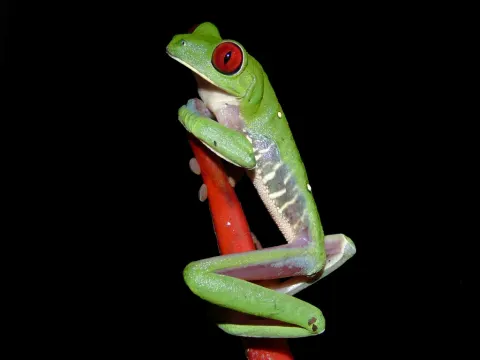
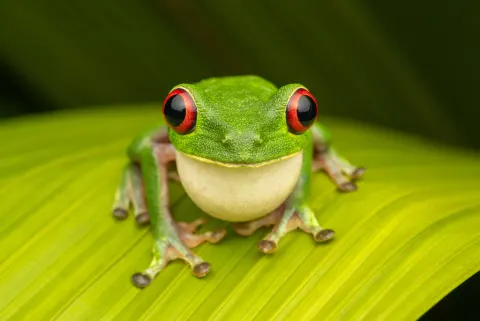
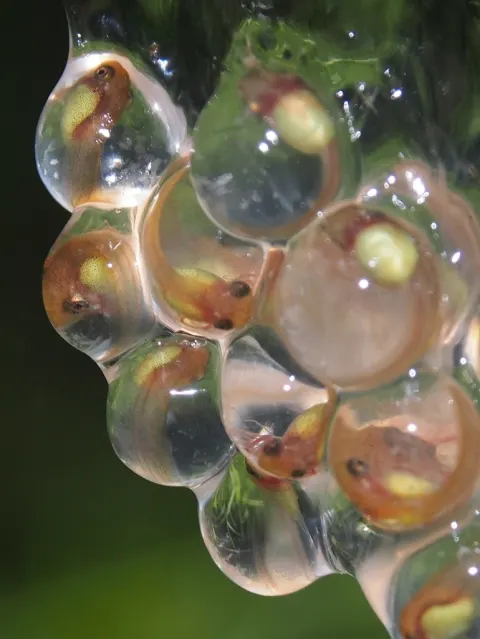
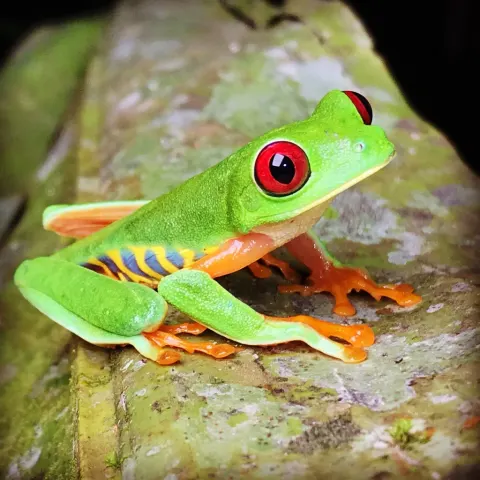
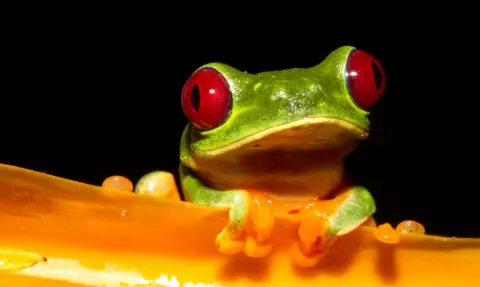
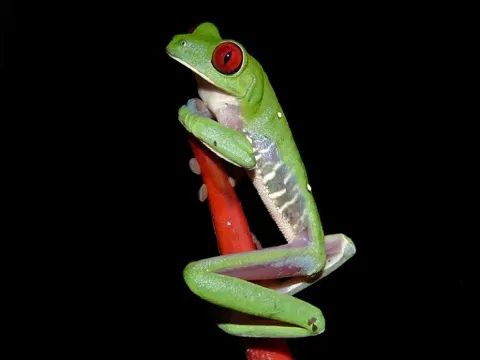
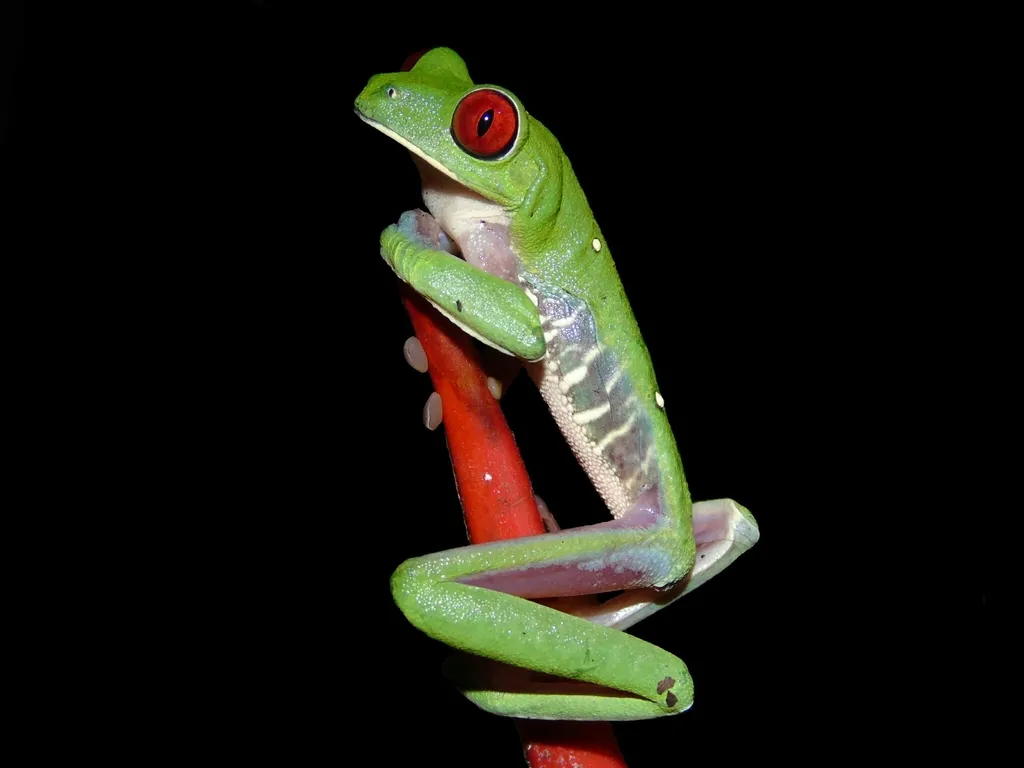
The postcard amphibian of the tropics earns the job at the moment of waking: a sleeping red-eyed tree frog is a green leaf-shape, everything tucked away, until a disturbance snaps open two enormous crimson eyes and flashes the blue-and-yellow striped flanks and orange feet. The theory is startle defense, a half-second of predator confusion that buys a leap. By day they sleep pressed under leaves; by night they hunt insects through the understory around ponds. Females lay eggs in jelly clutches on leaves overhanging water, and the embryos hold a party trick biologists adore: sensing the vibrations of an attacking snake, they can hatch early and escape, dropping into the water days ahead of schedule.
Nocturnal and arboreal; males call in rain-season choruses, a short chack from vegetation over still water.
Night-flying and crawling insects, crickets, moths and flies, ambushed from leaves with a lunge and a sticky tongue.
Night walks in the wet season with a guide. One diffused flash at low power, a few frames, and done; the eyes and wet skin do the rest of the work.
Never reposition a frog for a cleaner shot; skin absorbs whatever is on your hands, from repellent to sunscreen.
Generalised encounter areas, not exact locations. Each shape is a grid cell coloured by how likely the species is there.
- Very likelyCosta Rica10 km zone · high confidence · 806 records · updated 41 days ago
- Very likelyPanama10 km zone · high confidence · 132 records · updated 41 days ago
- Very likelyHonduras10 km zone · medium confidence · 98 records · updated 41 days ago
- Very likelyNicaragua10 km zone · medium confidence · 38 records · updated 41 days ago
- LikelyBelize10 km zone · medium confidence · 5 records · updated 41 days ago