Yangtze Giant Softshell Turtle
Rafetus swinhoei
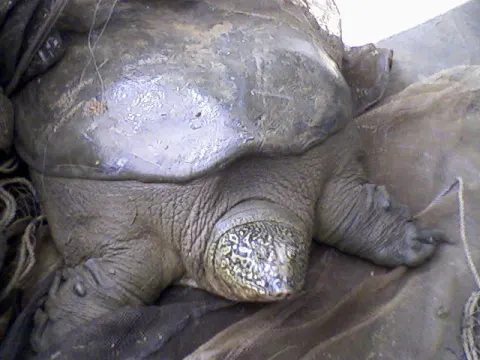
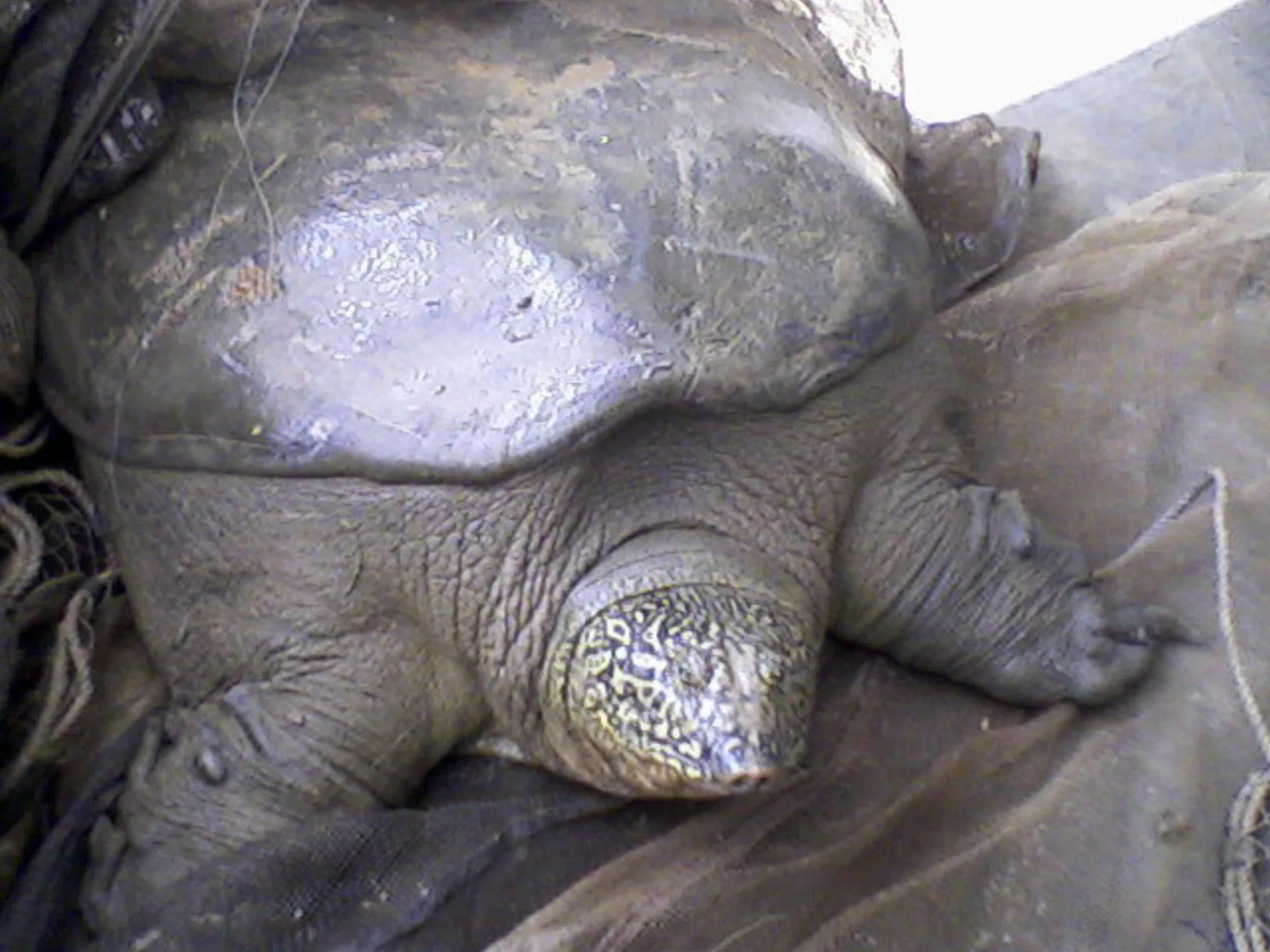
Reaching weights of up to 247.5 kg, the Yangtze Giant Softshell Turtle is widely considered the largest freshwater turtle on earth. It is identified by a pig-like snout, eyes positioned on the top of its head, and a deep skull. These massive reptiles can exceed 100 cm in length and 70 cm in width. Highly elusive, they spend the majority of their time hidden in deep water, surfacing only for brief moments to breathe.
Historically, these turtles lived in China's Yangtze River and Lake Tai, as well as the Red River regions of southern China and northern Vietnam. Today, the known population has dwindled to just two individuals. In the wild, they consume a varied diet of fish, snails, frogs, crabs, and aquatic plants like water hyacinths. Their life cycle follows the patterns of temperate-zone reptiles, including a long period of inactivity during the winter and nesting in the summer months. During breeding, females typically lay clutches of 20 to 80 eggs.
This species faces a precarious future due to habitat destruction from urban growth and pollution. Specifically, a proposal to build a sequence of 12 hydroelectric dams along the Red River in China threatens to flood essential habitats and disrupt downstream ecosystems. For decades, the turtles have also been hunted for their meat, while their bones and shells are used for traditional medicine. Despite intensive efforts to breed the remaining turtles in captivity, no viable offspring have been produced, and the lack of known fertile females has left the species functionally extinct.
Written from the English Wikipedia article Yangtze giant softshell turtle (CC BY-SA 4.0).
- Atlas places
- 0
These are open occurrence records, so they show where people looked for and recorded the Yangtze Giant Softshell Turtle as much as where it lives. Cells are up to 25 km across, and every location is generalised to its cell.
No encounter zones yet
Where and when you can expect to see Yangtze Giant Softshell Turtle is calculated from observation density. No zones have been computed for this species yet.