Ringed Seal
Pusa hispida
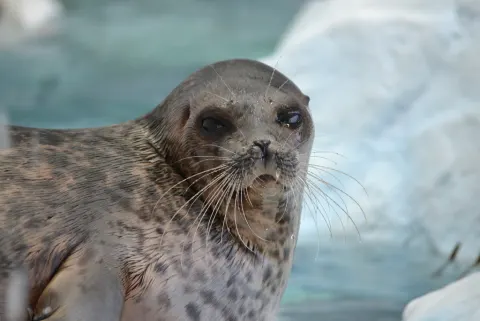
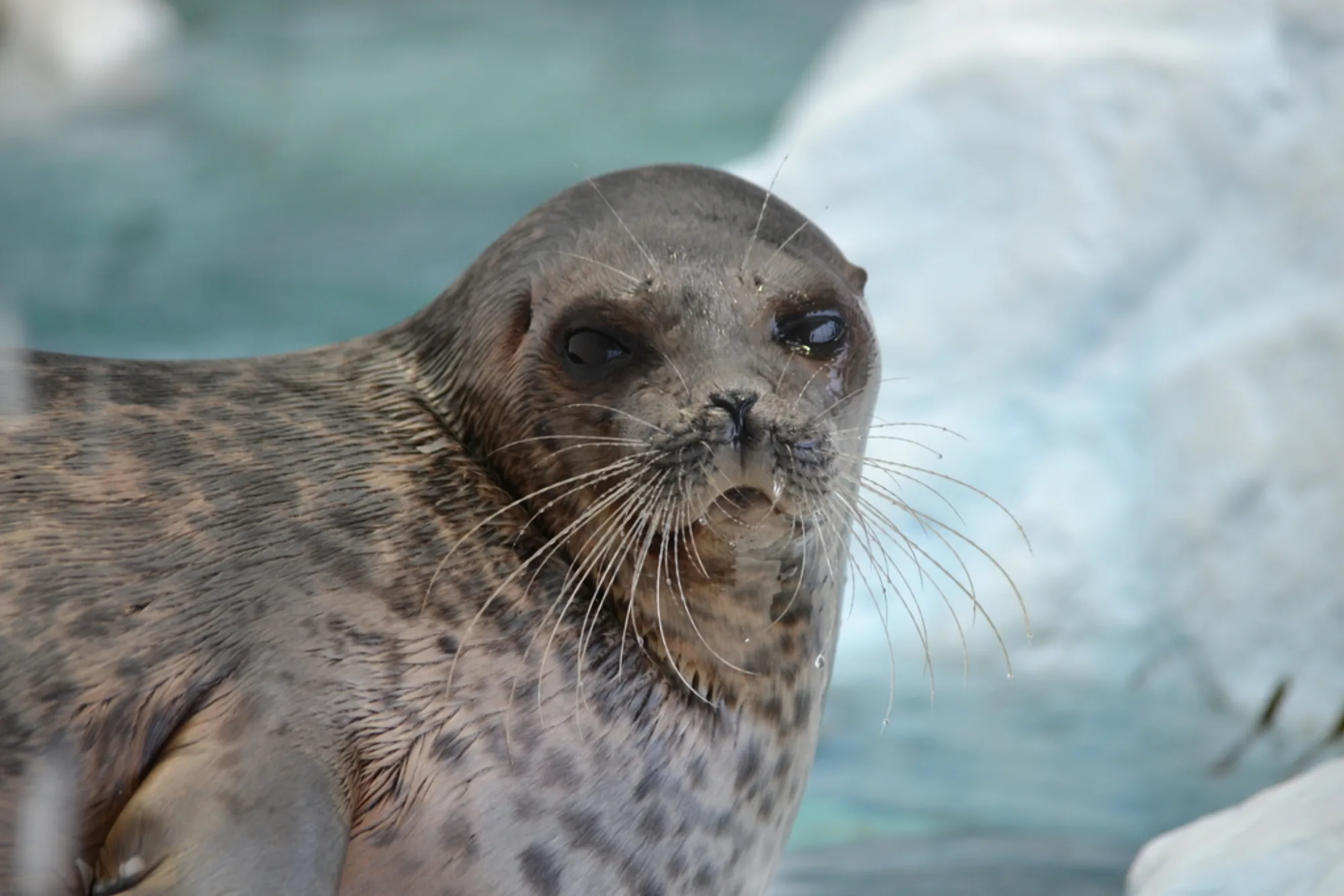
Dark spots edged with pale rings give the Ringed Seal its name and make its coat distinctive against the ice. This small, earless seal has a rounded body, a short, cat-like snout and a silver belly. Adults average 1.5 metres in length, although their size varies with subspecies and condition. Ringed seals range across the Arctic Ocean and into the Bering and Okhotsk seas, reaching the northern coast of Japan and North Atlantic coasts as far south as Newfoundland. Two subspecies live in freshwater in northern Europe. Most favour ice-covered water, resting on floes and remaining close to ice for much of the year.
Usually solitary, ringed seals keep their distance from one another when resting on the ice, although they gather in colonies to moult, mate or rest. They maintain breathing holes through ice, allowing them to occupy habitat unavailable to some other seals. Their varied diet includes Arctic cod, herring, shrimp and other small fish and crustaceans. In spring, females make lairs in thick ice and give birth to a single pup on a floe or shorefast ice. Pups are weaned after two months. Polar bears are major predators, while Arctic foxes and glaucous gulls take pups born outside lairs. In the water, ringed seals face predators including killer whales and Greenland sharks, as well as Atlantic walruses on occasion. Warming threatens the sea ice and snow cover on which the seals depend, and earlier ice breakup can force pups into the water sooner. Ringed seals are also caught accidentally in fishing gear and continue to be harvested by Arctic communities.
Written from the English Wikipedia article Ringed seal (CC BY-SA 4.0).
- Records
- 27,314
- Countries
- 10
No atlas park has a record of the Ringed Seal in or around it yet.
These are open occurrence records, so they show where people looked for and recorded the Ringed Seal as much as where it lives. Cells are up to 25 km across, and every location is generalised to its cell.
Generalised encounter areas, not exact locations. Each shape is a grid cell coloured by how likely the species is there.
- Very likelyFinland25 km zone · high confidence · 22866 records · updated 80 days ago
- Very likelySweden25 km zone · high confidence · 3409 records · updated 80 days ago
- Very likelyGreenland25 km zone · high confidence · 531 records · updated 80 days ago
- Very likelySvalbard & Jan Mayen25 km zone · high confidence · 263 records · updated 80 days ago
- Very likelyEstonia25 km zone · high confidence · 175 records · updated 80 days ago
- LikelyUnited States25 km zone · medium confidence · 34 records · updated 80 days ago
- LikelyCanada25 km zone · medium confidence · 16 records · updated 80 days ago
- LikelyRussia25 km zone · medium confidence · 13 records · updated 80 days ago
- PossibleNorway25 km zone · medium confidence · 5 records · updated 80 days ago
- PossibleFrance25 km zone · medium confidence · 2 records · updated 80 days ago
Conservation status not assessed here yet, so every location is generalised to its grid cell.