Caspian Seal
Pusa caspica
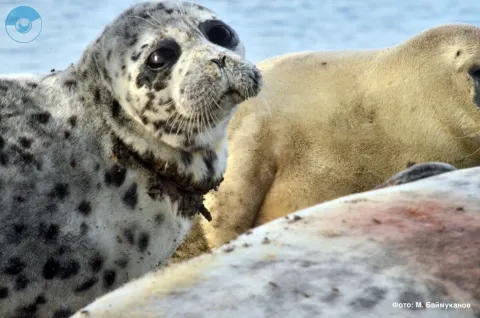
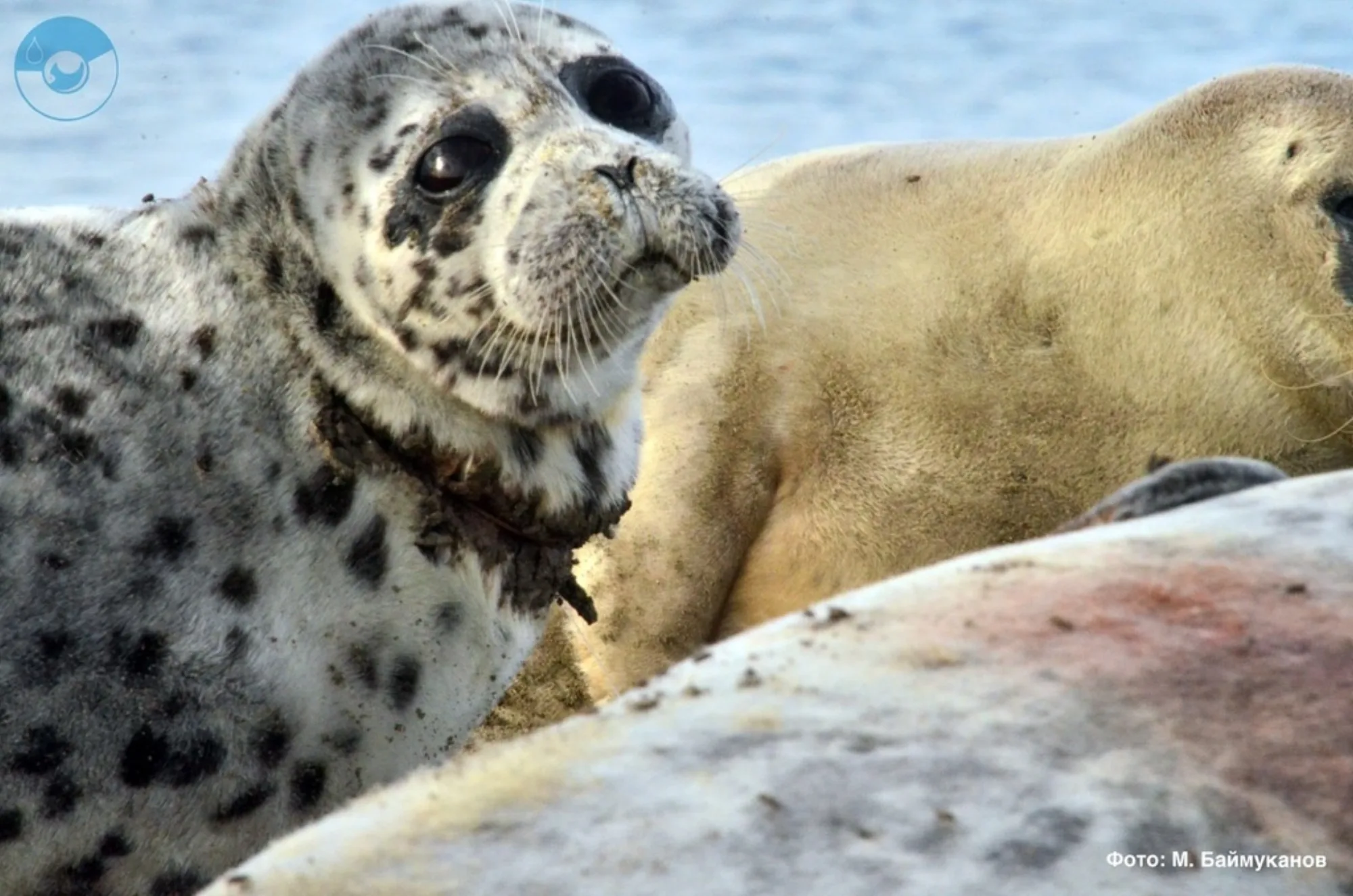
Small and confined to a single inland sea, the Caspian Seal is one of the smallest earless seals. Adults are about 126 to 129 cm long, and males are generally larger and bulkier than females. Newborn pups have white coats, which they shed at around three weeks to a month. The seals live only in the brackish Caspian Sea, along its shores and among rocky islands and floating ice. In winter and the cooler parts of spring and autumn, they occupy the northern coast. As the ice melts, they also visit the Volga and Ural river deltas and the deeper, cooler southern Caspian.
Caspian seals usually dive to about 50 m for roughly a minute, resting at the surface after feeding. They gather in large groups in summer and winter, but are solitary at other times of year. Their food changes with the season: in northern shallows in autumn and winter they mainly eat sculpins, gobies and crustaceans, while in the southern sea in summer they take fish including herring, roach and sprat. Females give birth to one pup each from late January to early February, in secluded places on northern ice sheets. Mothers fast while nursing, although they sometimes eat a little, and stop feeding their pups milk after several weeks.
The population has fallen by more than 90% since the beginning of the 1900s. Fisheries bycatch is a major cause of decline, alongside habitat encroachment, climate change, pollution and disease outbreaks. Commercial icebreaker routes through areas where pups gather may also contribute to habitat loss.
Written from the English Wikipedia article Caspian seal (CC BY-SA 4.0).
- Records
- 6
- Countries
- 3
No atlas park has a record of the Caspian Seal in or around it yet.
These are open occurrence records, so they show where people looked for and recorded the Caspian Seal as much as where it lives. Cells are up to 25 km across, and every location is generalised to its cell.
Generalised encounter areas, not exact locations. Each shape is a grid cell coloured by how likely the species is there.
- Very likelyRussia25 km zone · medium confidence · 6 records · updated 80 days ago
- LikelyKazakhstan25 km zone · low confidence · 0 records · updated 80 days ago
- UncommonAzerbaijan25 km zone · low confidence · 0 records · updated 80 days ago
Conservation status not assessed here yet, so every location is generalised to its grid cell.