Cherry Barb
Puntius titteya
Found naturally only in Sri Lanka, these small freshwater fish have also established populations within Mexico and Colombia. The Cherry Barb typically inhabits shallow, calm bodies of water that are heavily shaded. In their native environment, they prefer a silty bottom covered in fallen leaves. These tropical fish thrive in temperatures ranging from 73 to 81 °F and tend to stay hidden under the cover of aquatic plants. Though they require open spaces for swimming, they frequently withdraw into dense vegetation.
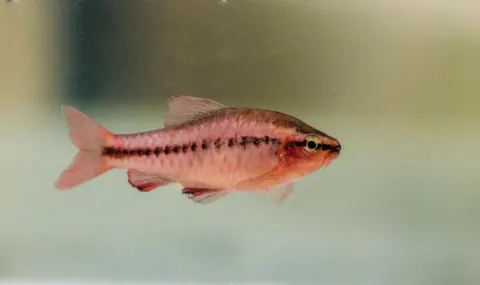
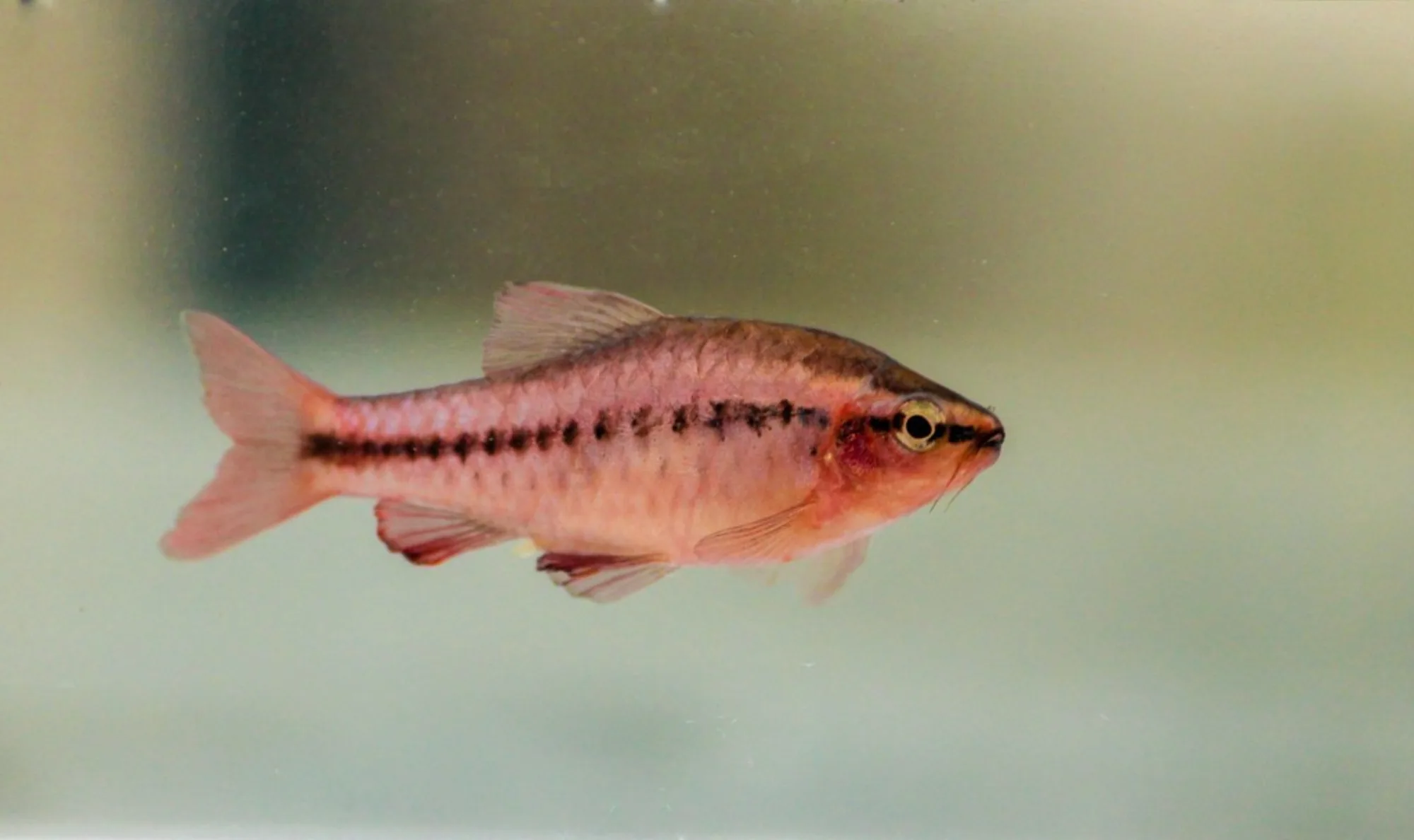
Reaching up to 5 cm in length, the species is recognized by its slender, compressed body. Females are fawn-colored with silver highlights on the belly and a greenish sheen on top, while males display a reddish tone that deepens significantly during breeding. A horizontal stripe runs from the snout through the eye to the tail. In the wild, they are social creatures that form schools, often organized into a specific hierarchy. Their diet includes their own eggs and small fry, which hatch just one or two days after the female scatters hundreds of them across plants and the substrate.
Travellers looking for them in the wild should note that they face significant pressure from the aquarium trade. Because of their popularity as pets, overcollection is a major threat to their survival in their original range. Additionally, the loss of their specialized shaded habitats continues to impact their numbers. Despite being widely farmed for commercial sale, these pressures remain a concern for the remaining wild populations in their home territory.
Written from the English Wikipedia article Cherry barb (CC BY-SA 4.0).
- Atlas places
- 0
These are open occurrence records, so they show where people looked for and recorded the Cherry Barb as much as where it lives. Cells are up to 25 km across, and every location is generalised to its cell.
No encounter zones yet
Where and when you can expect to see Cherry Barb is calculated from observation density. No zones have been computed for this species yet.
Conservation status not assessed here yet, so every location is generalised to its grid cell.