Ryukyu Flying Fox
Pteropus dasymallus
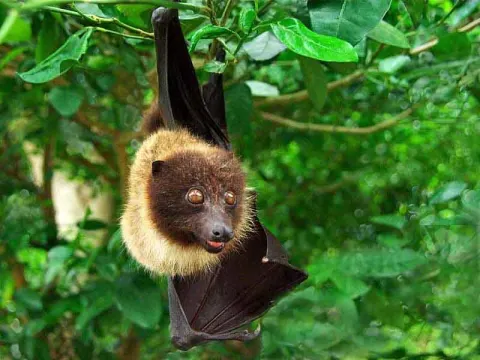
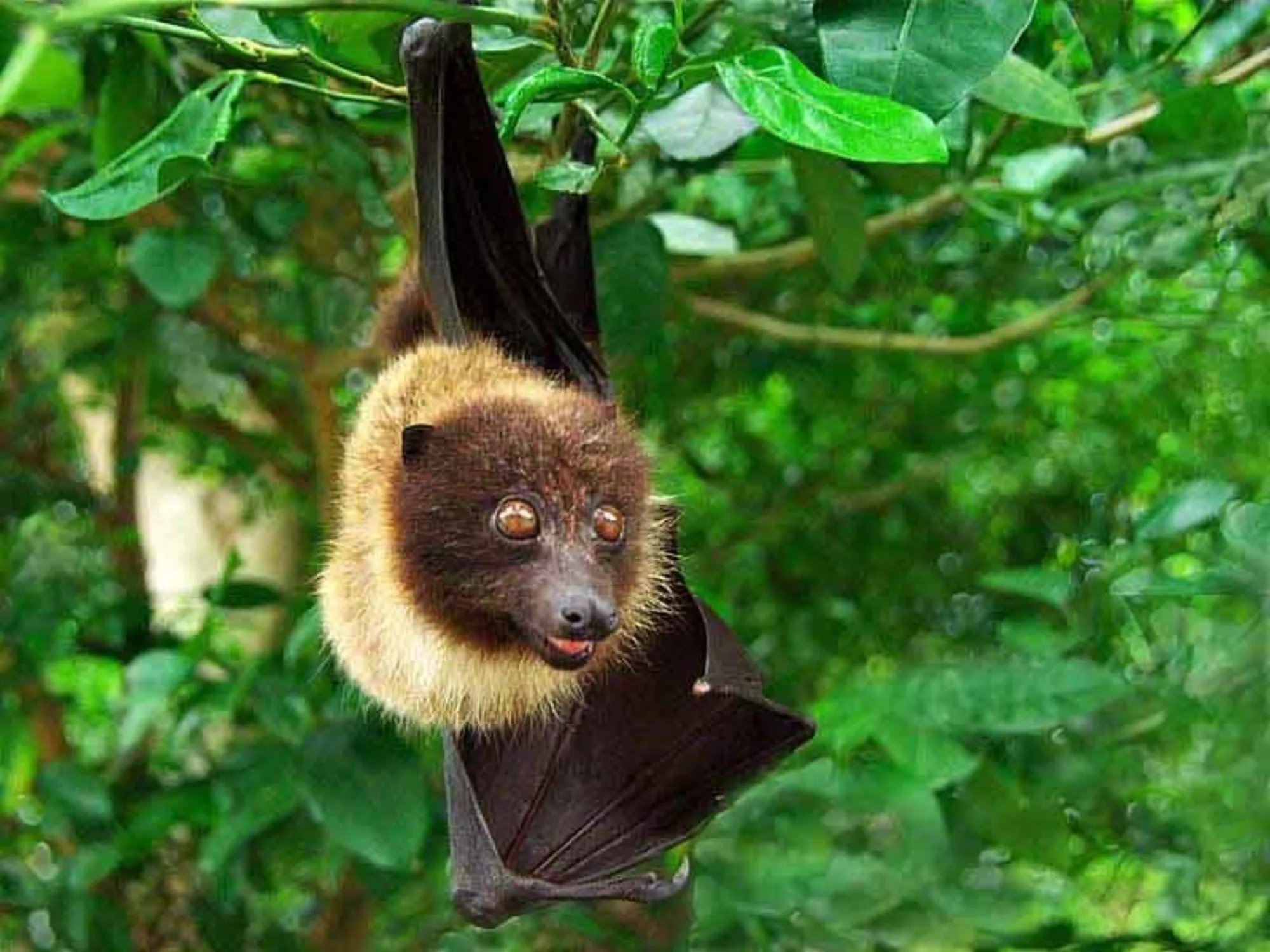
Defined by its long, woolly fur, the Ryukyu flying fox is a large bat with a wingspan measuring between 1.24 and 1.41 m. These animals weigh up to 500 g and are identifiable by their reddish brown bodies and yellowish white napes. Their small, pointed ears are often obscured by thick hair, while their flight membranes are dark brown. Five distinct subspecies exist, distributed across various islands in Japan, Taiwan, and the Philippines.
These bats favor subtropical or tropical dry forests and swamps. They are nocturnal and usually spend the day roosting alone or in small groups among the trees. At night, they forage for a varied diet consisting of fruits from at least 53 plant species, as well as flowers, leaves, and bark. They also eat several types of insects. The Chinese banyan provides a vital food source throughout the year. By depositing seeds in their guano up to 1,833 m from the original trees, they serve as essential seed dispersers and pollinators for the local flora.
While the population in the Philippines appears stable, numbers in Taiwan have dropped significantly. In some regions, the bats are hunted as a delicacy. Japanese populations face different challenges, including the loss of their natural habitat and accidental deaths from power lines or citrus crop nets. Because they can cause millions of yen in damage to orchards annually, some farmers view them as pests and advocate for culling programs.
Written from the English Wikipedia article Ryukyu flying fox (CC BY-SA 4.0).
- Atlas places
- 0
These are open occurrence records, so they show where people looked for and recorded the Ryukyu Flying Fox as much as where it lives. Cells are up to 25 km across, and every location is generalised to its cell.
No encounter zones yet
Where and when you can expect to see Ryukyu Flying Fox is calculated from observation density. No zones have been computed for this species yet.
Conservation status not assessed here yet, so every location is generalised to its grid cell.