European Glass Lizard
Pseudopus apodus
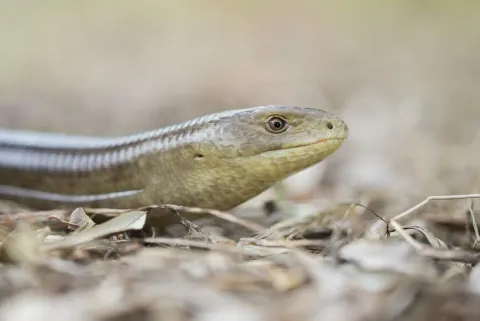
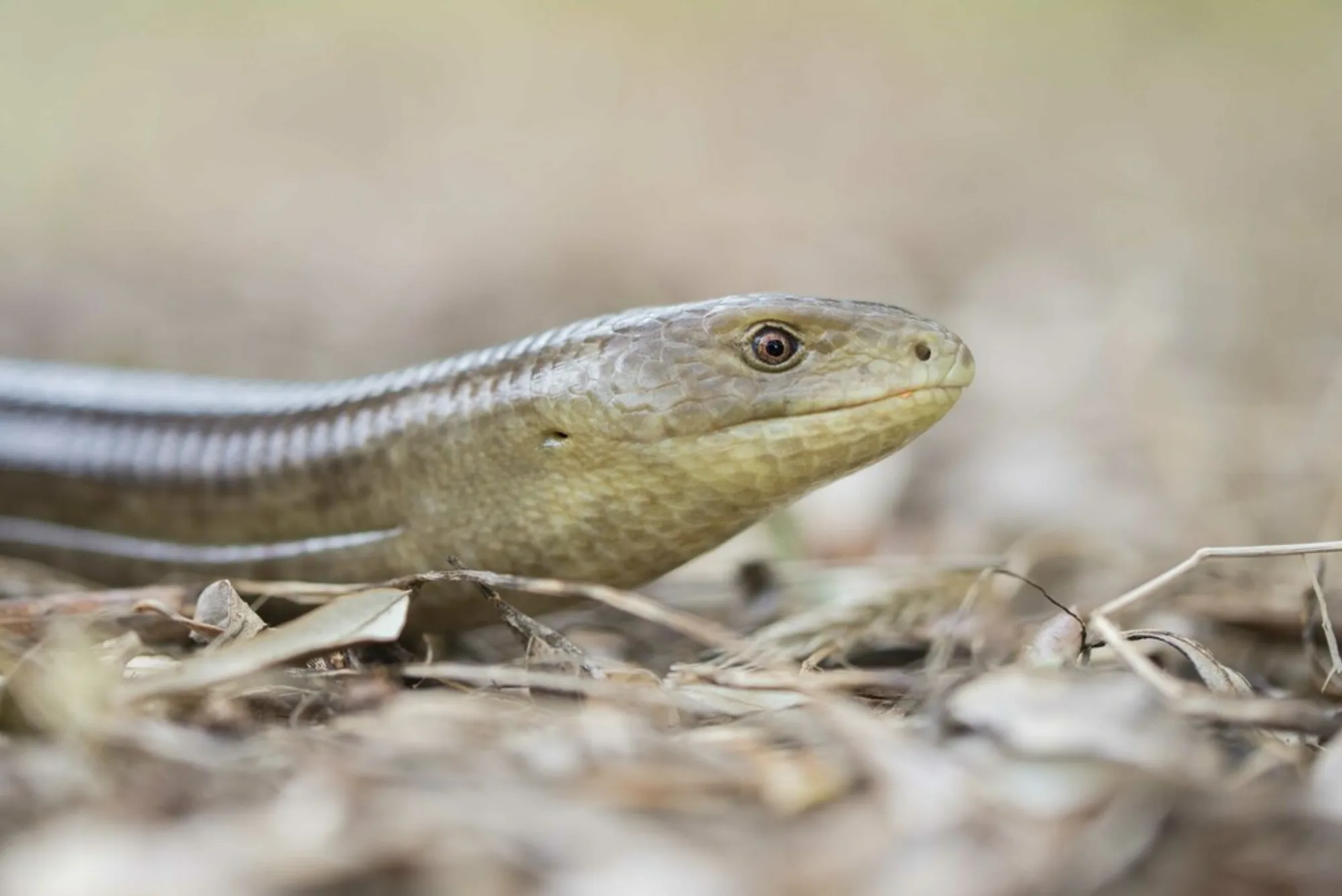
With its long, segmented body and barely visible legs, the European Glass Lizard can look rather like a large earthworm. It can reach 135 cm in total length, including the tail, and is tan, with a paler head and underside. A fold of skin runs along each side of its body. Its ears and eyelids help distinguish it from a snake.
The species ranges from Southern Europe to Central Asia, with populations described from Croatia and Greece eastwards to western Turkey, and from Crimea through Transcaucasia towards Kazakhstan. Another population occurs in the Levant, from southern Turkey to Israel and Palestine. Look for it in open country, including short grassland and hills with sparse tree cover. It favours places where sunny and shady patches lie close together. Although it prefers dry habitat, it is particularly active in wet weather. Snails and slugs appear to be favoured prey, and it also eats arthropods and small mammals. Its strong jaws and teeth make short work of snail shells.
When harassed, this large lizard may hiss, bite or release a musky scent. It sometimes sheds its tail, which can break into pieces after it comes away. A lost tail grows back slowly and is initially shorter and darker, though it may eventually regain its full length. About 10 weeks after mating, a female lays about eight eggs beneath bark or a stone, often staying to guard them. Hatching takes 45 to 55 days; the young measure about 15 cm and usually begin eating after four days. The exotic pet trade often offers this species, although captive breeding is rare.
Written from the English Wikipedia article Sheltopusik (CC BY-SA 4.0).
- Records
- 256
- Countries
- 17
No atlas park has a record of the European Glass Lizard in or around it yet.
These are open occurrence records, so they show where people looked for and recorded the European Glass Lizard as much as where it lives. Cells are up to 25 km across, and every location is generalised to its cell.
Generalised encounter areas, not exact locations. Each shape is a grid cell coloured by how likely the species is there.
- Very likelyCroatia25 km zone · medium confidence · 45 records · updated 80 days ago
- Very likelyRussia25 km zone · medium confidence · 38 records · updated 80 days ago
- Very likelyTurkmenistan25 km zone · medium confidence · 38 records · updated 80 days ago
- Very likelyUkraine25 km zone · medium confidence · 28 records · updated 80 days ago
- Very likelyGreece25 km zone · medium confidence · 25 records · updated 80 days ago
- Very likelyBulgaria25 km zone · medium confidence · 18 records · updated 80 days ago
- Very likelyMontenegro25 km zone · medium confidence · 15 records · updated 80 days ago
- Very likelyGeorgia25 km zone · medium confidence · 13 records · updated 80 days ago
- LikelyIsrael25 km zone · medium confidence · 14 records · updated 80 days ago
- LikelyArmenia25 km zone · medium confidence · 13 records · updated 80 days ago
Conservation status not assessed here yet, so every location is generalised to its grid cell.