Spring Peeper
Pseudacris crucifer
A high, clear peep can betray the presence of a Spring Peeper long before the little frog comes into view. Males call from evening through the night, often hidden at the edges of breeding water near the bases of grasses or shrubs. In a chorus, their calls sound like sleigh bells, and warm rain often prompts them to start calling again.
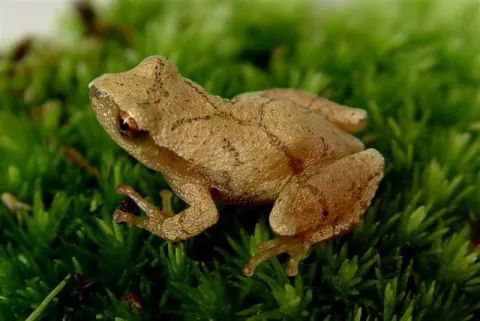
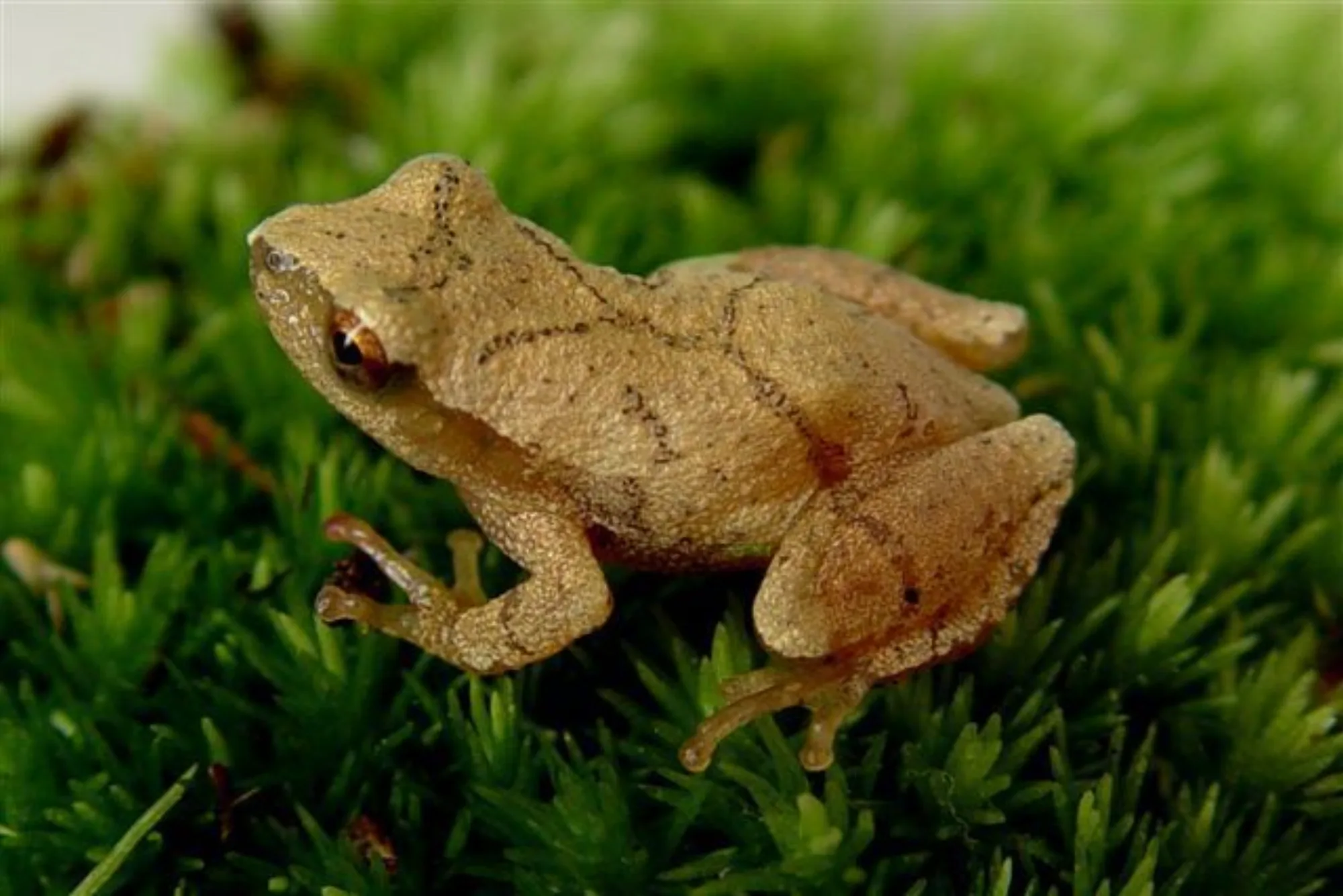
This small chorus frog ranges across the eastern United States and eastern Canada, reaching west to Saskatchewan. It lives mainly in forests and regenerating woodland close to wetlands, and breeds in ponds, marshes and swamps. Its colouring can be tan, grey or brown, with a dark cross on the back that is sometimes faint. Dark lines may also show between its eyes and across its hind legs. Its body measures from less than 25 mm to 38 mm, and its colour can change quickly to help conceal it from predators. Outside the breeding season, it shelters among dead plant material in the woods and hibernates beneath logs or loose bark. It hunts small invertebrates, including beetles, ants, flies and spiders, in low vegetation.
Breeding runs from October to March in southern areas and from March to June in the north, depending on local conditions. Eggs are hidden beneath vegetation or debris at the bottom of the water, and the tadpoles remain aquatic for two to three months before becoming frogs. Predators include snakes, skunks and larger frogs, while fish, salamanders and insect larvae can prey on tadpoles. Wetland loss has altered its habitat, and some populations have declined significantly. When road salt contaminates breeding ponds, it can lower amphibian survival and cause developmental abnormalities.
Written from the English Wikipedia article Spring peeper (CC BY-SA 4.0).
- Records
- 8,025
- Countries
- 2
- Atlas places
- 1
These are open occurrence records, so they show where people looked for and recorded the Spring Peeper as much as where it lives. Cells are up to 25 km across, and every location is generalised to its cell.
Generalised encounter areas, not exact locations. Each shape is a grid cell coloured by how likely the species is there.
- Very likelyUnited States25 km zone · medium confidence · 7002 records · updated 80 days ago
- Very likelyCanada25 km zone · medium confidence · 1023 records · updated 80 days ago
Conservation status not assessed here yet, so every location is generalised to its grid cell.