Purple Martin
Progne subis
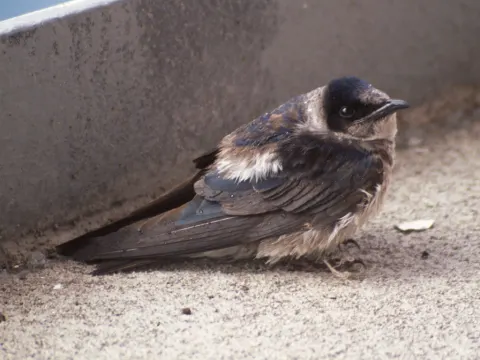
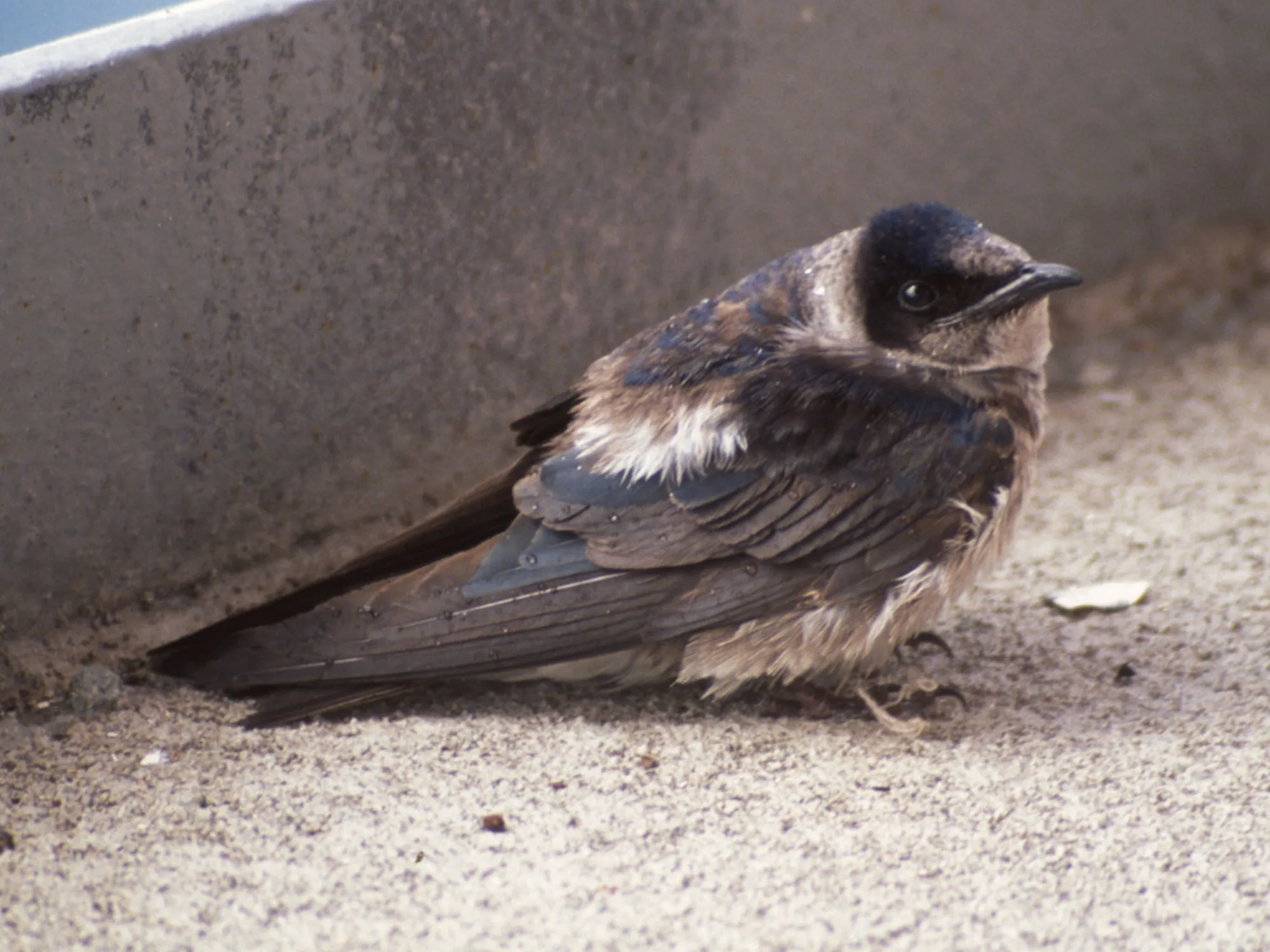
North America's largest swallow, the Purple Martin is a swift, agile bird that alternates rapid flapping with gliding. Adult males are black with a glossy steel-blue sheen, while females are dark above and lighter below, with some blue sheen. Both have slightly forked tails, and their calls range from chirps and chortles to rattles and croaks. Approaching a nest site, a martin may plunge from the sky with its wings tucked in.
Purple Martins breed in open areas across eastern North America and in some western coastal locations from British Columbia to Mexico. They spend winter in the Amazon basin, including parts of Brazil, Bolivia and Peru. Many pause in the Yucatán Peninsula or Cuba on their journeys north and south. Outside the breeding season, they gather in large flocks and roost together, sometimes in such numbers that their departures to feed appear on weather radar. In flight, they catch a variety of winged insects; mosquitoes make up little of their diet.
Martins nest in cavities. In the west, they often use abandoned woodpecker holes in saguaros or trees; eastern birds rely heavily on human-provided gourds and nest houses. Eastern colonies can be found close to people, including in towns and cities, but birds are usually absent where nesting sites are unavailable. A pair generally raises one brood, and both parents care for the young after they leave the nest. European starlings and house sparrows compete for nest cavities and can take over unmonitored martin houses. The decline in people providing nesting sites poses a further threat to eastern birds.
Written from the English Wikipedia article Purple martin (CC BY-SA 4.0).
- Records
- 925,941
- Countries
- 3
- Atlas places
- 2
These are open occurrence records, so they show where people looked for and recorded the Purple Martin as much as where it lives. Cells are up to 25 km across, and every location is generalised to its cell.
Generalised encounter areas, not exact locations. Each shape is a grid cell coloured by how likely the species is there.
- Very likelyUnited States25 km zone · high confidence · 798158 records · updated 80 days ago
- Very likelyCanada25 km zone · high confidence · 107649 records · updated 80 days ago
- Very likelyMexico25 km zone · high confidence · 20134 records · updated 80 days ago
Conservation status not assessed here yet, so every location is generalised to its grid cell.