Leopard Cat
Prionailurus bengalensis
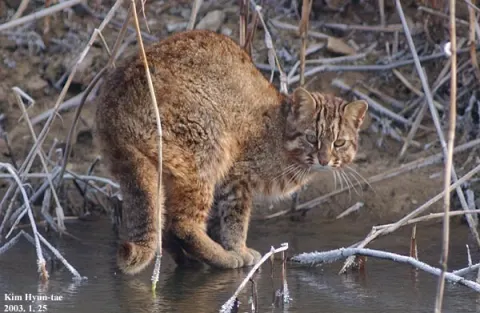
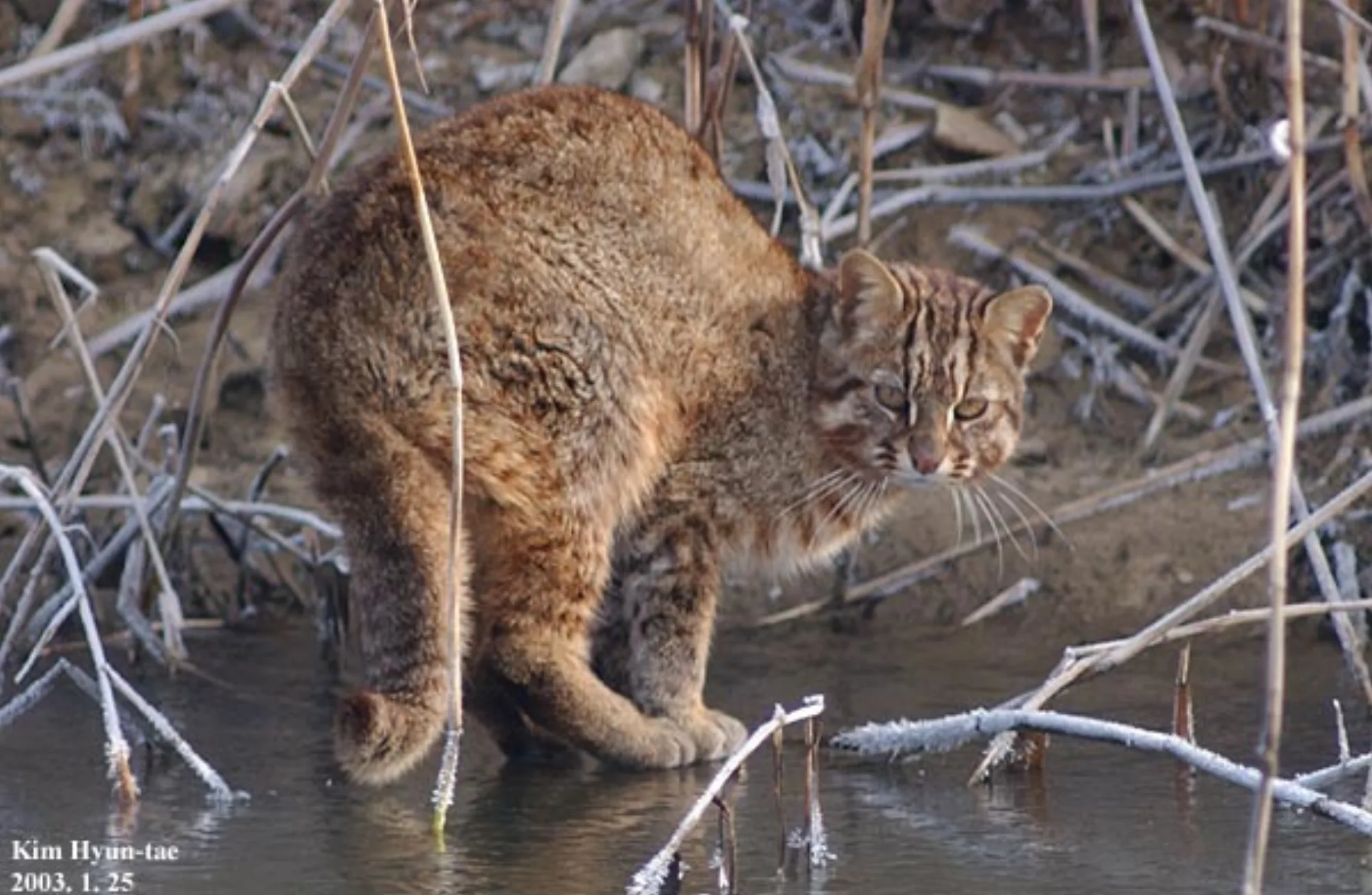
With its spotted coat and striped face, the Leopard Cat resembles a small domestic cat, though it is more slender and has longer legs. Dark stripes run from its eyes towards its ears, while shorter white streaks lead towards the nose. Its coat is generally tawny with a white chest and belly, but southern cats are yellowish brown and northern cats pale silver-grey. The spotted tail has faint rings near its black tip.
Its range stretches across continental South, Southeast and East Asia, reaching the Russian Far East from eastern Afghanistan and northern Pakistan. Tropical evergreen rainforest, subtropical deciduous and coniferous forest, and some cultivated landscapes with vegetation cover, including oil palm and sugar cane plantations, provide habitat. In the Himalayas, it has been recorded as high as 4,474 m.
Leopard cats are usually solitary and, although some are active by day, most hunt at night. They climb readily, rest in trees and also shelter in dense, thorny undergrowth. Rats and mice make up much of their diet across most of their range, alongside other small prey such as birds, lizards, amphibians and insects. In tropical habitats, kittens are born year round, while farther north births take place in spring; litters contain two or three kittens. Habitat loss and hunting threaten the cat in parts of its range, and it is killed for fur, food and the pet trade, as well as in retaliation for taking poultry. On Tsushima, habitat loss, the removal of hunting cover by deer and collisions with cars have added to the pressures it faces.
Written from the English Wikipedia article Leopard cat (CC BY-SA 4.0).
- Records
- 121
- Countries
- 8
- Atlas places
- 1
These are open occurrence records, so they show where people looked for and recorded the Leopard Cat as much as where it lives. Cells are up to 25 km across, and every location is generalised to its cell.
Generalised encounter areas, not exact locations. Each shape is a grid cell coloured by how likely the species is there.
- Very likelySouth Korea25 km zone · medium confidence · 86 records · updated 80 days ago
- Very likelyMalaysia25 km zone · medium confidence · 14 records · updated 80 days ago
- Very likelyThailand25 km zone · medium confidence · 10 records · updated 80 days ago
- LikelyTaiwan25 km zone · medium confidence · 7 records · updated 80 days ago
- LikelyIndia25 km zone · medium confidence · 3 records · updated 80 days ago
- PossibleHong Kong SAR China25 km zone · medium confidence · 1 record · updated 80 days ago
- PossibleChina25 km zone · low confidence · 0 records · updated 80 days ago
- UncommonCambodia25 km zone · low confidence · 0 records · updated 80 days ago
Conservation status not assessed here yet, so every location is generalised to its grid cell.