Giant Otter Shrew
Potamogale velox
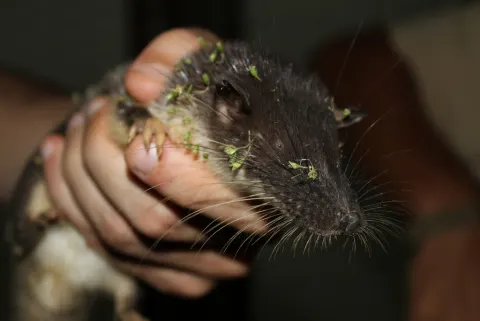
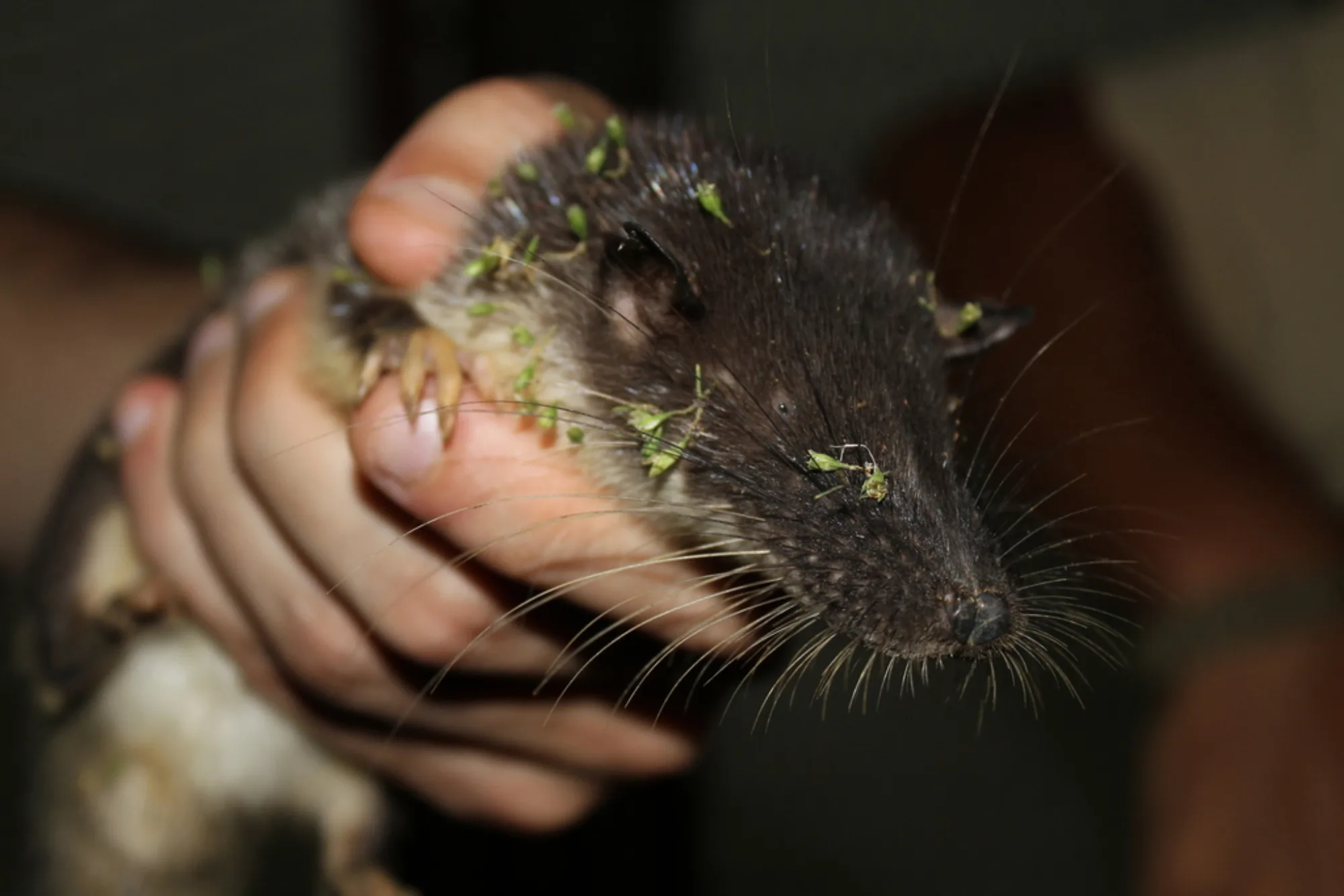
Resembling a cross between an otter and a shrew, the Giant Otter Shrew is a unique African mammal with a flat face and a thick coat of dark brown fur. It is easily identified by its muscular, laterally compressed tail which it moves side to side like a fish to swim. Despite its aquatic nature, its short legs are not webbed. Instead, it uses a skin flap on its hind feet to keep its legs tucked against its body while moving through the water. These animals weigh between 300 and 950 grams and can reach a total length of 640 millimetres including the tail.
This solitary creature lives in the rainforests of central Africa, ranging from Nigeria to Zambia, with small groups also found in Kenya and Uganda. It occupies fresh water habitats such as fast flowing rivers, swamps, and forest pools. By day, it hides in riverbank burrows lined with dry leaves, emerging at night to hunt. Using scent and sensitive whiskers rather than its small eyes, it searches for frogs, fish, and crabs. It is a predictable forager, often covering 800 meters in a single night and consuming its catch on the bank. Breeding occurs during the rainy season, when females produce litters of one or two young.
While currently widespread, populations are on the decline. Soil erosion caused by deforestation is a major threat, as the species avoids streams that have become too muddy. Human activity also impacts them directly through extensive hunting for their skins. Additionally, individuals sometimes drown after becoming entangled in fish traps or nets. Because they fare very poorly in captivity, often surviving only a few days, protecting their natural rainforest habitat is essential for their continued survival.
Written from the English Wikipedia article Giant otter shrew (CC BY-SA 4.0).
- Atlas places
- 0
These are open occurrence records, so they show where people looked for and recorded the Giant Otter Shrew as much as where it lives. Cells are up to 25 km across, and every location is generalised to its cell.
No encounter zones yet
Where and when you can expect to see Giant Otter Shrew is calculated from observation density. No zones have been computed for this species yet.
Conservation status not assessed here yet, so every location is generalised to its grid cell.