Plainfin Midshipman
Porichthys notatus
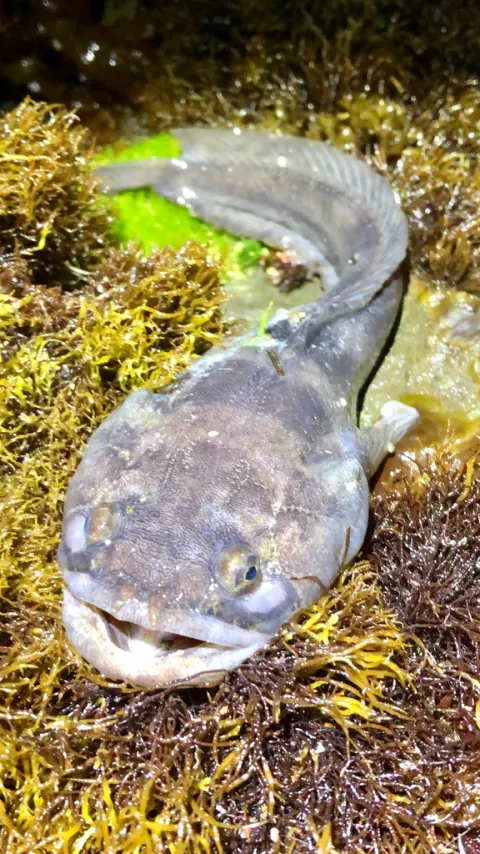
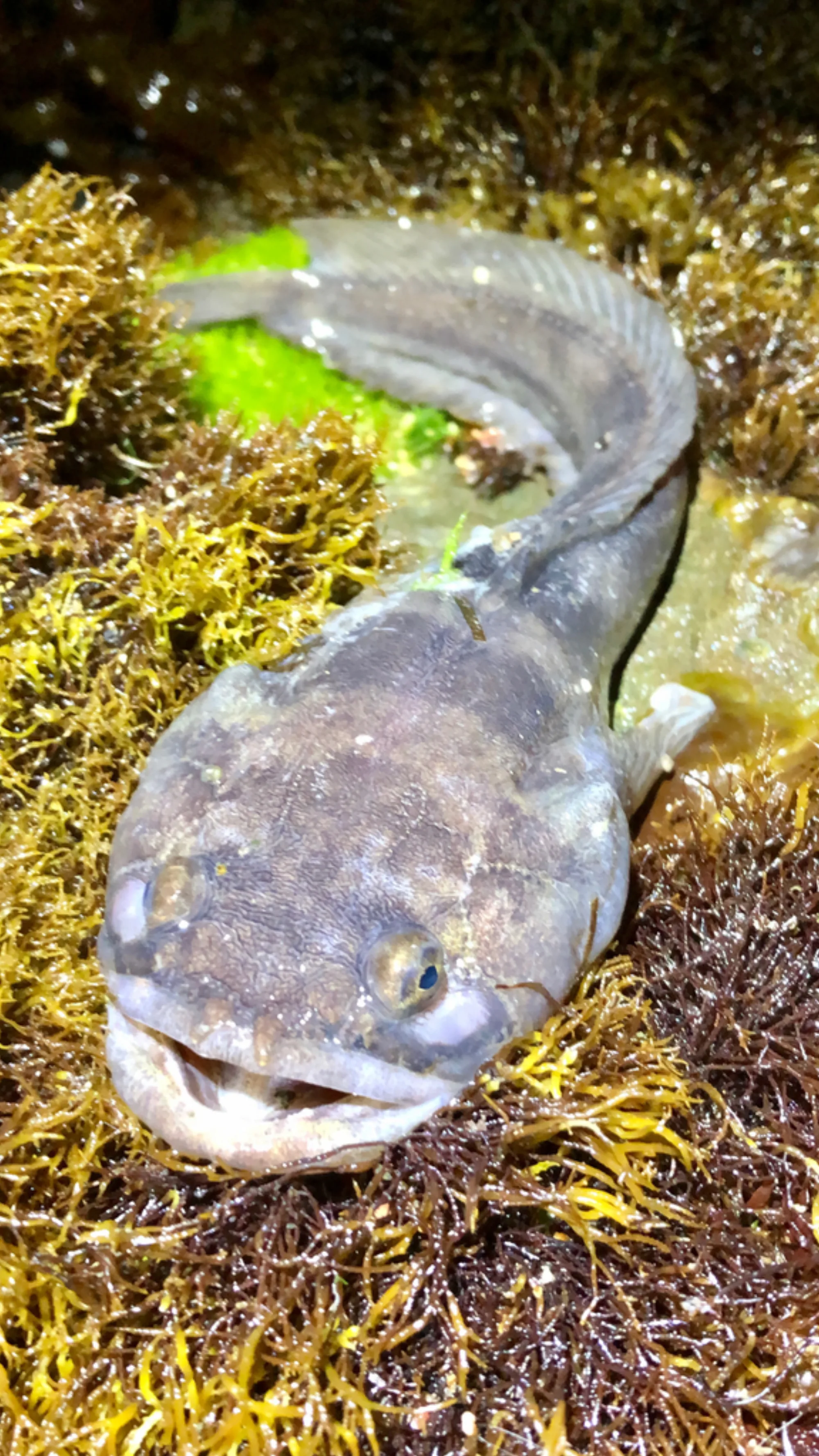
Along North America's Pacific coast, the Plainfin Midshipman lives near the bottom, with a range stretching south from Alaska's Sitka to Magdalena Bay, Baja California. This toadfish reaches up to 38 cm long, with a brownish, olive or iridescent purple back, paler sides and a yellowish or golden belly. A whitish patch and a black crescent lie below the eye, while wide pectoral fins and a narrow, rounded tail help give the fish its shape. Rows of light-producing spots run along its sides and underside, though most northern fish do not glow.
Outside the breeding season, these fish favour sandy or muddy bottoms, from just below the tide line down to 366 m. They feed at night on crustaceans and fish, then rest buried in sand during the day. Young midshipmen eat small crustacean larvae and zooplankton, and also spend daylight hours buried. In late spring and early summer, adults move into coastal intertidal areas to breed, and can be found beneath rocks or logs. In Monterey, California, they travel from canyons to shallow intertidal outcrops. Nesting males make a long humming call at night that draws females towards them. Where many males call together, the sound can be heard on land, and in Sausalito it can keep houseboat residents awake.
A nesting male digs a cavity beneath a rock or boulder and tends the eggs left there, keeping the nest clean and fanning them. He also protects the young after they hatch, until they leave the nest at the juvenile stage. Seals, sea lions, otters, mink, fish and crustaceans eat midshipmen, as do several coastal birds. Relatively high levels of contaminants, including dioxins, have also been found in the fish.
Written from the English Wikipedia article Porichthys notatus (CC BY-SA 4.0).
- Records
- 76,583
- Countries
- 3
- Atlas places
- 3
These are open occurrence records, so they show where people looked for and recorded the Plainfin Midshipman as much as where it lives. Cells are up to 25 km across, and every location is generalised to its cell.
Generalised encounter areas, not exact locations. Each shape is a grid cell coloured by how likely the species is there.
- Very likelyUnited States25 km zone · high confidence · 73260 records · updated 80 days ago
- Very likelyCanada25 km zone · high confidence · 3318 records · updated 80 days ago
- UncommonMexico25 km zone · medium confidence · 5 records · updated 80 days ago
Conservation status not assessed here yet, so every location is generalised to its grid cell.