Tapanuli Orangutan
Pongo tapanuliensis
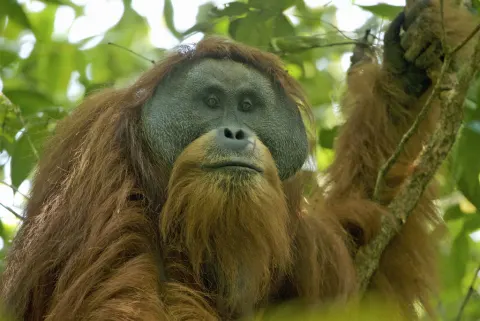
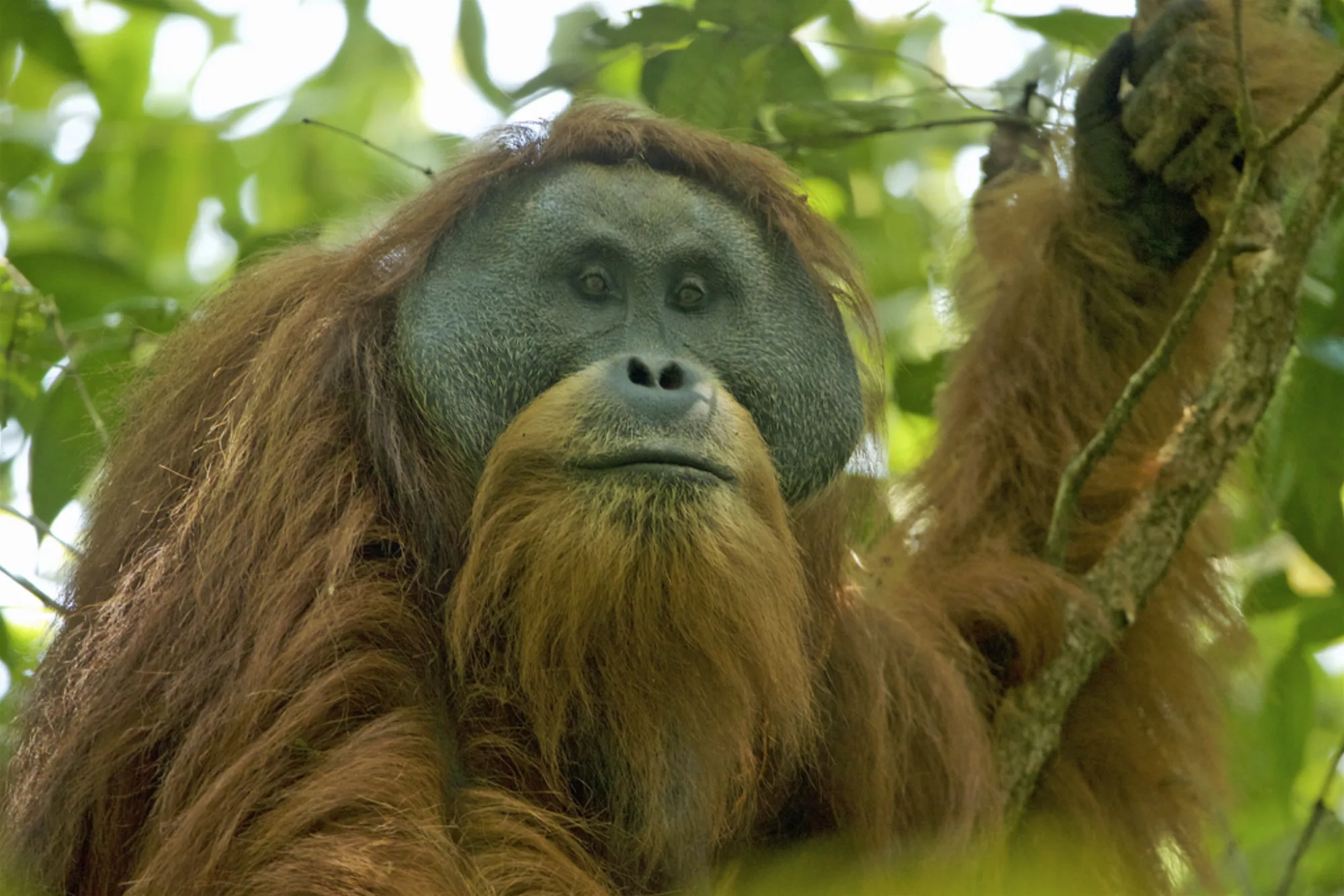
Living only in South Tapanuli on the island of Sumatra, the Tapanuli Orangutan was recognized as a unique species in 2017. These great apes inhabit the hilly Batang Toru area, specifically within tropical and subtropical moist broadleaf forests. Their limited range covers roughly 1,000 km2 at elevations between 300 and 1,300 m. Although they look similar to the Sumatran species, they have smaller heads and flatter, wider faces. You can identify them by their frizzier hair and the prominent moustaches found on dominant males. These males also have large, flat cheek pads covered in downy hair. To hear them, listen for the long call of the male, which reaches a higher maximum frequency than that of its Sumatran neighbors.
These primates are believed to be exclusively arboreal, as researchers have not observed them on the ground during more than 3,000 hours of study. This behavior likely helps them avoid Sumatran tigers, though they also face threats from clouded leopards, dholes, and crocodiles. Their diet includes unique items such as conifer cones and caterpillars. With a population of fewer than 800 individuals, they face many dangers. Human conflict and hunting remain serious issues, alongside the illegal wildlife trade. Their habitat is being destroyed by mining and small scale agriculture. Furthermore, a proposed hydroelectric dam could impact 10% of their remaining territory and damage vital wildlife corridors. Low reproductive rates and inbreeding within their fragmented range make it even harder for the population to recover from these pressures.
Written from the English Wikipedia article Tapanuli orangutan (CC BY-SA 4.0).
- Records
- 0
- Countries
- 1
- Atlas places
- 0
These are open occurrence records, so they show where people looked for and recorded the Tapanuli Orangutan as much as where it lives. Cells are up to 25 km across, and every location is generalised to its cell.
Generalised encounter areas, not exact locations. Each shape is a grid cell coloured by how likely the species is there.
- Very likelyIndonesia50 km zone · low confidence · 0 records · updated 4 days ago