Philippine Eagle
Pithecophaga jefferyi
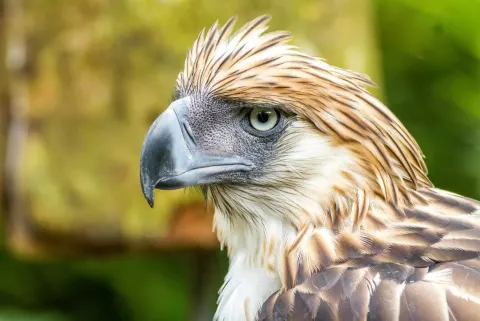
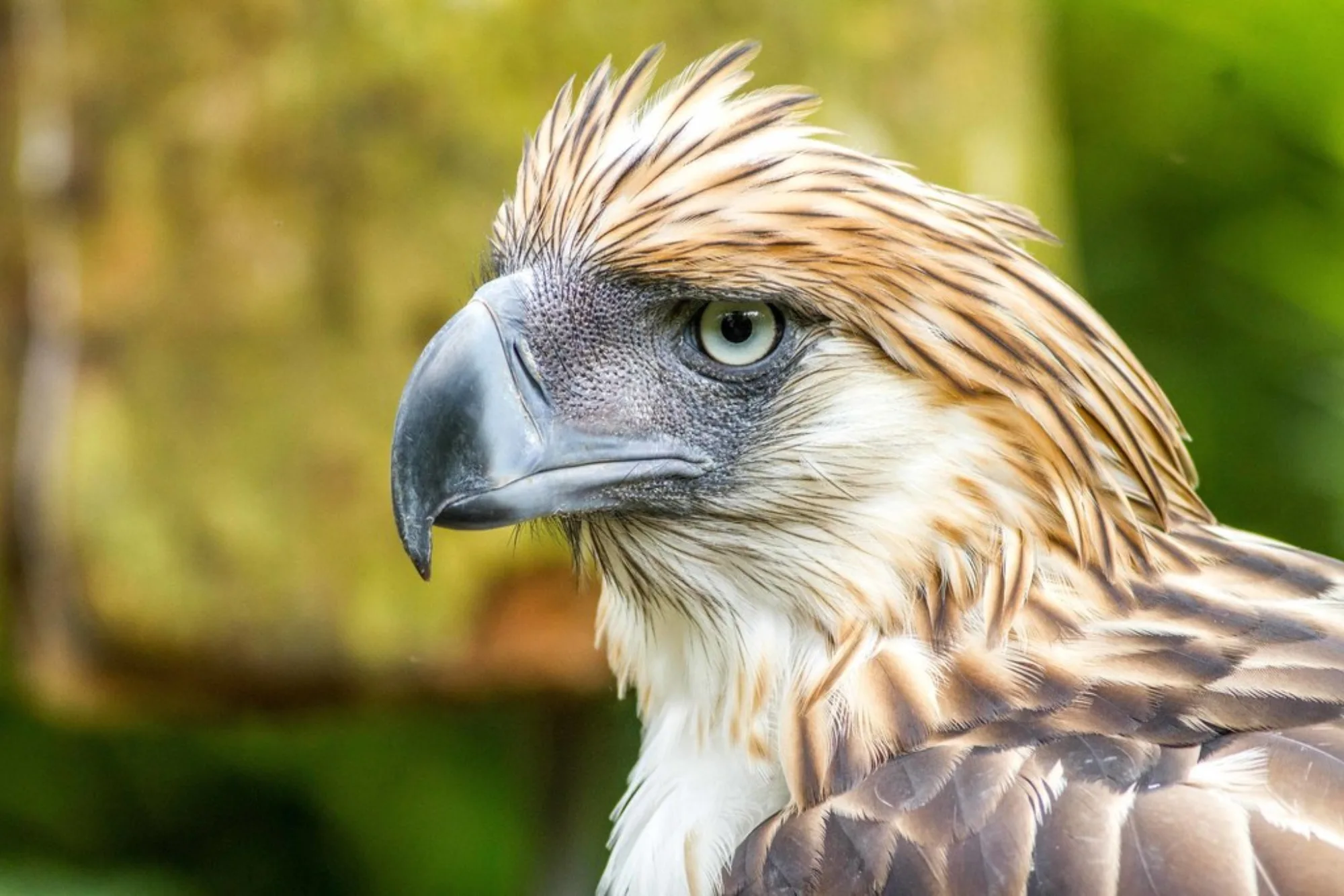
With a shaggy crest of long brown feathers and a dark face, the Philippine Eagle cuts a distinctive figure in the forest. Its back is dark brown, its underside and underwings are white, and its large beak is bluish-grey. It generally measures 86 to 102 cm in length, and its broad wings span 184 to 220 cm. Its loud, high-pitched whistles are the calls most often heard.
Found only in the Philippines, this eagle lives on eastern Luzon, Samar, Leyte and Mindanao, with the largest numbers on Mindanao. It inhabits dipterocarp and mid-montane forests, especially on steep ground, from the lowlands to mountains above 1,800 m. Its flight is fast and agile, and it hunts both by watching almost motionlessly from a branch and by gliding between perches. Despite its other name, monkey-eating eagle, it takes a wide range of prey, including mammals, birds and reptiles. Flying lemurs are favoured on Mindanao, while eagles on Luzon chiefly take macaques, reptiles and Northern Luzon giant cloud rats.
Pairs generally remain together for life and build a stick platform high in a tall tree, often returning to the same nesting site. The female usually lays one egg, and both parents feed the chick and shelter it from sun and rain. The young bird fledges after four or five months but receives parental care for 20 months. Each breeding pair needs a large home range, making forest loss a serious threat. Logging and expanding agriculture drive deforestation, while mining, pollution, pesticides and poaching also threaten the eagle; some birds are caught in traps set for deer.
Written from the English Wikipedia article Philippine eagle (CC BY-SA 4.0).
- Records
- 13
- Countries
- 1
No atlas park has a record of the Philippine Eagle in or around it yet.
These are open occurrence records, so they show where people looked for and recorded the Philippine Eagle as much as where it lives. Cells are up to 25 km across, and every location is generalised to its cell.
Generalised encounter areas, not exact locations. Each shape is a grid cell coloured by how likely the species is there.
- Very likelyPhilippines25 km zone · medium confidence · 13 records · updated 80 days ago
Conservation status not assessed here yet, so every location is generalised to its grid cell.