Campbell's Hamster
Phodopus campbelli
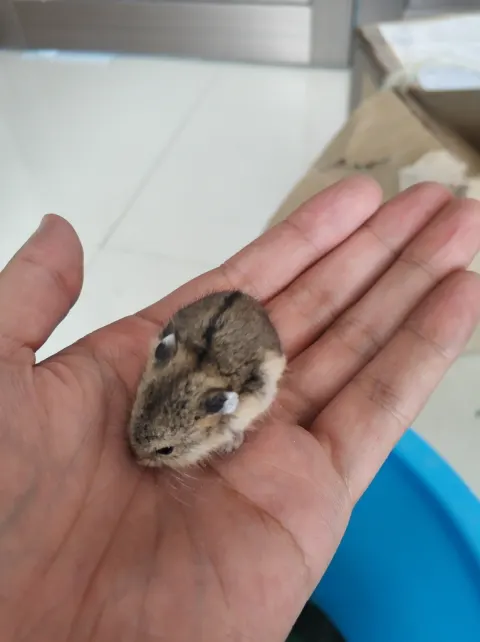
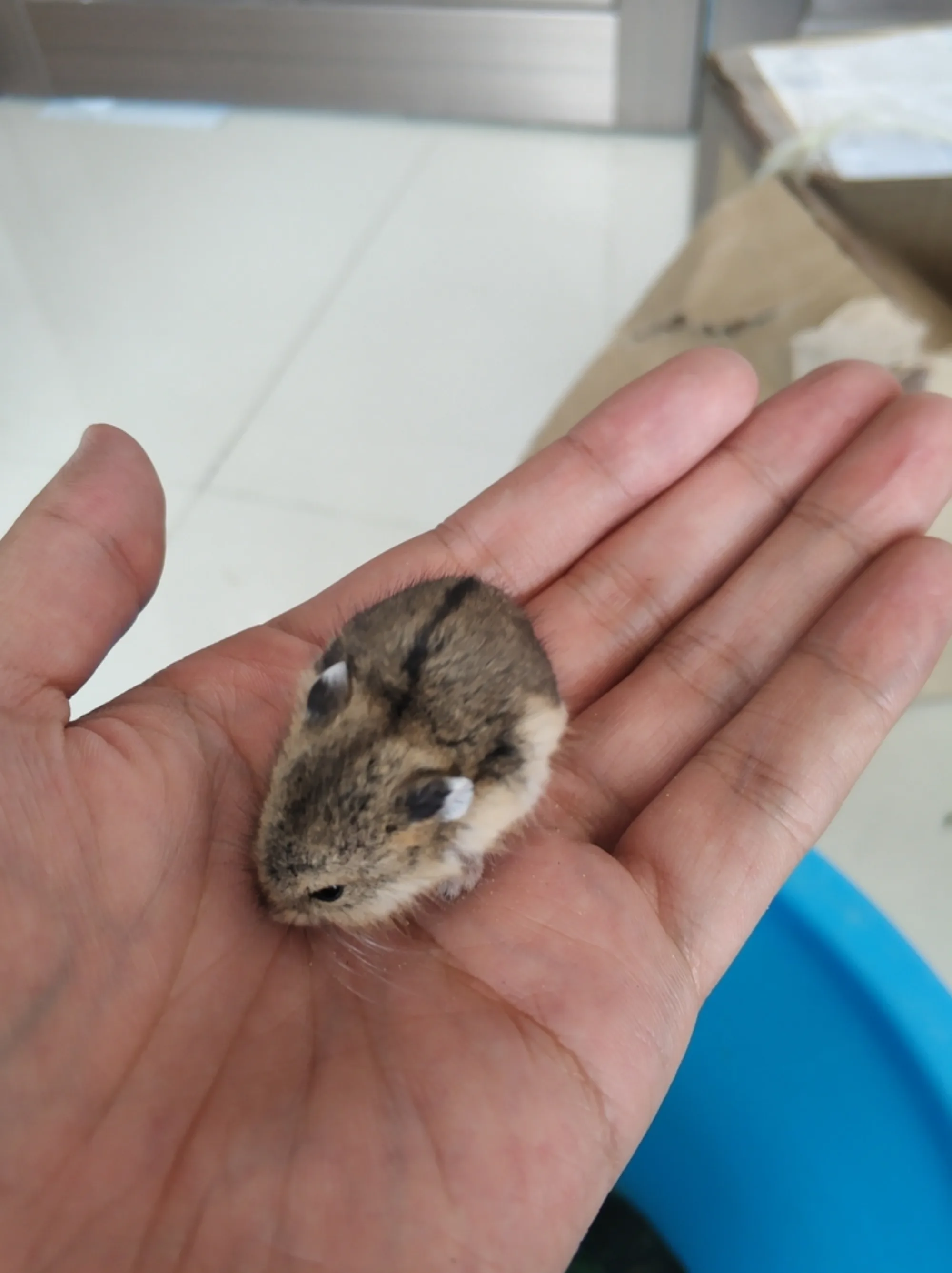
A narrow dark stripe runs down the back of the Campbell's Hamster (Phodopus campbelli), from its neck towards its tail. Its cheeks and lips are white, while the rest of its face can be grey or brown. The fur on its stomach is grey or brown, and its feet are white. It closely resembles the Djungarian hamster, but generally has smaller ears and a narrower, shorter, darker stripe. In some colourations, it also lacks the dark patch on the crown found on its relative.
This small hamster inhabits central Asian steppe and semi-desert habitats, including the Altai Mountains, Tuva and Hebei province in northeastern China. Its burrow can have four to six tunnels and a nesting area lined with dry grass or sheep's wool. In northern Manchuria, it may share a burrow with Daurian pikas. The hamster is active throughout the year, especially around dawn and dusk, and marks its territory with scent. It eats plant material and insects, and also hunts burrowing worms and grubs. Its wild diet varies across its range: plants recorded in Transbaikalia include Stipa capillata and Allium species, while Potentilla is common in its diet in Tuva.
In the wild, breeding begins in April in Tuva and around the end of April or beginning of May in Mongolia. Across its range, the season ends in late September or early October. Wild females produce three to four litters a year, averaging eight young per litter. Predators include the Eurasian eagle owl, steppe eagle, corsac fox, common kestrel and saker falcon. No major or widespread threats are known, though increasing livestock numbers put some burrows at risk of destruction, and declining water sources are a minor concern in arid areas.
Written from the English Wikipedia article Campbell's dwarf hamster (CC BY-SA 4.0).
- Records
- 12
- Countries
- 1
No atlas park has a record of the Campbell's Hamster in or around it yet.
These are open occurrence records, so they show where people looked for and recorded the Campbell's Hamster as much as where it lives. Cells are up to 25 km across, and every location is generalised to its cell.
Generalised encounter areas, not exact locations. Each shape is a grid cell coloured by how likely the species is there.
- Very likelyChina25 km zone · medium confidence · 12 records · updated 80 days ago
Conservation status not assessed here yet, so every location is generalised to its grid cell.