Vaquita
Phocoena sinus
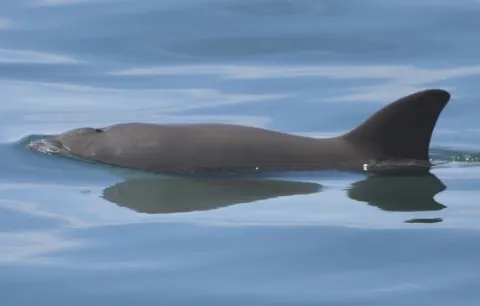
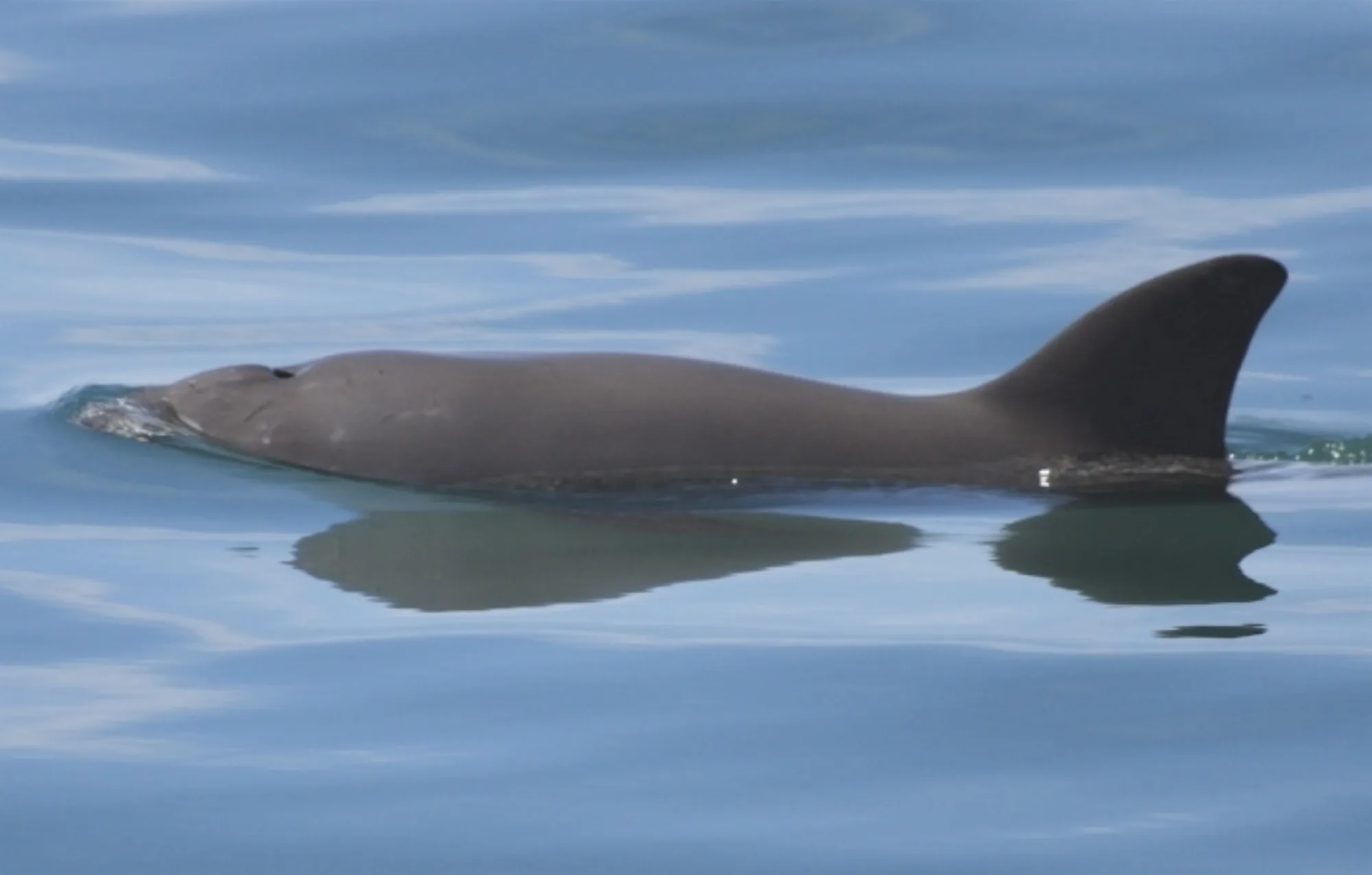
Small and elusive, the Vaquita is a porpoise found only at the northern end of Mexico's Gulf of California. It is the smallest living cetacean, with females reaching about 150 cm and males about 140 cm in length. Look for a tall, triangular dorsal fin, a rounded head without a distinct beak, and dark patches around the eyes and lips. Its body is mostly grey, darker along the back and white underneath. Its range is confined to a small area of the upper gulf, also known as the Sea of Cortez, where it lives in shallow, cloudy water less than 150 m deep.
Vaquitas are usually seen alone or in pairs, often accompanied by a calf, although groups of up to 10 have been recorded. They eat a variety of fish, crustaceans and squid, with bottom-dwelling fish such as grunts and croakers making up most of their diet. Much about their lives remains unknown, but their estimated lifespan is 20 years. Females give birth to a single calf, usually between February and April, and nurse it for 6 to 8 months. One estimate puts births about two years apart, although more recent sightings suggest they can reproduce annually.
Fishing gear poses the greatest threat: vaquitas become caught accidentally in gillnets, including those used illegally to catch totoaba. Gillnets used for shrimp and other fish have also contributed to the steep decline. Illegal totoaba fishing continues in vaquita habitat despite restrictions on gillnets. Pollution and pesticides carried into coastal waters by agricultural runoff are further threats. With so few animals remaining, deaths in fishing gear are difficult for the population to replace.
Written from the English Wikipedia article Vaquita (CC BY-SA 4.0).
- Records
- 112
- Countries
- 1
No atlas park has a record of the Vaquita in or around it yet.
These are open occurrence records, so they show where people looked for and recorded the Vaquita as much as where it lives. Cells are up to 25 km across, and every location is generalised to its cell.
Generalised encounter areas, not exact locations. Each shape is a grid cell coloured by how likely the species is there.
- Very likelyMexico25 km zone · medium confidence · 112 records · updated 80 days ago
Conservation status not assessed here yet, so every location is generalised to its grid cell.