Koala
Phascolarctos cinereus
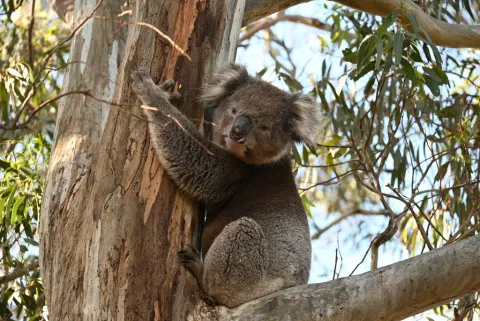
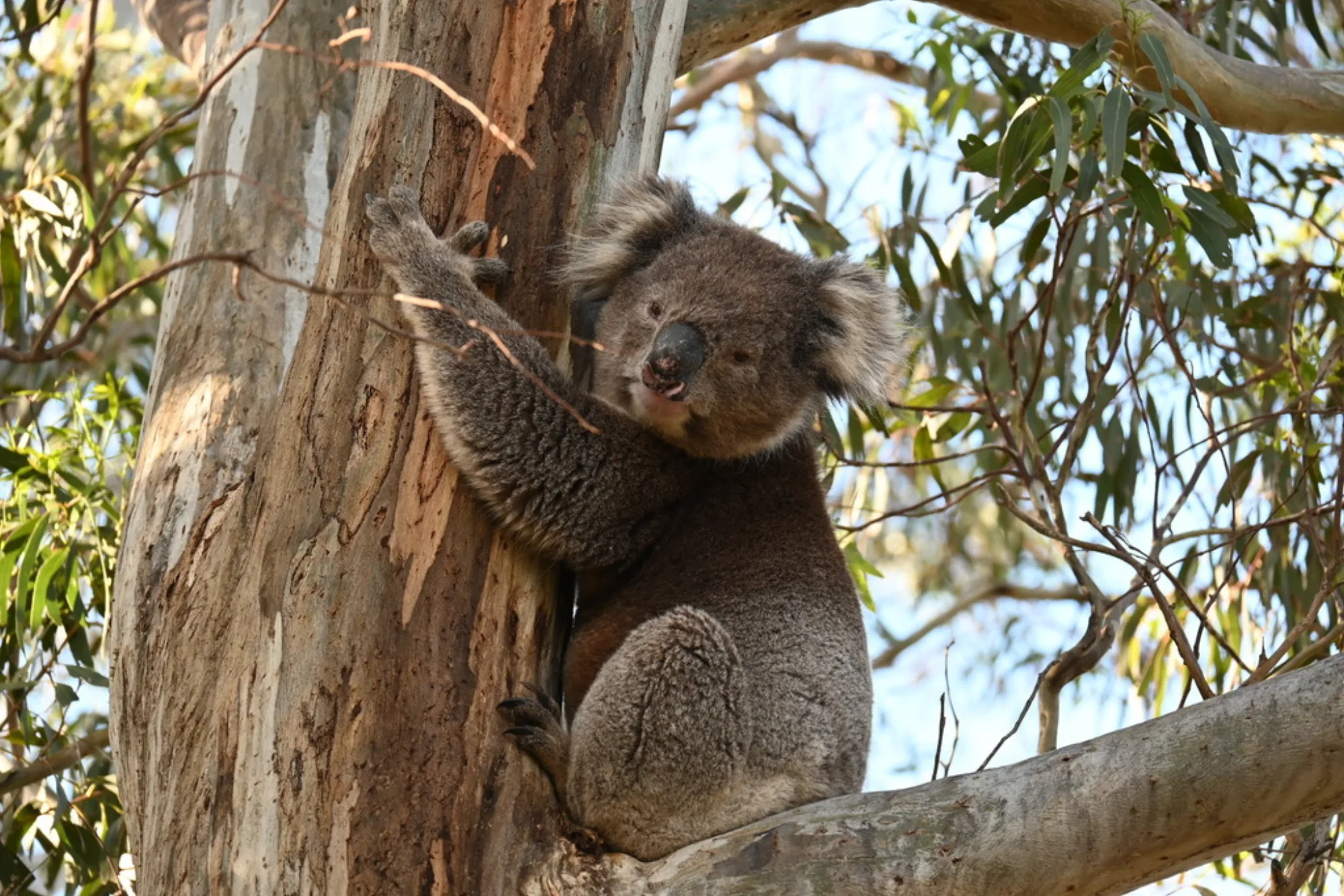
High in the trees of eastern and southern Australia, the Koala is a plant-eating marsupial with a stout body and little or no tail. Its large head, round fluffy ears and dark nose make it easy to recognise, while its fur ranges from silver grey to chocolate brown. Northern animals tend to be smaller and paler than those farther south.
Koalas usually inhabit open eucalyptus woodland across parts of four Australian states, from Queensland south to Victoria and west to South Australia. They also occupy habitats from dense woodland to more widely spaced forest, and in semi-arid areas favour places beside streams and creeks. Eucalyptus leaves form most of their diet, although they can also be found in other kinds of trees. The leaves provide little energy, so koalas spend much of their time resting and may sleep for 20 hours a day. They are most active at night, when they spend much of their waking time searching for food. On hot days, a koala may rest lower in the canopy, close to the cooler trunk. It spends most of its time in trees but comes down to travel between them. Koalas generally live alone, though mothers form bonds with their dependent young. Births take place from October to May, and a joey spends its first six to seven months in its mother's pouch. After leaving the pouch, it rides on her back and learns to climb.
Habitat clearing for agriculture and urban development threatens koalas, as do drought and bushfires. In urban areas, vehicles and domestic dogs pose additional dangers. Disease is another threat, including infections caused by Chlamydiaceae bacteria and the koala retrovirus.
Written from the English Wikipedia article Koala (CC BY-SA 4.0).
- Records
- 325,682
- Countries
- 1
- Atlas places
- 4
These are open occurrence records, so they show where people looked for and recorded the Koala as much as where it lives. Cells are up to 25 km across, and every location is generalised to its cell.
Generalised encounter areas, not exact locations. Each shape is a grid cell coloured by how likely the species is there.
- Very likelyAustralia25 km zone · high confidence · 325682 records · updated 80 days ago
Conservation status not assessed here yet, so every location is generalised to its grid cell.