Amami Rabbit
Pentalagus furnessi
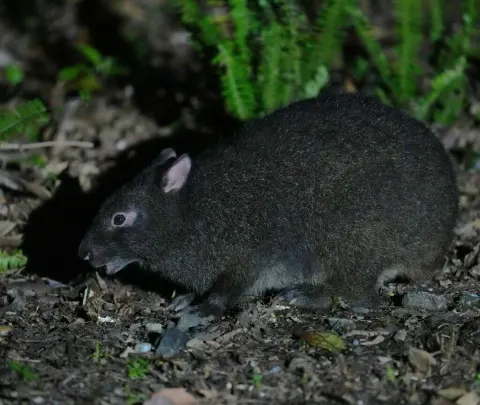
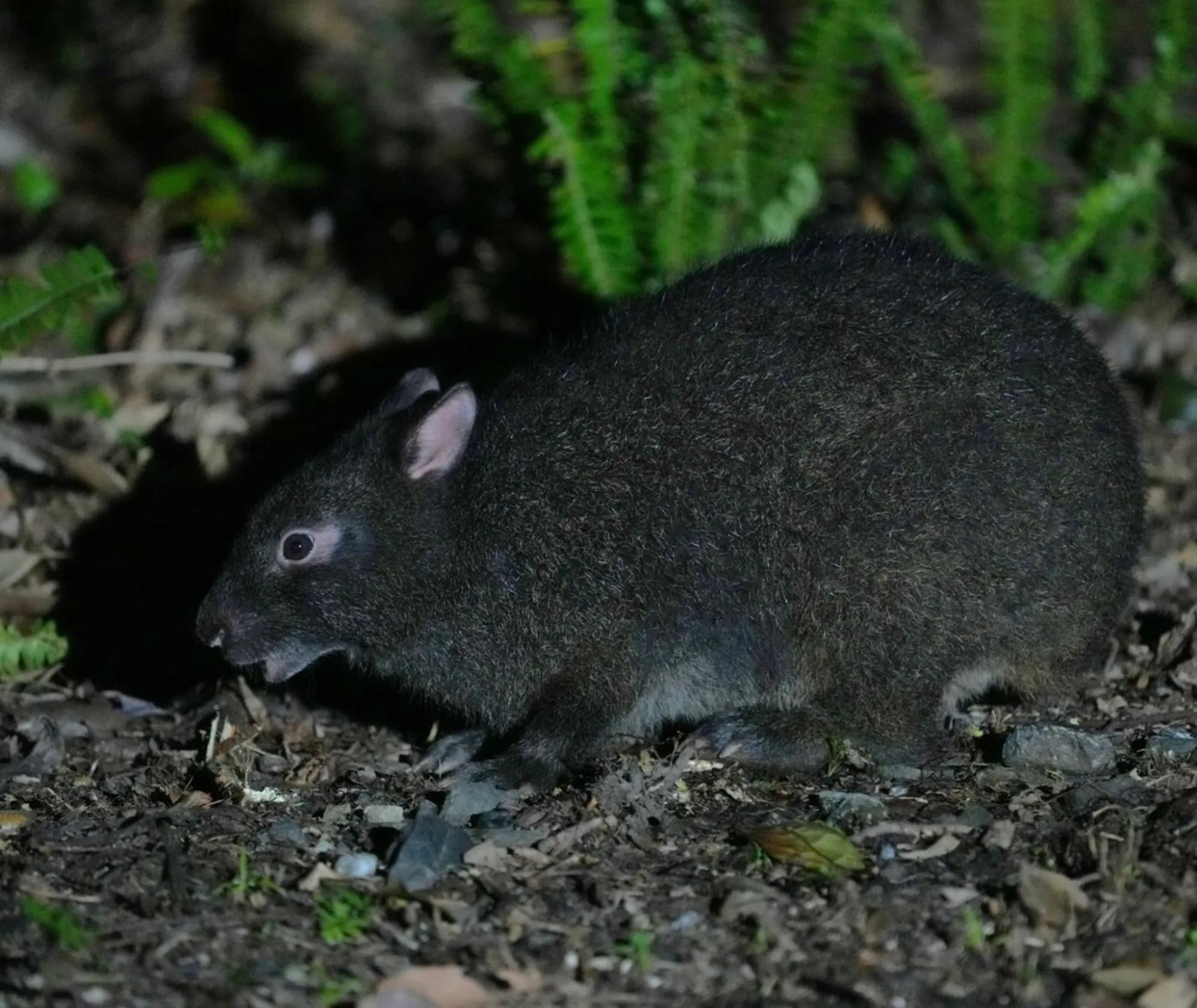
With its bulky body, short legs and small ears, the Amami Rabbit has a distinctive shape. Its thick, woolly fur is dark brown above and more reddish brown along the sides, while its large claws help it dig and sometimes climb. This rabbit lives only on Amami Ōshima and Tokunoshima, two Japanese islands between southern Kyūshū and Okinawa. It favours places where mature and young forests meet, with unobstructed access between them: the older forest provides shelter, while both forest types offer food.
A nocturnal forest-dweller, it sleeps by day in concealed places such as caves and has a call resembling that of a pika. Its varied diet includes sprouts, young shoots, acorns, nuts, bark and the soft tissue beneath bark. In summer it mainly eats Japanese pampas grass, switching chiefly to pasania tree acorns in winter. It also eats the fruit of a parasitic flowering plant, Balanophora yuwanensis, and is the main distributor of its seeds. Breeding takes place once from late March to May and once from September to December, with one or two young each time. A mother hides her young in a hole, opens it at night to nurse them and then closes the entrance with soil and plant material.
Forest clearing for logging, agriculture and housing damages its habitat, while forest roads fragment it and make access easier for predators. Feral cats and dogs prey on the rabbit, as did the invasive small Indian mongoose, which was declared eradicated on Amami Island in September 2024. Plans for golf courses and resorts also threaten to remove habitat.
Written from the English Wikipedia article Amami rabbit (CC BY-SA 4.0).
- Records
- 20
- Countries
- 1
No atlas park has a record of the Amami Rabbit in or around it yet.
These are open occurrence records, so they show where people looked for and recorded the Amami Rabbit as much as where it lives. Cells are up to 25 km across, and every location is generalised to its cell.
Generalised encounter areas, not exact locations. Each shape is a grid cell coloured by how likely the species is there.
- Very likelyJapan25 km zone · medium confidence · 20 records · updated 80 days ago
Conservation status not assessed here yet, so every location is generalised to its grid cell.