Golden Palm Civet
Paradoxurus zeylonensis
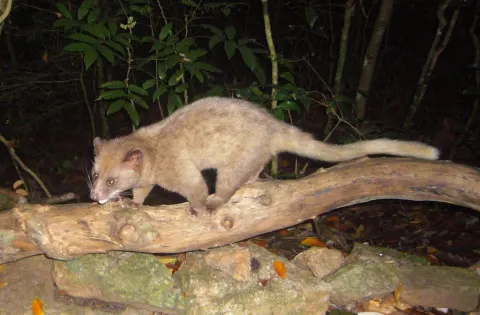
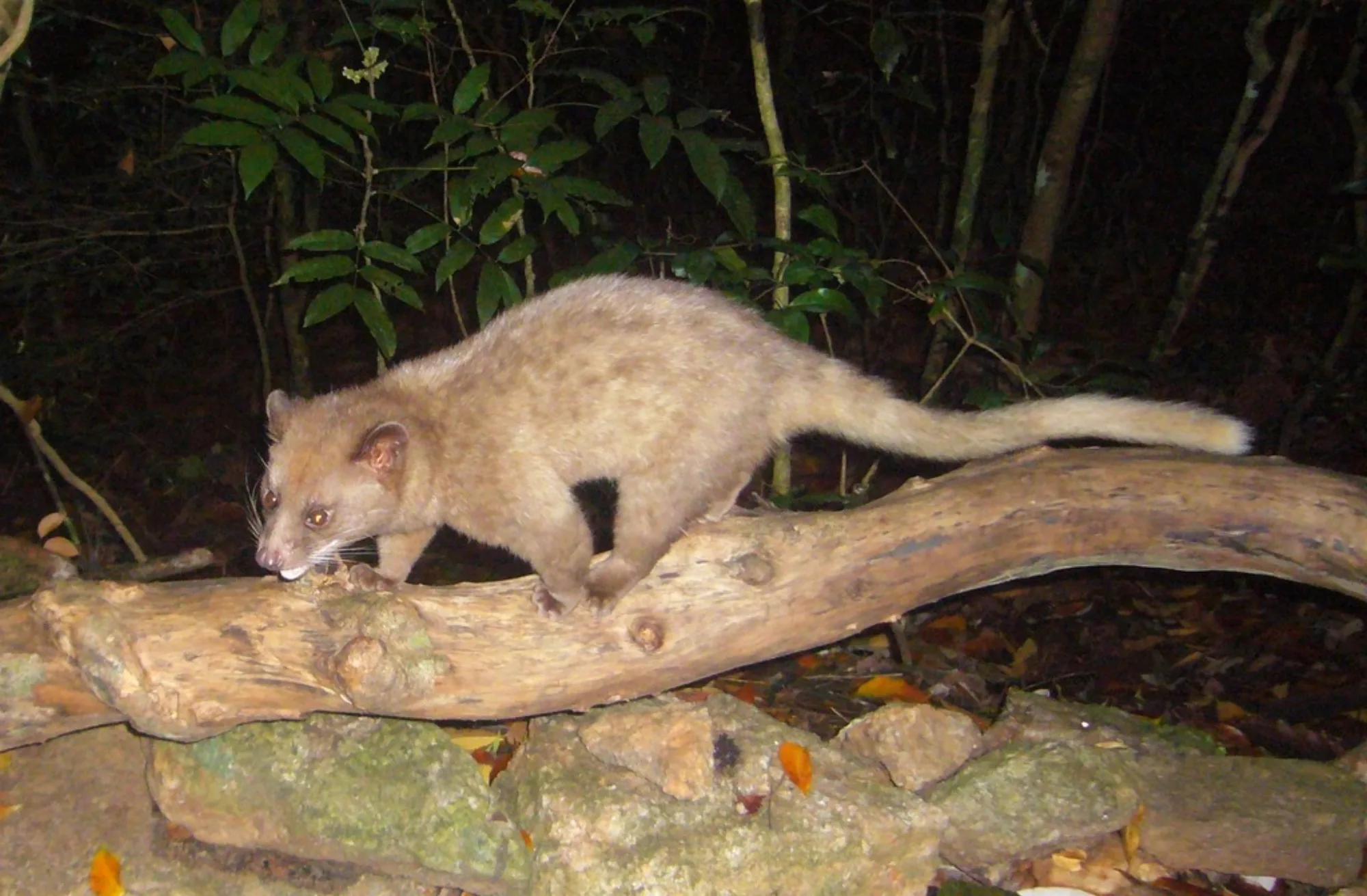
Endemic to Sri Lanka, the Golden Palm Civet is a nocturnal mammal with a coat that ranges from dark sepia to ochreous or rusty gold. Its underside is typically paler, and its large eyes feature vertical pupils. While its face lacks a pattern, its back may show faint spots or bands. Some individuals from the mountains have a greyish tone and a yellowish-white tip on their tails. A unique characteristic of this animal is the pleasant scent it produces from its glands, which smells like the flowers of Michelia champaca.
This tree-dwelling species is solitary and lives across the island's wet, dry, and intermediate zones. You may find them in lowland rainforests, cloud forests, or monsoon forests from sea level up to 2,000 m. They are flexible enough to inhabit home gardens, agricultural lands, and secondary forests, though they generally avoid urban areas. Their diet is diverse, consisting of berries, fruits, invertebrates, and various small vertebrates.
Because they are active at night and live in the trees, these animals are often under-reported. However, they face real challenges as the quality and extent of their habitat in the hill regions of Sri Lanka decline. While they can tolerate some modification to their environment, their long-term survival relies on the presence of forest cover, as they are unlikely to survive in landscapes that have been completely deforested.
Written from the English Wikipedia article Golden palm civet (CC BY-SA 4.0).
- Records
- 2
- Countries
- 1
- Atlas places
- 0
These are open occurrence records, so they show where people looked for and recorded the Golden Palm Civet as much as where it lives. Cells are up to 25 km across, and every location is generalised to its cell.
Generalised encounter areas, not exact locations. Each shape is a grid cell coloured by how likely the species is there.
- Very likelySri Lanka25 km zone · medium confidence · 2 records · updated 4 days ago
Conservation status not assessed here yet, so every location is generalised to its grid cell.