Tiger
Panthera tigris
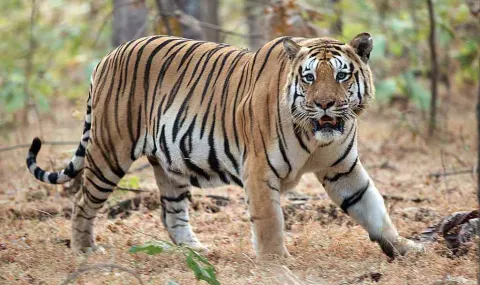
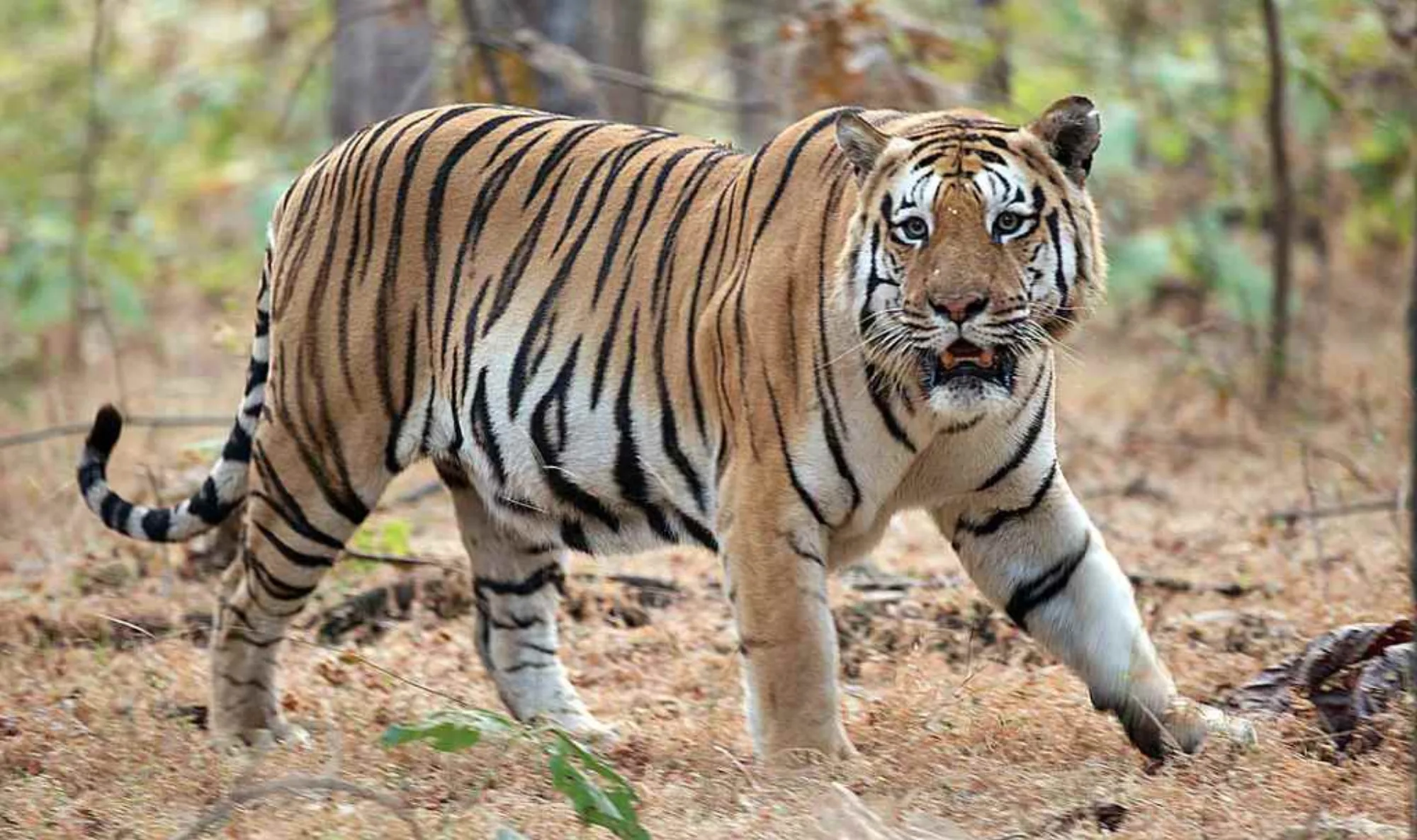
Orange fur, dark stripes and a powerful build make the Tiger (Panthera tigris) distinctive among Asia's cats. Its coat fades to white on the underside and parts of the face, while each individual has its own stripe pattern. Those stripes help it blend into vegetation where trees, reeds or tall grass create vertical patterns of light and shade. A strong swimmer, it crosses rivers and also immerses itself in water on hot days.
Its scattered range reaches from the Indian subcontinent and Indochina to Sumatra, with other populations in northeastern China and the Russian Far East. Forest is its main habitat, from temperate mixed woodland in Russia and China to tropical forests farther south. On the Indian subcontinent it also lives in the mangroves of the Sundarbans, while in Sumatra it occupies peat swamp and mountain forests. Activity varies by place: in Chitwan National Park, camera traps found tigers more active at night than during the day. Adults generally live alone, defending their home ranges against others of the same sex. A male's range overlaps those of several females.
Tigers hunt mainly by ambush, taking large and medium-sized hoofed mammals such as deer, gaur and wild boar. They also take smaller animals, including monkeys, birds and fish. A mother usually gives birth to two or three cubs in a sheltered place and teaches them to hunt. The young stay with her for about two years before establishing ranges of their own. Forest clearing breaks up and destroys habitat, while poachers target tigers for their fur and body parts. Where wild prey is scarce, tigers may attack livestock and can be killed in retaliation.
Written from the English Wikipedia article Tiger (CC BY-SA 4.0).
- Records
- 58
- Countries
- 4
- Atlas places
- 2
These are open occurrence records, so they show where people looked for and recorded the Tiger as much as where it lives. Cells are up to 25 km across, and every location is generalised to its cell.
Generalised encounter areas, not exact locations. Each shape is a grid cell coloured by how likely the species is there.
- Very likelyIndia25 km zone · medium confidence · 33 records · updated 80 days ago
- LikelyLaos25 km zone · medium confidence · 14 records · updated 80 days ago
- PossibleUnited States25 km zone · medium confidence · 7 records · updated 80 days ago
- PossibleChina25 km zone · medium confidence · 4 records · updated 80 days ago
Conservation status not assessed here yet, so every location is generalised to its grid cell.