Kuhli Loach
Pangio kuhlii
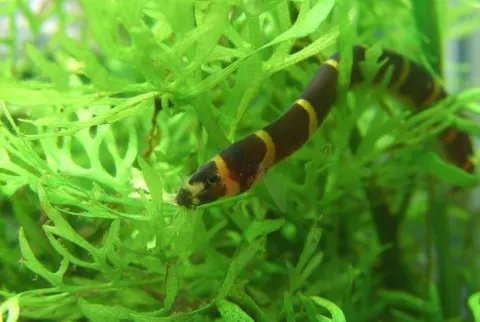
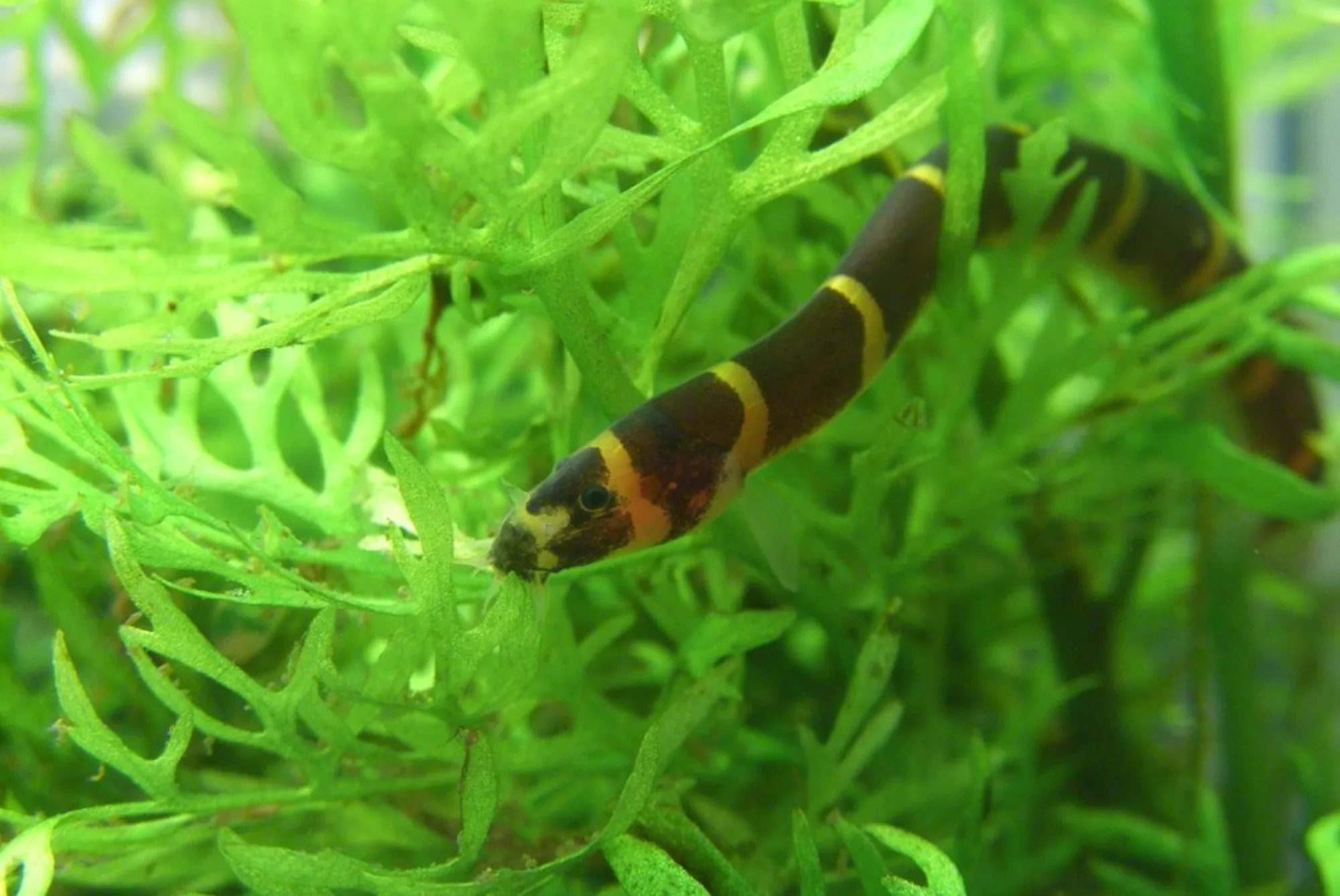
Resembling a small, slender eel, the Kuhli Loach is a worm-shaped fish with an orange-pink body marked by ten to fifteen dark vertical bars. These nocturnal creatures possess four pairs of fleshy whiskers around the mouth and a defensive spine tucked beneath each eye. Reaching a maximum length of 4 inches, they are social animals that prefer to live in small clusters. While they are often confused with similar species in the aquarium trade, the true version is found on the island of Java in Indonesia.
In their natural range, these fish inhabit the sandy beds of clean mountain streams and slow-moving rivers. They are frequently found in shallow, shaded areas such as reservoirs, swamps, and muddy pools where they can hide under leaf litter. As scavengers, they swim near the bottom to feed on whatever food they can find among obstacles. When the water is murky, they are able to breathe air to survive. Breeding occurs in very shallow water, where they lay several hundred greenish eggs among the roots of floating plants.
Populations are currently threatened by the expansion of industrial palm plantations, which can cause bank erosion and increase sedimentation in their habitat. This land degradation removes the shade and leaf litter they need for protection. Because they live in shallow pools, a lack of shade puts them at risk of overheating. Furthermore, the use of pesticides and fertilizers in nearby agriculture can pollute the water. They are also highly valued as ornamental fish, and overcollection for the market remains a primary concern for the species.
Written from the English Wikipedia article Kuhli loach (CC BY-SA 4.0).
- Atlas places
- 0
These are open occurrence records, so they show where people looked for and recorded the Kuhli Loach as much as where it lives. Cells are up to 25 km across, and every location is generalised to its cell.
No encounter zones yet
Where and when you can expect to see Kuhli Loach is calculated from observation density. No zones have been computed for this species yet.
Conservation status not assessed here yet, so every location is generalised to its grid cell.