Giant Pangasius
Pangasius sanitwongsei
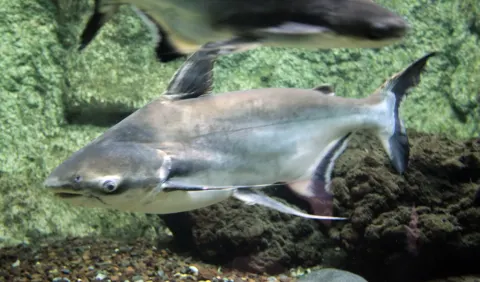
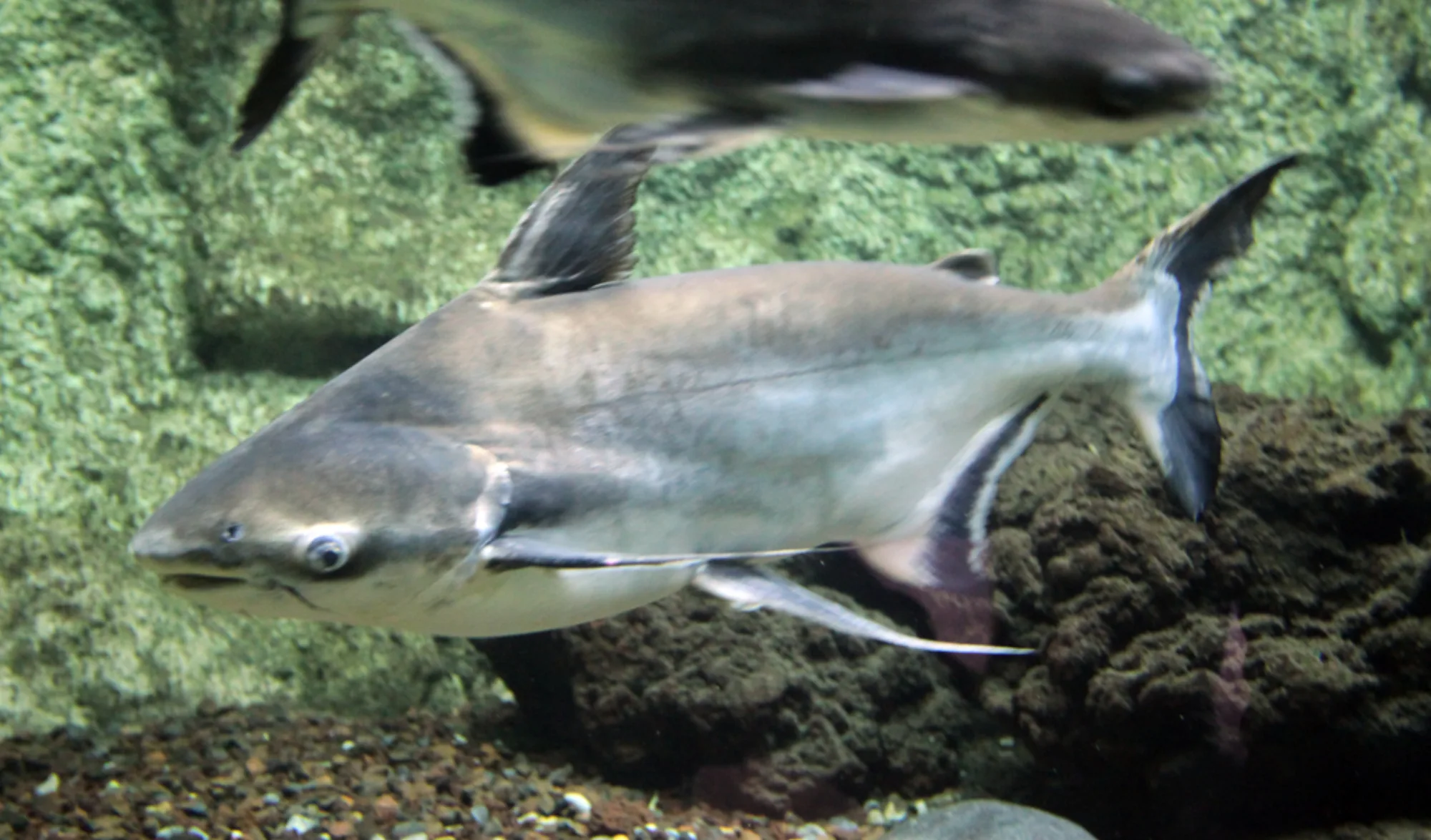
Reaching up to 300 centimetres in length, the Giant Pangasius is a massive inhabitant of the Mekong and Chao Phraya basins. It is easily identified by its dark brown back and silver, curved belly, which provide camouflage in the water. Unlike many other catfish, this species often swims off the riverbed. Its head is wide and flat, and its fins are notably dark, with long filaments extending from the first rays of the pelvic, pectoral, and dorsal fins.
These fish are top predators that maintain the balance of the river ecosystem by preying on smaller fish, crustaceans, and the remains of larger animals. They prefer the deep depressions of freshwater rivers but can also tolerate brackish conditions. During the months of April and May, they migrate within their river systems to spawn, typically releasing around 600 eggs in muddy areas. Because they grow rapidly and lack parental care, they are particularly vulnerable to environmental pressures.
Travellers should note that these giants face severe threats from overharvesting for food and sport. Because they are migratory, the construction of dams is a major obstacle, as it segments their habitat and blocks access to breeding sites. Pollution and a lack of regional enforcement further impact their numbers. To help the population recover, some governments have implemented fishing bans and breeding programs, while conservation groups work to protect the river systems they call home.
Written from the English Wikipedia article Giant pangasius (CC BY-SA 4.0).
- Atlas places
- 0
These are open occurrence records, so they show where people looked for and recorded the Giant Pangasius as much as where it lives. Cells are up to 25 km across, and every location is generalised to its cell.
No encounter zones yet
Where and when you can expect to see Giant Pangasius is calculated from observation density. No zones have been computed for this species yet.