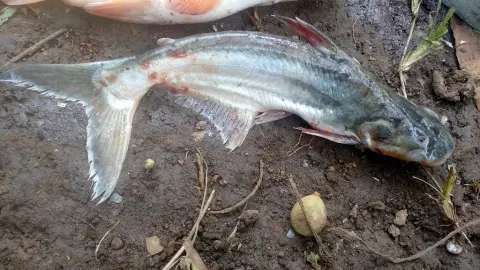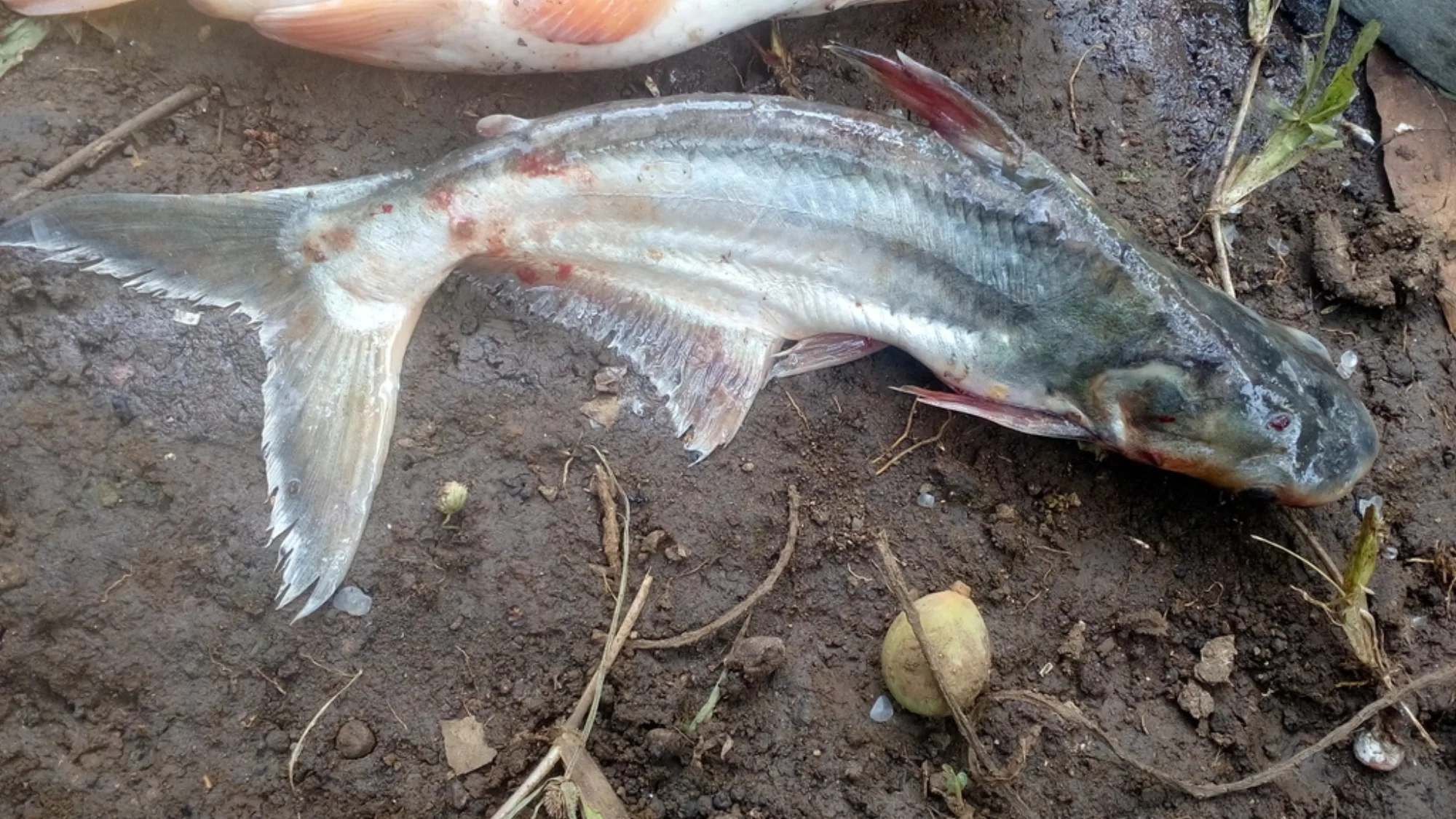
Basa Catfish
Pangasius bocourti
The Basa Catfish (Pangasius bocourti) belongs to the shark-catfish family and lives mainly in fresh water. Its native range covers the Mekong and Chao Phraya basins in mainland Southeast Asia. It has a stout, heavy body and a rounded head that is wider than it is long. A white band crosses its blunt snout, and the fish can reach 120 centimetres in length. Basa feed on plants and spawn as the flood season begins. Their young are first seen in June and average about five centimetres by the middle of that month.
For travellers encountering basa in markets, the name on a label can vary considerably. In Asian fish markets it may be called Pacific dory or patin, while in the United Kingdom it is also sold as river cobbler. Other related shark-catfish species are sometimes incorrectly labelled as basa, including the iridescent shark and the yellowtail catfish. Basa are an important regional food source and are also valued in international markets. In the UK, they are sold fresh and frozen, mainly through large supermarkets, as a cheaper alternative to fish such as cod and haddock.
Environmental groups have raised concerns about the effects of farming basa on surrounding ecosystems and wild fish. OceanWise has flagged possible pollution and disruption to wild species from basa farms. It also links disease transmission to wild basa with farming in open cages in Southeast Asia. The group has questioned the quality of feed and standards on farms, as well as the biological effects of taking wild fish for cultivation.
Written from the English Wikipedia article Basa (fish) (CC BY-SA 4.0).
- Records
- 4
- Countries
- 1
No atlas park has a record of the Basa Catfish in or around it yet.
These are open occurrence records, so they show where people looked for and recorded the Basa Catfish as much as where it lives. Cells are up to 25 km across, and every location is generalised to its cell.
Generalised encounter areas, not exact locations. Each shape is a grid cell coloured by how likely the species is there.
- Very likelyCambodia25 km zone · medium confidence · 4 records · updated 80 days ago
Conservation status not assessed here yet, so every location is generalised to its grid cell.