Bonobo
Pan paniscus
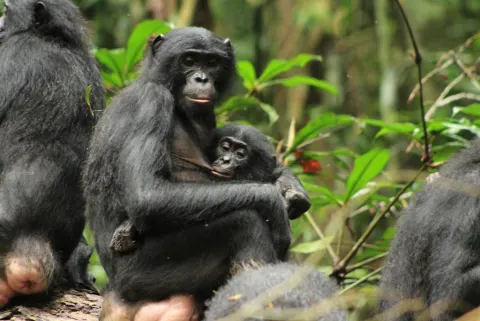
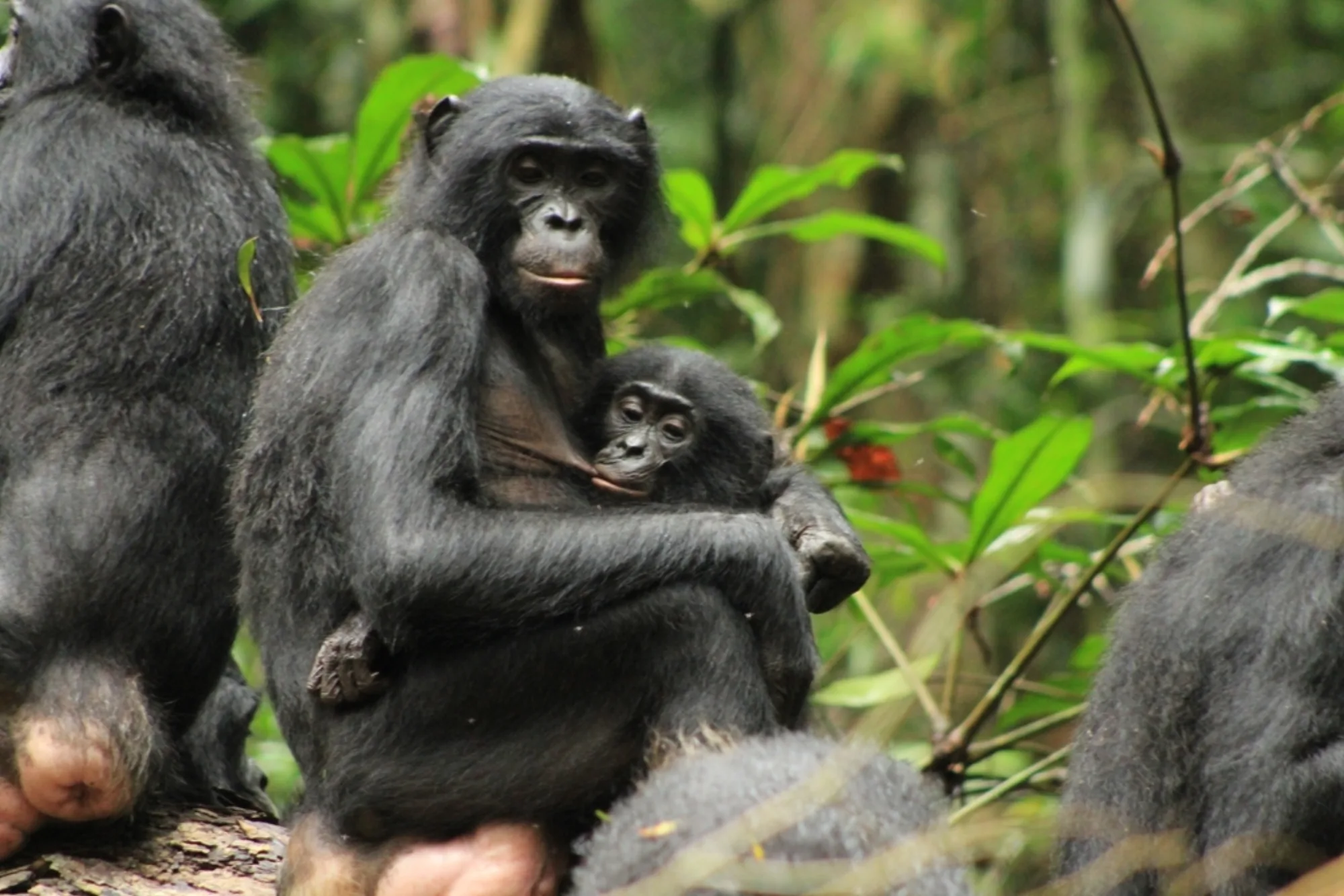
Often identified by their dark faces and pink lips, bonobos are the smallest of the great apes. They are distinguished from common chimpanzees by their longer legs, narrow shoulders, and the long, parted hair on their heads. While they typically spend time in the trees and on the ground using all four limbs, they occasionally walk upright. In captivity, they generally live for 40 years, though their lifespan in the wild is expected to be much shorter.
These primates are found only in the Democratic Republic of the Congo, specifically in the humid forests of the Congo Basin south of the Congo River. They inhabit both primary and secondary forests, including areas of swamp forest that flood seasonally. Their diet is primarily based on fruit, though they supplement this with leaves, honey, and eggs. They also eat invertebrates and small vertebrates, such as rodents and small antelope. Living in communities of around 100 members, they split into smaller groups during the day to forage before reuniting to sleep in tree nests.
Social life is dominated by females, who form strong alliances to manage group dynamics and resolve conflicts. Sexual activity is used frequently to maintain these bonds and settle disputes. Females usually have their first offspring at 13 or 14 years of age, with a pregnancy lasting about 240 days. Mothers provide all the parental care, nursing their young for four years. The species faces severe pressure from commercial poaching and the destruction of its habitat. Ongoing political instability, civil unrest, and human population growth further threaten their survival.
Written from the English Wikipedia article Bonobo (CC BY-SA 4.0).
- Records
- 0
- Countries
- 1
- Atlas places
- 0
These are open occurrence records, so they show where people looked for and recorded the Bonobo as much as where it lives. Cells are up to 25 km across, and every location is generalised to its cell.
Generalised encounter areas, not exact locations. Each shape is a grid cell coloured by how likely the species is there.
- Very likelyCongo - Kinshasa50 km zone · low confidence · 0 records · updated 4 days ago