Fierce Snake
Oxyuranus microlepidotus
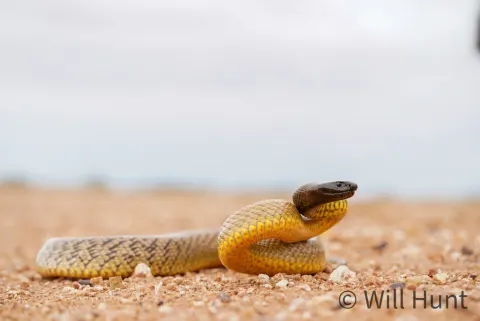
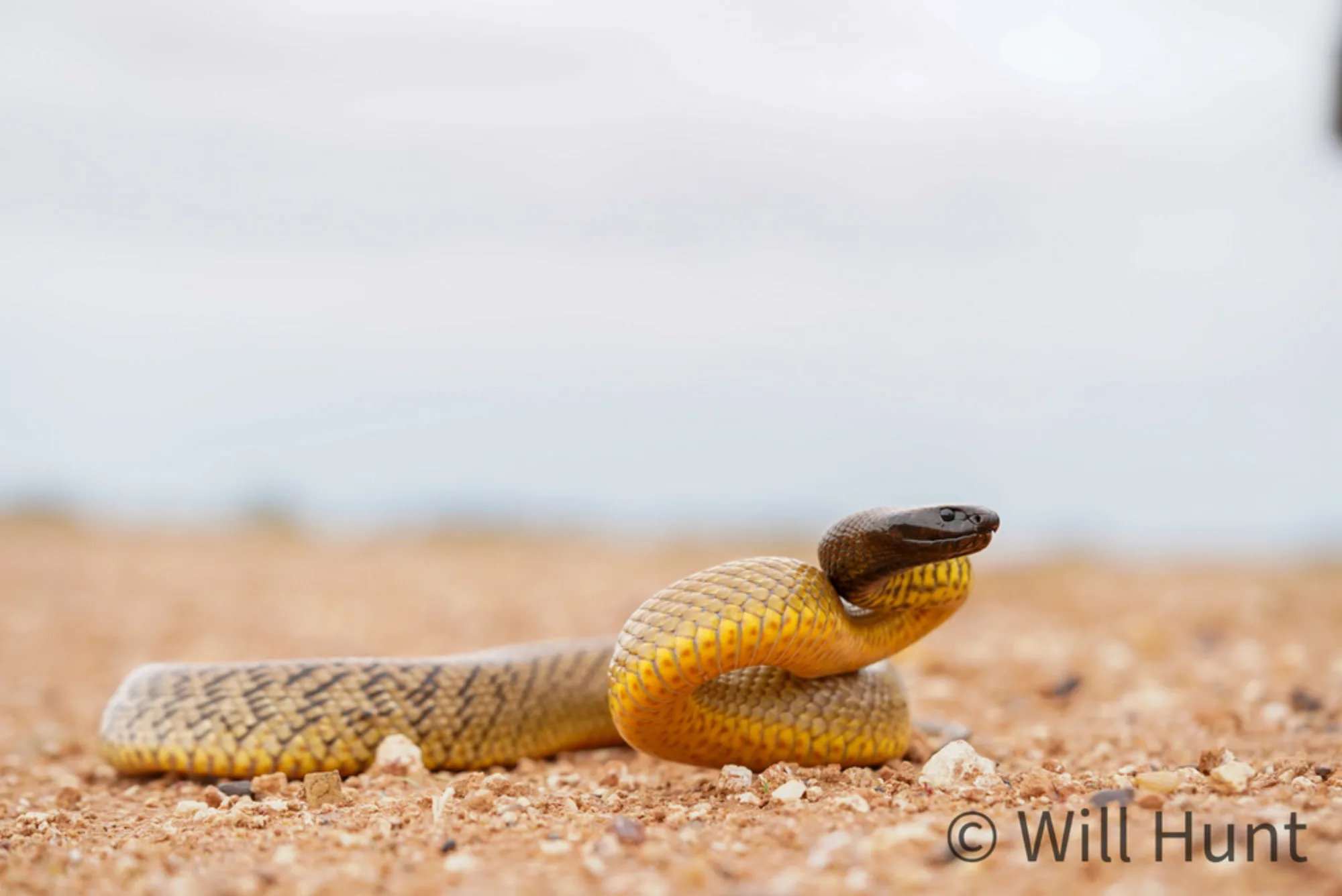
In the remote interior of Australia, the Fierce Snake lives on semiarid cracking-clay plains near the Queensland and South Australia border. Also known as the inland taipan, it is an extremely venomous snake, but is usually shy and rarely encounters people. Its body ranges from dark brown to brownish light green, with colour changing through the seasons. Dark-edged scales can form broken chevron patterns along its back, while the rounded head and neck are usually darker than the body. The snake averages about 1.8 m in total length, although larger individuals can reach 2.5 m. In Queensland, it has been recorded in the Channel Country, including Diamantina and Astrebla Downs national parks. South Australian records include Goyder Lagoon and the Tirari Desert, with an isolated population near Coober Pedy.
A wild encounter is uncommon: the snake lives far from populated areas and spends much of the day underground. When threatened, it usually tries to escape, but a cornered snake may raise its front body in a low S-shaped curve and strike if the warning is ignored. Keep a safe distance, as any bite is a medical emergency. Its wild diet consists almost entirely of small to medium-sized mammals, especially rodents, and it may bite prey repeatedly while holding it with its body. Females usually lay 10 to 24 eggs in sheltered places such as abandoned mammal burrows or deep rock crevices. When prey is scarce, they may lay fewer eggs or not breed. Adult snakes have few natural predators, but young snakes are vulnerable to predators including the mulga snake. The possible effects of threats need further investigation and may be significant locally.
Written from the English Wikipedia article Inland taipan (CC BY-SA 4.0).
- Records
- 21
- Countries
- 1
No atlas park has a record of the Fierce Snake in or around it yet.
These are open occurrence records, so they show where people looked for and recorded the Fierce Snake as much as where it lives. Cells are up to 25 km across, and every location is generalised to its cell.
Generalised encounter areas, not exact locations. Each shape is a grid cell coloured by how likely the species is there.
- Very likelyAustralia25 km zone · medium confidence · 21 records · updated 80 days ago
Conservation status not assessed here yet, so every location is generalised to its grid cell.